
Views: 273 Author: 广宇大 Publish Time: 2026-09-24 Origin: Site


Content Menu
● Understanding Roll Coating Technology
>> Core Components of Roll Coating Systems
● Types of Roll Coating Configurations
>> Direct Roll Coating for High-Speed Applications
>> Reverse Roll Coating for Precision Thickness Control
>> Gravure Roll Coating for Patterned and Thin Films
>> Kiss Coating for Delicate Substrates
>> Multi-Roll Coating Systems for Complex Applications
● Roll Coating vs Spray Coating: Comparative Analysis
>> Material Utilization and Waste Reduction
>> Production Efficiency and Throughput
>> Environmental Impact and VOC Emissions
● Leading Roll Coating Machine Manufacturers
>> SENLIAN and Godn Finishing (China)
>> WoodTech Machines and Incri Machinery (China)
>> Hirano Tecseed and Musashino Kikai (Japan)
>> Olbrich and Potdevin (Europe and USA)
● Key Selection Criteria for Roll Coating Systems
>> Production Volume and Substrate Geometry
>> Coating Material Compatibility and Viscosity Requirements
>> Substrate Dimensions and Tolerance Requirements
● Maintenance and Operational Best Practices
>> Daily Cleaning and Inspection Procedures
>> Scheduled Roll Replacement Based on Meters Coated
>> Preventive Maintenance and Calibration
>> What is the difference between roll coating and spray coating?
>> How much coating material can be saved by using roll coating versus spray application?
>> Can roll coating machines handle both solvent-based and water-based coatings?
>> What maintenance is required for roll coating machines?
>> How do you select the correct roll hardness for roll coating applications?
Modern manufacturing across furniture, flooring, metal coil, flexible packaging, and architectural panel sectors demands exceptional coating uniformity, precise thickness control, and minimal material waste to remain competitive in global markets. Roll coating has evolved from simple two-roller applicators and manual metering systems into sophisticated automated systems that integrate precision coating application, real-time thickness monitoring, and controlled film formation through various roll configurations. This comprehensive guide explores leading roll coating technologies, system configurations, and selection criteria that transform coating operations from quality bottlenecks into streamlined competitive advantages across pre-painted metal, architectural panels, flexible packaging, adhesive tapes, furniture panels, and decorative laminate manufacturing sectors.
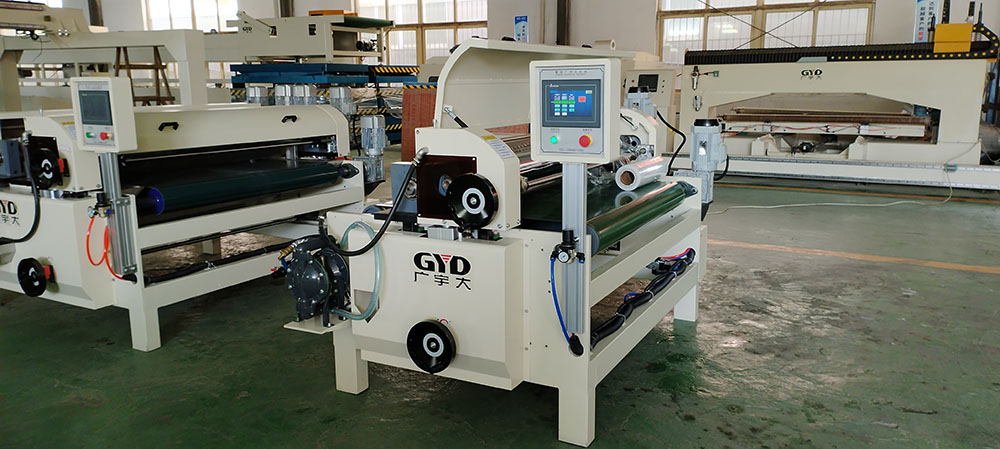
Roll coating is an industrial coating application process where liquid coatings including paints, primers, adhesives, varnishes, and functional materials are transferred onto flat substrates using rotating rollers that meter and apply coating with precise thickness control. Unlike spray coating that atomizes paint into fine mists creating overspray waste and requiring extensive masking, roll coating is a contact-based precision transfer coating process that eliminates paint atomization, splashing, and drift loss, achieving a paint utilization rate of over 99 percent, far exceeding traditional coating processes.
These systems integrate precision applicator rollers, metering rolls, doctor blades, and backup rolls that control coating thickness with tolerances of plus or minus 0.1 microns depending on application requirements and substrate characteristics. The coating medium is transferred precisely from a dosing roll to an application roll and then evenly onto workpieces through controlled mechanical processes, creating process-stable conditions that enable precise, controlled media distribution with coating thickness tolerances far superior to spray application methods where overspray and inconsistent coverage create waste and quality defects.
Industrial roll coating machines consist of several integrated subsystems working in concert to achieve reliable high-quality finishes at production speeds optimized for flat panels, metal coils, and continuous webs. Application rollers rotate through coating reservoirs or receive coating from fountain rolls, collecting material and transferring it to substrates while metering rollers or doctor blades remove excess coating to achieve precise thickness control. Dosing rollers control material transfer to application rollers, with rotation direction adjustable clockwise or counter-clockwise to optimize coating distribution for different substrate geometries and coating viscosities.
Roll materials include rubber compounds with Shore hardness ranging from 20 to 90 A, steel with chrome plating for durability and corrosion resistance, polyurethane for chemical resistance and consistent performance, and ceramic coatings for extreme wear resistance in high-volume production environments. Roll diameters range from 50 to 300 millimeters with working lengths from 250 to 3,000 millimeters, accommodating diverse panel geometries from narrow trim components to wide architectural boards and continuous web applications in coil coating and flexible packaging.
Direct roll coating represents the simplest roll coating configuration where the applicator roller rotates in the same direction as substrate travel, picking up coating from a reservoir and transferring it directly to the substrate surface. This popular continuous energy efficient process requires less labor, reduces waste, has superior coating transfer efficiency, excellent weight control and allows design flexibility for high-volume production of pre-painted metal, architectural panels, and continuous web applications.
Coating thickness is controlled by the gap between applicator and backup rolls, roller speed, and coating viscosity, with typical dry film thickness ranging from 5 to 25 microns depending on application requirements. Direct roll coating achieves production speeds from 10 to 150 meters per minute depending on coating formulation and substrate type, making it ideal for high-volume coil coating lines where throughput is critical for competitiveness in demanding domestic and export markets.
Reverse roll coating represents advanced configurations where both applicator and metering rollers rotate in the same direction but at different speeds, with the substrate being pulled between the two rolls through a metered gap where flow dynamics determine coating thickness and uniformity. This configuration has the advantage that coating is applied by wiping rather than by film splitting, forming smoother films and minimizing leveling problems compared to direct roll coating where web and applicator roll move in the same direction.
The thickness of the coating is controlled by the gap between the applicator and the metering roll, the rotational speed of the applicator roll, and the amount of material transferred on the web, which in turn is dependent on the web pressure on the applicator roll adjusted by the backup roll. This gives reverse roll coaters greater flexibility in adjusting coating thickness compared to knife over roll systems where coating is controlled only by gap of knife and the roll, enabling precise control over coating weight from 5 to 50 microns dry film thickness depending on application requirements.
Gravure roll coating employs engraved rollers with precise cell patterns that pick up coating from a fountain and transfer it to substrates in controlled patterns or uniform thin films. This is the basic form of the gravure method and is suitable for thin and high speed coating applications with coating speeds from 1 to 300 meters per minute, viscosity from 1 to 500 millipascal-seconds, and coating amount from 1 to 100 microns wet film thickness.
Use examples include release agents, primer applications, adhesive coating, and functional material coating where precise coating distribution patterns reduce material consumption while maintaining performance requirements. Kiss reverse gravure is a method in which transfer in the gravure reverse method is done using the kiss touch style, stressing the substrate less and resulting in a good coating surface, though it is likely to be affected by substrate side conditions and not well suited for high speed coating.
Kiss coating represents specialized configurations where the applicator roller lightly touches the substrate surface, transferring coating with minimal pressure that prevents damage to delicate substrates including thin plastic films, paper webs, and sensitive decorative surfaces. One roll kiss coaters achieve coating from 10 to 100 grams per square meter wet with viscosity from 1 to 3,000 centipoise and coating speed from 1 to 100 meters per minute, with coating possible on uneven sheet surfaces.
Reverse kiss coaters with small diameter gravure rolls achieve coating from 1 to 20 grams per square meter wet with viscosity from 1 to 100 centipoise and coating speed up to 50 meters per minute, with the advantage that paint does not go from one side to the backside of thin substrates. This configuration is ideal for optical functional materials, release agent coating, and delicate decorative films where substrate damage must be avoided while maintaining precise coating thickness control.
Multi-roll coating systems including three-roll and four-roll coaters represent sophisticated configurations that enable precise control over coating thickness, uniformity, and surface finish for demanding applications. Three reverse roll coaters with top feed achieve coating from 8 to 50 grams per square meter wet with viscosity from 1,000 to 50,000 centipoise and coating speed from 10 to 180 meters per minute, suitable for high viscosity coatings including solvent-based and water-based paints.
Four reverse roll coaters with bottom feed achieve coating from 8 to 35 grams per square meter wet with viscosity from 1 to 400 centipoise and coating speed from 10 to 250 meters per minute, ideal for low viscosity coatings requiring exceptional uniformity. These multi-roll configurations enable independent control of coating application, metering, and smoothing functions, delivering superior coating quality for premium architectural panels, pre-painted metal, and high-performance flexible packaging applications.
Roll coating achieves paint utilization rate of over 99 percent with virtually no waste, while spray coating through precise equipment recycling structure design can increase utilization rate to 80 to 95 percent with significant overspray losses. The expected transfer efficiency for roll coating method is in the range of 90 to 98 percent, while spray coating typically achieves only 40 to 60 percent transfer efficiency outdoors in wind, burning 20 to 35 percent more material to overspray.
Roll coating wastes almost no paint, needs almost no masking, and pushes coating into porous surfaces so the film actually lasts longer, while spray coating produces significant exhaust gas and dust from atomization and diffusion of paint, necessitating specialized VOC collection and treatment equipment. Applying 1 micron AR coatings with spray systems wastes 82 percent materials, while roll coating achieves 95 percent utilization with minimal environmental impact and lower long-term environmental maintenance costs.
Roll coating continuous assembly lines typically operate at production speed of 8 to 12 meters per minute for furniture and architectural panel applications, with metal coil coating lines reaching 10 to 150 meters per minute depending on configuration and automation level. Spray coating supports multiple modes including assembly line and step spraying, with production speed of spraying equipment usually slower than roll coating but faster than manual spraying, achieving 400 to 750 square feet per hour on open surfaces compared to 125 to 225 square feet per hour for rolling.
Spraying is three to five times faster with the trigger pulled and leaves a finish a roller cannot match on doors, trim, and kitchen cabinets where complex geometries challenge roll coating limitations. However, for flat panels, metal coils, and continuous webs, roll coating delivers superior throughput with minimal setup time, no masking requirements, and continuous operation that justifies capital investment through dramatic labor savings and material efficiency improvements.
Roll coating is highly eco-friendly with paint recycled in liquid form, no paint mist evaporation, low VOC emissions, and minimal pollution that meets industrial environmental protection standards. Spray coating produces atomization and diffusion of paint that generate significant exhaust gas and dust, necessitating specialized VOC collection and treatment equipment with high capital and operating costs.
Roll coating effectively lowers VOC emissions, reduces the need for complex waste gas treatment equipment, creates a clean working environment that meets industrial environmental protection standards, and can significantly reduce paint costs and environmental maintenance costs in the long term. The coating is recycled in liquid form with no paint mist evaporation, while spray coating requires extensive air filtration and solvent recovery systems that increase facility costs and regulatory compliance burdens.
SENLIAN manufactures roller coaters including single head, double head, and multi-roll configurations with working widths from 600 to 1,300 millimeters and feeding speeds from 0 to 20 meters per minute. The company's roller coater selection guide emphasizes high coating utilization rate over 99 percent, energy saving and eco-friendly operation with virtually no waste, far exceeding traditional coating processes.
Godn Finishing produces double roller coaters for UV coating wood panels with working widths of 600, 1,000, and 1,300 millimeters, designed for fast, efficient, and consistent coating of flat wooden panels, doors, cabinets, and furniture components. By using dual rollers, the machine ensures even transfer of paint, primer, or lacquer with minimal waste and compact design suitable for small to medium volume operations.
WoodTech Machines manufactures single head roll coaters in the WTM-UVRC series with working widths of 24, 36, and 51 inches, work piece thickness from 2 to 80 millimeters, minimum working length of 300 millimeters, and feeding speed from 5 to 20 meters per minute. Features include Italian JMC aluminum alloy reduction gear drive, Schneider electronics, high-quality coupling transmission, and NSK Japanese bearings for reliable performance.
Incri Machinery produces 3 head roller coater machines for UV panel and woodworking panel applications with maximum processing widths of 600, 1,000, and 1,300 millimeters, feeding speed from 0 to 20 meters per minute, and paint thickness from 5 to 10 grams per square meter. Available for UV, PU, and water-based coatings with electrical box separated from main structure and anti-collision design where feeding anti-collision plates avoid wood hurting the roller.
Hirano Tecseed manufactures gravure coaters suitable for thin and high speed coating applications with coating speed from 1 to 300 meters per minute, viscosity from 1 to 500 millipascal-seconds, and coating amount from 1 to 100 microns wet. Use examples include release agents, primer applications, adhesive coating, and functional material coating for optical and electronic applications.
Musashino Kikai produces comprehensive coater systems including direct gravure coaters, one roll kiss coaters, reverse kiss coaters with small diameter gravure rolls, three reverse roll coaters with top feed, and four reverse roll coaters with bottom feed. Coating technologies serve paper, polymer films, cloth, metal, and wood board processing with coating thickness from ultra-thick to nano-level ultra-thin films depending on application requirements.
Olbrich provides coating technologies including gravure roller coating (direct, indirect), reverse gravure with pressurized doctor chamber system, die coating, curtain coating, Mayerbar, kiss coaters, screen coaters, roll coaters, reverse roll coaters, 5-roll coaters, comma bar with deflection compensation, and knife over roll coating for flexible packaging, adhesive tapes, and functional material applications.
Potdevin emphasizes roll coating advantages including less waste and overspray since adhesive is applied directly via rollers, avoiding overspray, misting, or bounce back with waste minimized. If production workflow demands consistency, minimal waste, and scalable throughput, roll coating is often the safer bet compared to spray coating for flat panels and continuous web applications.
Matching roll coating capacity to actual production volumes and substrate complexity prevents both underutilization of capital equipment and production bottlenecks that delay order fulfillment. Low to medium volume operations processing under 500 panels or coils daily benefit from single head roll coaters or compact configurations with manual loading and unloading stations positioned at ergonomic heights.
High-volume manufacturers handling thousands of meters daily require multi-roll configurations or integrated production lines with automated material handling, quick-change roll assemblies, and integrated curing zones that minimize changeover downtime between product styles. Evaluate cycle times including loading, coating application, flash-off, curing, cooling, and unloading phases to calculate realistic daily throughput under actual operating conditions.
Different coating chemistries demand specific roll materials, metering configurations, and viscosity ranges to achieve optimal results without ribbing, orange peel, or thickness variation. Solvent-based and water-based paints with 35 to 50 percent solids content and operating viscosity of 35 to 90 seconds through FORD-4 viscosity cup are ideal for roll coating, while high viscosity coatings benefit from multi-roll configurations with doctor blade metering.
Roll coating handles coating viscosity from 1 to 50,000 centipoise depending on configuration, with gravure coaters suitable for low viscosity from 1 to 500 millipascal-seconds and multi-roll reverse coaters handling high viscosity from 1,000 to 50,000 centipoise. Verify that candidate roll coating machines accommodate your specific coating portfolio including primers, topcoats, adhesives, and specialty coatings without requiring extensive reconfiguration.
Metal coils, architectural panels, furniture components, and flexible webs vary dramatically in dimensions from narrow tapes measuring 600 millimeters wide to substantial architectural panels exceeding 2,000 millimeters in width with varying thickness from 0.3 to 80 millimeters. Ensure that candidate roll coating machines accommodate maximum substrate dimensions with adequate clearance for applicator roll contact, metering roll positioning, and web tracking without edge contact.
For sensitive substrates including thin plastic films and delicate paper webs, prioritize roll coating machines with precision web tension control and soft applicator rolls that prevent substrate damage. Standard metal coil coating machines may achieve superior results on robust metal substrates but require careful tension control for thin films, potentially requiring specialized configurations for flexible packaging applications.
Consistent daily cleaning prevents coating buildup on applicator rolls, metering rolls, and doctor blades that degrades finish quality and increases unplanned downtime. Wipe down rolls with appropriate solvents at shift end, removing doctor blades for thorough cleaning to prevent clogging from dried coating residue that alters metering gap and creates streaks or thickness variation.
Inspect applicator rolls, metering rolls, and backup rolls for scoring, pitting, contamination, and excessive wear that could affect coating uniformity. Visual inspection should identify buildup or debris that, if unclean, may hinder even application, with soft lint-free cloths used to wipe rolls and all surfaces to ensure no scratches or damage occurs during cleaning.
Premium roll coater producers track roll replacement in meters coated rather than calendar days because coating type, substrate, and line speed determine wear rate far more accurately than time-based schedules. Applicator rolls typically require replacement every 500,000 to 750,000 meters for high-speed premium product lines where surface finish on worn rolls creates coating weight variation above tolerance limits.
Backup and metering rolls last 750,000 to 1,500,000 meters due to lower contact stress, but crown profile tracking is mandatory since a flat roll on a crowned strip creates edge-heavy coating. Crown profile must be measured quarterly regardless of metered life, since localized wear creates coating weight variation before rolls reach metered replacement points.
Preventive maintenance programs implement scheduled inspections based on equipment manuals and operational hours to avoid unexpected downtime. Weekly maintenance includes checking motor load, lubricating bearings, and inspecting roller alignment to ensure proper nip pressure and coating thickness control.
Monthly maintenance involves calibrating sensors, verifying nip pressure against coating weight targets, and documenting all readings in computerized maintenance management systems. Annual maintenance overhauls all mechanical systems, updates software, and replaces worn components before they cause coating defects or unplanned downtime.
Roll coating is a contact-based precision transfer coating process that achieves paint utilization rate over 99 percent with virtually no waste, while spray coating achieves 80 to 95 percent utilization with significant overspray losses. Roll coating eliminates paint atomization and drift loss with low VOC emissions, while spray coating produces significant exhaust gas and dust requiring specialized VOC treatment equipment.
Roll coating typically reduces coating consumption by 20 to 40 percent compared to spray application through precise metering, consistent application patterns, and minimal overspray. Integrated coating recovery systems further reduce waste by capturing and recycling excess material, dramatically reducing material costs and environmental impact compared to spray methods where overspray losses are unavoidable.
Yes, most modern roll coating machines accommodate multiple coating types including solvent-based and water-based paints with 35 to 50 percent solids content. Roll coating handles viscosity from 1 to 50,000 centipoise depending on configuration, with gravure coaters for low viscosity and multi-roll reverse coaters for high viscosity coatings.
Daily maintenance includes wiping down applicator rolls, metering rolls, and doctor blades, checking web tension, and inspecting for coating buildup. Weekly tasks involve checking motor load, lubricating bearings, and inspecting roller alignment, while monthly maintenance calibrates sensors and verifies nip pressure against coating weight targets.
Roll hardness selection balances compliance for sensitive substrates against precision for metal coils and architectural panels, with softer rolls from 20 to 40 Shore A for delicate plastic films and harder rolls from 60 to 90 Shore A for precise film thickness control on metal substrates. Roll hardness affects coating transfer efficiency, surface finish quality, and roll life, making proper selection critical for consistent coating quality.


