
Views: 276 Author: 广宇大 Publish Time: 2026-09-21 Origin: Site


Content Menu
● Understanding Furniture Spraying Machine Technology
>> What Is a Furniture Spraying Machine?
>> Core Components of Automated Spraying Systems
● Types of Furniture Spraying Machines
>> Reciprocating Spray Painting Machines
>> Multi-Axis Robotic Spraying Systems
● Leading Furniture Spraying Machine Manufacturers
>> Guangyutai Machinery (GYD Finishing)
>> Giardina USA
● Key Selection Criteria for Furniture Spraying Machines
>> Production Volume and Throughput Requirements
>> Coating Material Compatibility
>> Workpiece Geometry and Size Constraints
● Maintenance and Operational Best Practices
>> Daily Cleaning and Preventive Maintenance
>> Optimizing Spray Parameters for Quality and Efficiency
>> What is the difference between a reciprocating spray machine and a robotic spray system?
>> Can furniture spraying machines handle both water-based and solvent-borne coatings?
>> What maintenance is required for furniture spraying machines?
>> How long does it take to install and commission a furniture spraying machine?
In modern furniture manufacturing, selecting the right furniture spraying machine is critical for achieving flawless paint finishes, maximizing production efficiency, and minimizing material waste. Automated spraying systems have revolutionized how cabinet doors, wooden panels, and custom furniture pieces receive their protective and decorative coatings. This comprehensive guide explores leading manufacturers, key technologies, and selection criteria for industrial furniture spraying machines.
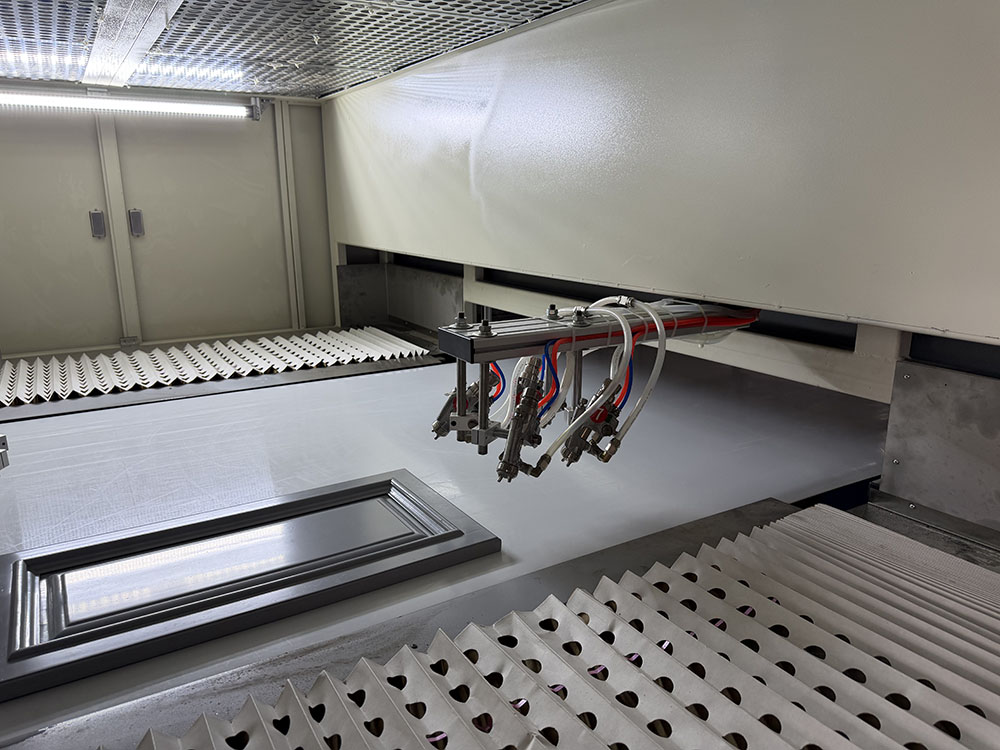
A furniture spraying machine is an automated industrial system designed to apply paint, lacquer, primer, or protective coatings onto wooden furniture components with precision and consistency. Unlike manual spraying, which relies on operator skill and often results in uneven coverage, automated furniture spraying machines use programmable controls, reciprocating spray guns, and conveyor systems to deliver uniform finishes across flat panels, shaped components, and three-dimensional furniture parts.
These machines integrate high-volume low-pressure (HVLP) spray technology, electrostatic coating systems, or airless spray mechanisms to atomize coating materials into fine mists that adhere evenly to wood surfaces. Advanced models feature multi-axis robotic arms, UV curing integration, and real-time viscosity monitoring to ensure optimal application parameters throughout production runs.
Modern furniture spraying machines consist of several critical subsystems working in harmony. The conveyor system transports workpieces through the spraying zone at controlled speeds, typically ranging from 2 to 20 meters per minute depending on coating requirements. Reciprocating spray guns mounted on linear tracks move back and forth perpendicular to the conveyor direction, creating overlapping spray patterns that eliminate streaks and missed spots.
The fluid delivery system includes pressure pots, gear pumps, or diaphragm pumps that maintain consistent coating flow to spray nozzles. Programmable logic controllers (PLCs) coordinate gun triggering, conveyor speed, and spray pattern adjustments based on workpiece dimensions detected by photoelectric sensors. Overspray recovery systems capture excess coating material through water wash booths or dry filter systems, reducing environmental impact and material costs.
Reciprocating spray painting machines represent the most common configuration for flat panel furniture production. These systems feature spray guns mounted on horizontal or vertical tracks that move in synchronized patterns as panels pass underneath on chain or belt conveyors. Single-arm reciprocating machines suit low to medium volume production, while dual-arm configurations double throughput for high-volume cabinet door and furniture panel manufacturing.
The reciprocating motion allows precise control over spray gun speed, fan width, and fluid pressure, enabling operators to achieve specific film thicknesses ranging from 30 to 150 microns per coat. Advanced models incorporate servo-driven axes that adjust gun angle and distance dynamically to accommodate raised panel doors, moulded edges, and profiled furniture components without manual intervention.
For complex three-dimensional furniture parts, multi-axis robotic spraying systems offer unmatched flexibility and precision. Six-axis articulated robots equipped with specialized spray guns navigate intricate geometries, maintaining optimal standoff distance and spray angle across curved surfaces, carved details, and assembled furniture frames. These systems excel in custom furniture production, luxury cabinet manufacturing, and applications requiring consistent coverage on non-uniform substrates.
Robotic furniture spraying machines integrate vision systems that scan workpieces before coating, automatically generating optimized spray paths that minimize overspray while ensuring complete coverage. Collision avoidance algorithms prevent accidental contact between spray guns and workpieces, reducing downtime and maintenance costs in high-mix production environments.
UV curing spray lines combine automated spraying with immediate ultraviolet light curing, dramatically reducing drying times and floor space requirements. After coating application, furniture components pass through high-intensity UV lamp arrays that instantly polymerize UV-curable coatings, enabling immediate handling and secondary processing within minutes rather than hours.
These integrated systems suit high-volume production of flat furniture panels, cabinet doors, and decorative wall panels where rapid throughput and minimal work-in-progress inventory are critical. UV furniture spraying machines achieve line speeds exceeding 30 meters per minute while maintaining coating quality superior to conventional air-dry or thermal cure systems.
Guangyutai Machinery stands as a premier manufacturer of automated furniture spraying machines, offering comprehensive solutions from single spray stations to complete turnkey coating lines. Their product portfolio includes reciprocating spray painting machines, UV roller coating systems, and profile coating equipment designed specifically for furniture, cabinet door, and architectural woodwork applications.
The company's automated spraying lines feature PLC-controlled dual-arm mechanisms with adjustable gun spacing, variable conveyor speeds, and integrated overspray recovery systems. Guangyutai's UV curing machines complement their spraying equipment, enabling complete coating workflows from primer application through topcoat curing in continuous production flows. Technical support encompasses installation, operator training, and ongoing maintenance services across global markets.
IMLUCHY Machinery specializes in customized automated spraying equipment, manufacturing one to eight-axis reciprocating arc continuous spraying machines and integrated conjoined spraying lines. Their furniture spraying machines serve diverse industries including furniture, hardware, plastics, and architectural components, with particular expertise in multi-surface simultaneous coating applications.
The company's plane and three-dimensional multi-functional automatic spraying machines accommodate flat panels, shaped components, and assembled furniture pieces within single production lines. IMLUCHY's static and dynamic automatic conveying systems, combined with ground rail coating spraying lines and hanging shaft configurations, provide flexible material handling solutions for varied furniture geometries and production volumes.
Foshan Taisan Machinery manufactures high-performance automatic spraying machines engineered for furniture finishing applications. Their product range includes UV automatic spray painting machines, roller coating systems, and complete coating production lines designed for MDF boards, wooden doors, and cabinet components.
Taisan's automatic paint spraying machines feature high stability PLC controls, HVLP spray technology, and dual spray gun support for optimized material transfer efficiency. The company's UV painting machines achieve precise coating thicknesses on wood-based panels while minimizing solvent emissions through closed-loop fluid delivery systems. Technical specifications emphasize repeatability, ease of maintenance, and compatibility with water-based, UV, and solvent-borne coatings.
Qingdao Incri Machinery produces five-axis automatic spray painting machines specifically designed for double-sided cabinet door coating applications. Their industrial spraying systems accommodate simultaneous top and bottom surface coating, eliminating the need for manual flipping and re-fixturing that slows conventional production methods.
Incri's precision intelligent automatic UV coating machines integrate servo-driven spray axes with real-time thickness monitoring, ensuring consistent film builds across production batches. The company's woodworking machinery division complements their spraying equipment with wire brush machines, sanding systems, and surface preparation equipment, providing complete furniture finishing solutions from substrate preparation through final topcoat application.
Giardina USA delivers customizable furniture finishing equipment backed by over 25 years of installation and maintenance expertise. Their advanced UV coating systems handle fast-paced processing lines with absolute reliability, serving high-volume furniture manufacturers requiring consistent quality and minimal downtime.
Giardina's spraying systems integrate seamlessly with existing production workflows, offering modular configurations that scale with growing production demands. The company's technical support network provides on-site commissioning, preventive maintenance programs, and rapid spare parts availability to maximize equipment uptime in demanding industrial environments.
Matching furniture spraying machine capacity to actual production volumes prevents both underutilization of capital equipment and production bottlenecks that delay order fulfillment. Low to medium volume operations producing under 500 panels daily benefit from single-arm reciprocating machines with manual loading and unloading stations. High-volume manufacturers processing thousands of components daily require dual-arm systems with automated conveyor integration and robotic material handling.
Consider not only current production levels but also anticipated growth over the equipment's expected 10 to 15-year service life. Modular spraying systems that allow additional spray stations or conveyor extensions provide scalability without complete system replacement. Evaluate cycle times, including loading, spraying, and unloading phases, to calculate realistic daily throughput under actual operating conditions.
Different coating types demand specific spray gun technologies, fluid delivery pressures, and atomization methods to achieve optimal results. Water-based coatings require stainless steel fluid paths and corrosion-resistant seals to prevent rust contamination, while solvent-borne systems need explosion-proof electrical components and adequate ventilation to meet safety regulations.
UV-curable coatings necessitate spray guns with specialized nozzles that prevent premature curing inside fluid passages, along with integrated UV lamp systems positioned immediately after spray zones. Verify that candidate furniture spraying machines accommodate your specific coating portfolio, including primers, stains, lacquers, and topcoats, without requiring extensive reconfiguration or component replacement when switching materials.
Furniture components vary dramatically in dimensions, from small drawer fronts to large wardrobe panels exceeding two meters in length. Ensure that candidate spraying machines accommodate your maximum workpiece dimensions with adequate clearance for spray gun travel and overspray containment. Conveyor width, spray zone length, and recovery system capacity must align with your largest production parts.
For shaped components such as raised panel doors, moulded edges, or carved furniture elements, prioritize multi-axis spraying systems that adjust gun angle and distance dynamically. Flat panel-only machines may achieve superior results on uniform substrates but struggle with profiled surfaces, potentially requiring manual touch-up that negates automation benefits.
Consistent daily cleaning prevents coating buildup in spray guns, fluid lines, and recovery systems that degrades finish quality and increases downtime. Flush spray guns with appropriate solvents at shift end, removing nozzles and air caps for thorough cleaning to prevent clogging from dried coating residue. Inspect conveyor chains, drive motors, and photoelectric sensors for wear or contamination that could affect positioning accuracy.
Weekly preventive maintenance should include lubrication of linear guides, verification of spray gun alignment, and calibration of fluid pressure regulators. Monthly inspections of overspray recovery systems ensure filters or water wash sections function properly, maintaining adequate airflow and preventing overspray accumulation that creates fire hazards or environmental compliance issues.
Achieving optimal coating quality while minimizing material consumption requires careful balancing of spray gun pressure, fan width, fluid flow rate, and conveyor speed. Start with manufacturer-recommended baseline settings for your specific coating type, then conduct test sprays on sample panels to evaluate coverage, orange peel, and film thickness uniformity.
Use wet film thickness gauges during setup to verify that applied coatings meet specification requirements before entering curing or drying stages. Document successful parameter combinations for each coating type and workpiece geometry, creating standardized setup sheets that reduce changeover times and ensure consistent results across shifts and operators.
Reciprocating spray machines use linear tracks with spray guns moving in straight back-and-forth patterns, ideal for flat panels and simple geometries. Robotic spray systems employ multi-axis articulated arms that navigate complex three-dimensional paths, better suited for shaped furniture components, carved details, and assembled frames requiring variable spray angles.
Automated furniture spraying machines typically reduce coating consumption by 20 to 40 percent compared to manual spraying through precise gun triggering, consistent overlap patterns, and optimized spray parameters. Overspray recovery systems further reduce waste by capturing and filtering excess material for proper disposal or recycling.
Yes, most modern furniture spraying machines accommodate multiple coating types with appropriate configuration. Water-based coatings require stainless steel fluid paths and corrosion-resistant components, while solvent-borne systems need explosion-proof electrical systems and enhanced ventilation. Many manufacturers offer convertible systems that can be adapted for different coating chemistries with component changes.
Daily maintenance includes flushing spray guns, cleaning nozzles, and wiping down conveyor systems. Weekly tasks involve lubricating linear guides, checking spray gun alignment, and verifying pressure settings. Monthly inspections should cover overspray recovery systems, electrical connections, and safety interlocks. Annual professional servicing ensures optimal performance and identifies wear components before failure.
Installation and commissioning timelines vary by system complexity, typically ranging from two to six weeks. Simple reciprocating machines may be operational within days after delivery, while complete turnkey coating lines with conveyor integration, curing systems, and material handling automation require extended commissioning periods including operator training and production trials.


