
Views: 287 Author: 广宇大 Publish Time: 2026-09-30 Origin: Site


Content Menu
● Understanding Roller Coating Production Line Technology
>> What Is a Roller Coating Production Line?
>> Core Components of Roller Coating Production Line Systems
● Types of Roller Coating Production Line Configurations
>> Single Head Roller Coating Production Lines
>> Double Head Roller Coating Production Lines
>> Triple Head Roller Coating Production Lines
>> Integrated Roller Coating Production Lines
● Roller Coating Production Line vs Spray Coating: Comparative Analysis
>> Production Speed and Throughput
>> Coating Uniformity and Finish Quality
>> Material Utilization and Waste Reduction
>> Operating Costs and Labor Requirements
● Leading Roller Coating Production Line Manufacturers and Suppliers
>> ZZ Chryso and Qingdao INCRI Machinery (China)
>> Cefla Finishing and Senr Machinery (Italy and China)
>> Wedoimport and China Coating Line (China)
● Key Selection Criteria for Roller Coating Production Line Systems
>> Production Volume and Panel Geometry
>> Coating Type Compatibility and Application Requirements
>> Panel Dimensions and Tolerance Requirements
● Maintenance and Operational Best Practices
>> Daily Cleaning and Inspection Procedures
>> Scheduled Component Replacement
>> Preventive Maintenance and Calibration
>> What is the difference between single, double, and triple head roller coating production lines?
>> How much coating material can be saved by using roller coating production line versus spray coating?
>> Can roller coating production lines handle both UV and water-based coatings?
>> What maintenance is required for roller coating production lines?
>> How do you select the correct roller coating production line for specific applications?
Modern furniture, flooring, door, cabinet, and architectural millwork manufacturing demands flawless surface finishes, minimal material waste, and maximum production efficiency to remain competitive in global markets. A roller coating production line has evolved from simple manual roller applicators and brush coating methods into sophisticated automated systems that integrate precision coating application, controlled drying and curing, real-time thickness monitoring, and intelligent panel handling specifically engineered for flat wood panels, MDF, particleboard, plywood, melamine-faced boards, decorative laminates, glass, metal sheets, and composite panels. This comprehensive guide explores leading roller coating production line technologies, system configurations, and selection criteria that transform coating operations from labor-intensive bottlenecks into streamlined competitive advantages across furniture, flooring, door, cabinet, architectural panels, decorative boards, and industrial panel manufacturing sectors.
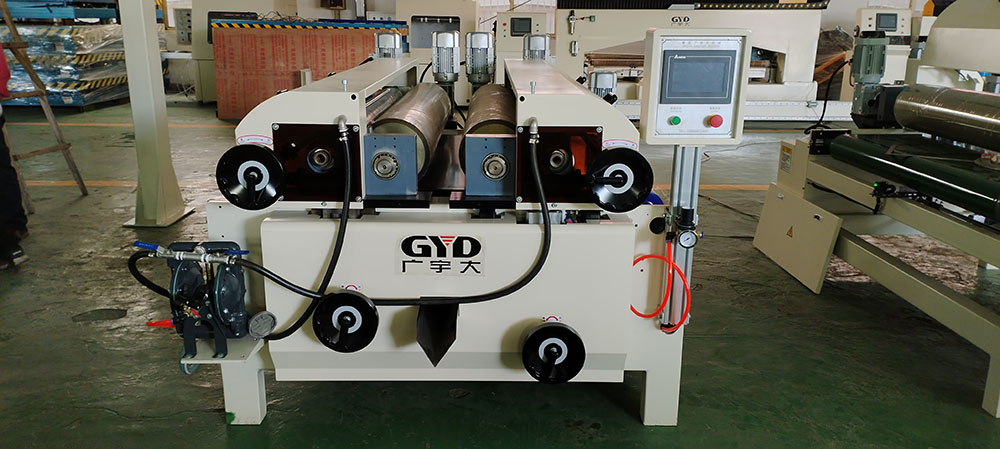
A roller coating production line is a specialized finishing system widely adopted in industries such as furniture manufacturing, bamboo and wood crafts, flooring, wall panels, and footwear production that applies precise, even coats of UV-curable coatings, primers, sealers, putty, water-based paints, solvent-based lacquers, and adhesives onto flat panels using precision applicator rollers with repeatable precision in a continuous flow configuration. Unlike manual roller coating or spray application methods that create uneven coverage and excessive material consumption, roller coating production lines transfer liquid coatings from applicator rollers to panel surfaces through controlled contact in a continuous flow process, ensuring uniform coating thickness across full working widths with minimal waste and consistent finish quality.
These systems integrate precision applicator rollers, metering rollers, and coating reservoirs with precise gap control that maintains optimal coating thickness ranging from 6 to 25 grams per square meter depending on coating type and application requirements. Advanced roller coating production line configurations feature programmable logic controllers, human-machine interfaces, servo-driven feeding systems, and real-time coating thickness monitoring that maintain optimal application parameters throughout high-volume production cycles, enabling continuous flow manufacturing in modern smart factories with minimal operator oversight while achieving coating thickness tolerances far superior to manual spray methods.
Industrial roller coating production lines consist of several integrated subsystems working in concert to achieve reliable high-quality finishes at production speeds optimized for flat panel geometries. The process starts with panel feeding systems that transport workpieces through coating zones at controlled speeds ranging from 0 to 20 meters per minute depending on coating formulation, panel thickness, and desired film thickness. Applicator rollers rotate through coating reservoirs or receive coating from metering rollers, collecting material and transferring it to panel surfaces while metering rollers or doctor blades remove excess coating to achieve precise thickness control.
Dosing rollers control coating transfer to applicator rollers, with rotation direction adjustable clockwise or counter-clockwise to optimize coating distribution for different panel geometries and coating viscosities. Conveyor systems transport panels through application, drying, curing, and cooling zones at controlled speeds, with photoelectric sensors detecting panel dimensions to trigger automatic roller movement and coating application without manual intervention. Hard chrome-plated rollers with hardness HRC 60 plus and five-year service life ensure consistent coating quality across extended production runs without roller wear that compromises finish quality.
The coordinated control among conveyor system, coating roller, and precision metering components enables exceptionally uniform paint application, high production efficiency, and significantly reduced paint waste. This synchronized operation produces a smooth, full, and even film without sags or misses, with finish quality that rivals curtain coating but with thinner, more controlled film build that minimizes material consumption while maximizing protection and aesthetic appeal. A roller coating production line is combined with a dust cleaning machine, roller coating with putty, and UV dryer for complete finishing solutions.
Single head roller coating production lines represent entry-level configurations suitable for small workshops and basic coating needs where capital investment must be minimized while still achieving dramatic improvements over manual coating methods. These machines feature working widths from 620 to 1,320 millimeters with feeding speeds from 0 to 20 meters per minute, fully automating application of UV coatings, primers, sealers, and decorative finishes with exceptional uniformity that effectively replaces inconsistent manual methods.
High precision single roller coating production lines for primer and stain application feature working widths from 620 to 1,320 millimeters, working heights from 2 to 80 millimeters, minimum working lengths of 300 millimeters, and feeding speeds from 0 to 20 meters per minute for compact, high-precision, and versatile entry-level coating application on flat panels. These machines are designed for flawless coating application with minimal material waste and consistent finish quality across extended production runs.
Single head roller coating production lines apply a precise, even coat of paint, UV coating, primer, or putty onto flat panels including MDF, plywood, particleboard, metal sheets, PVC, and calcium silicate boards. They are widely used in furniture, flooring, cabinet doors, and wall panel production where simplicity and cost-effectiveness are paramount for small to medium-volume operations. Common widths include 700 millimeters, 1,300 millimeters, and 1,600 millimeters for diverse production requirements.
Double head roller coating production lines represent mid-range configurations suitable for medium-scale production where better finish control and higher throughput justify increased capital investment. These machines apply coating from both top and bottom sides simultaneously or apply primer and topcoat in sequential stations for higher efficiency compared to single head configurations.
High precision double roller coating production lines for furniture board coating applications feature working widths of 600, 1,000, and 1,300 millimeters with prices competitive for standard configurations. These machines enable simultaneous application of different coating types including primer and topcoat, or top and bottom surface coating for complete panel protection. Double head roller coating production lines apply coating from both top and bottom sides simultaneously for higher efficiency, making them ideal for medium-scale production where throughput and finish quality are critical.
Furniture automatic intelligent precise roller coater machines with double head UV coating feature max processing widths of 600 millimeters, 1,000 millimeters, and 1,300 millimeters, processing thickness from 2 to 90 millimeters, and feeding speeds from 0 to 20 meters per minute. These machines are built to order by manufacturers exporting to more than 20 countries, serving plants where film weight tolerance is tight and precise double roller build is required for consistent quality.
Triple head roller coating production lines represent advanced configurations suitable for large-scale, high-precision industrial finishing where maximum throughput and exceptional finish quality justify premium capital investment. These machines feature three applicator roller assemblies that enable multi-layer coating application in single pass operations, dramatically increasing throughput while minimizing floor space requirements compared to sequential single-pass coating lines.
High precision triple roller coating production lines feature maximum processing widths of 600, 1,000, and 1,300 millimeters with feeding speeds from 0 to 20 meters per minute for board type furniture, floor, flush door, ceramic, and handicraft surface primer and top paint applications. These machines ensure exceptional coating uniformity with minimal material waste and consistent finish quality across extended production runs.
Triple head roller coating production lines are ideal for mass production environments where high-volume output and exceptional finish quality are critical for competitiveness in demanding domestic and export markets. The three applicator roller assemblies enable simultaneous application of primer, sealer, and topcoat in single pass operations for maximum throughput, making them the preferred choice for large-scale furniture, flooring, and architectural panel manufacturing.
Integrated roller coating production lines combine surface preparation, multi-stage coating application, drying and curing tunnels, inspection, and stacking in one continuous flow that transforms raw substrates into finished, ready-to-assemble components with minimal manual handling. These complete installations suit mass production environments where panels move automatically from dust removal through coating application, drying, curing, inspection, and stacking without intermediate storage or re-fixturing that introduces contamination risks and delays order fulfillment.
A complete roller coating production line can process a panel through multiple stages from putty filling to topcoating in just minutes, boosting production efficiency substantially, reducing labor time, and lowering overall costs compared to traditional manual coating plus drying processes that take hours to complete. UV coatings cure instantly upon exposure to UV light, eliminating drying wait times and production bottlenecks that constrain throughput in traditional finishing operations.
Integrated roller coating production lines integrate easily with sanding and curing systems, giving higher efficiency, better finish quality, and lower operating costs compared to standalone coating machines that require manual panel handling between operations. These integrated systems achieve production speeds from 0 to 20 meters per minute for continuous, high-volume flat-panel lines, dramatically increasing throughput compared to spray coating systems that operate at lower speeds due to atomization, flash-off, and drying constraints.
Roller coating production lines operate at production speeds from 0 to 20 meters per minute for continuous, high-volume flat-panel lines, significantly faster than spray coating systems that operate at lower speeds due to atomization, flash-off, and drying constraints. A modern roller coating production line allows panels to move continuously through the coating and curing process, significantly increasing production speed and ensuring consistent coating quality across extended production runs.
In contrast, spray coating often requires more time because each piece must be coated individually with multiple passes to achieve uniform coverage, especially on large panels where manual spray operators struggle to maintain consistent gun distance and traverse speed across full panel surfaces. For flat panel production and large-scale manufacturing, roller coating is usually more efficient and cost-effective compared to spray coating methods that constrain throughput and increase labor costs per finished unit.
Roller coating applications are typically run at line speeds of 0 to 20 meters per minute, while spray coating operates at lower speeds due to atomization and drying constraints. The continuous nature of roller coating eliminates drying wait times, enabling continuous flow production that dramatically increases throughput compared to traditional spray plus drying processes. Coating efficiency and production capacity far exceed traditional manual coating methods, substantially shortening delivery cycles and reducing per-unit production costs.
Roller coating production lines deliver highly uniform coating layers because coating material is evenly distributed by precision rollers with coating thickness tolerances far superior to spray coating methods. Roller coating provides a highly uniform coating layer because the coating material is evenly distributed by precision rollers, with coating thickness typically ranging from 6 to 25 grams per square meter for thin films that are consistent across the entire panel.
The roller application process also creates a durable surface with excellent adhesion that far exceeds spray coating finish quality on flat panels. In contrast, spray coating produces highly variable coating thickness affected by gun distance, air pressure, and traverse speed, suitable for thick builds but difficult to control for thin uniform films that require precise thickness control for optimal performance.
Roller coating delivers smooth, even gloss with paint mechanically pressed into wood grain, eliminating pinholes and orange peel defects that plague spray coating methods. Spray coating can produce soft, matte, or textured effects, but is prone to orange peel, pinholes, and dry spray if not optimally controlled by skilled operators with extensive training and experience. Flooring finished on a roller coating production line exhibits a smooth, full-bodied surface with consistent film thickness and no sags or puddling. Precision roller control ensures uniform coating thickness without color variation or runs – quality far superior to manual operations.
Roller coating production lines achieve paint utilization rate of over 96 percent with closed-loop recirculation systems and almost no overspray waste, while spray coating achieves only approximately 90 percent utilization with approximately 10 percent loss from overspray and atomization. Excellent paint economy with over 96 percent of coating material used makes roller coating very cost-effective for expensive UV or waterborne paints that represent significant material costs in high-volume production.
Roller coating production lines waste almost no coating material, need almost no masking, and push coating into wood grain so the finish actually lasts longer, while spray coating produces significant overspray that creates cleanup burdens and hazardous waste disposal costs. The coating is metered onto the applicator roller by precision setting of the gap between the upper metering roller and the application roller, with the coating wiped off the application roller by the panel as it passes around the support roller, ensuring precise coat weight control without overspray losses.
Roller and curtain coater systems are best suited for flat-panel production, nearing 100 percent transfer efficiency with no overspray and unused paint staying in the tray. Spray systems achieve only about 90 percent transfer efficiency with approximately 10 percent loss from overspray and atomization, making them less economical for high-volume flat panel production. To put this in perspective: a roller coating machine typically applies 6 to 25 grams per square meter, while traditional curtain coating requires 80 to 180 grams per square meter. This means the roller coating process reduces paint consumption by over 70 percent.
Roller coating production lines require minimal operator intervention with PLC-controlled systems enabling continuous flow manufacturing in modern smart factories, while spray coating depends on skilled operators who require extensive training and experience to achieve consistent quality. Roller coating uses rollers to apply coating evenly on flat surfaces and cures it instantly with controlled processes, while spray coating applies paint through spray guns and is more suitable for complex shapes that roll coating cannot access.
For flat panel production and large-scale manufacturing, roller coating is usually more efficient and cost-effective with lower operating costs and minimal labor requirements compared to spray coating methods that depend on skilled operators and frequent quality inspections. Roll coating offers less waste, lower operating costs, and consistent film thickness compared to spray systems, making it the preferred choice for high-volume flat panel manufacturing where throughput and material efficiency are critical.
A complete roller coating production line reduces labor time by 50 percent and lowers overall costs by more than 40 percent compared to traditional spray plus drying processes, while boosting production efficiency by over 60 percent through controlled application that eliminates drying wait times and production bottlenecks. This leads to direct savings of over 70 percent in paint consumption compared to curtain coating methods, providing a rapid return on investment.
ZZ Chryso manufactures roller coating lines for flooring production including engineered wood flooring, parquet flooring, and solid wood flooring with working widths of 700 millimeters, 1,300 millimeters, and 1,600 millimeters. The company's systems feature coating transfer efficiency approaching 100 percent, meaning nearly all coating material is transferred directly to the workpiece surface – precisely where it is needed, with minimal waste.
Qingdao INCRI Machinery manufactures furniture automatic intelligent precise roller coater machines with double roller UV coating, featuring max processing widths of 600 millimeters, 1,000 millimeters, and 1,300 millimeters, processing thickness from 2 to 90 millimeters, and feeding speeds from 0 to 20 meters per minute. The company's machines are built to order, exporting to more than 20 countries, serving plants where film weight tolerance is tight and precise double roller build is required.
Cefla Finishing specializes in the manufacture of machines and automated lines for roller coating with high flexibility in terms of output rate and choice of cycles and processes according to the line make-up. The company's systems serve furniture, flooring, door, cabinet, architectural panel, and decorative board applications where exceptional coating uniformity and material efficiency are critical for competitiveness in demanding markets.
Senr Machinery manufactures automated feeder roll coating systems with effective processing thickness from 2 to 80 millimeters, effective processing widths of 620, 920, and 1,320 millimeters optional, and transport speeds from 0 to 20 meters per minute. The coating feeder is used for putty filling for all kinds of flat panels with uneven surfaces, which can eliminate manual filling work and improve productivity for furniture plates, wood doors, floors, MDF panels, and inorganic panels.
Wedoimport manufactures UV coating production lines for furniture combined with dust cleaning machines, roller coating with putty, and UV dryers. These lines are designed for small furniture with working widths of 620 millimeters and 1,320 millimeters, working thickness from 2 to 80 millimeters, and feeding speeds from 0 to 20 meters per minute.
China Coating Line manufactures automated feeder roll coating systems with effective processing thickness from 2 to 80 millimeters, effective processing widths of 620, 920, and 1,320 millimeters optional, and transport speeds from 0 to 20 meters per minute. The company's systems serve furniture, flooring, door, cabinet, architectural panel, and decorative board applications where exceptional coating uniformity and material efficiency are critical.
Matching roller coating production line capacity to actual production volumes and panel complexity prevents both underutilization of capital equipment and production bottlenecks that delay order fulfillment. Low to medium volume operations processing under 500 panels daily benefit from single head roller coating production lines or compact configurations with manual loading and unloading stations positioned at ergonomic heights.
High-volume manufacturers handling thousands of panels daily require triple head configurations or integrated production lines with automated material handling, quick-change roller assemblies, and integrated drying and curing zones that minimize changeover downtime between product styles. Evaluate cycle times including loading, coating application, drying, curing, cooling, and unloading phases to calculate realistic daily throughput under actual operating conditions rather than theoretical maximums.
Different coating chemistries demand specific roller materials, gap settings, and curing methods to achieve optimal results without incomplete cure, adhesion failures, or finish defects. UV-curable coatings require UV lamp arrays positioned immediately after coating zones for instant polymerization that enables immediate handling and packaging, while water-based coatings require extended flash-off and drying zones for solvent evaporation before stacking.
Verify that candidate roller coating production lines accommodate your specific coating portfolio including primers, sealers, topcoats, putty, UV coatings, water-based paints, and solvent-based lacquers without requiring extensive reconfiguration when switching materials between production runs. Furniture and cabinet applications typically require coating thickness from 6 to 25 grams per square meter for thin films, while flooring and architectural panels may require precise thickness control for enhanced durability and wear resistance.
Wood panels, MDF boards, and decorative laminates vary dramatically in dimensions from small furniture parts measuring 300 millimeters minimum length to substantial architectural panels exceeding 2,440 millimeters in length with varying thickness from 2 to 90 millimeters. Ensure that candidate roller coating production lines accommodate maximum panel dimensions with adequate clearance for applicator roller contact, conveyor tracking, and curing zones without edge contact that damages finishes or creates safety hazards.
For thin panels under 10 millimeters thickness, prioritize roller coating production lines with precision panel support systems that prevent panel deflection and ensure consistent coating application across full panel surfaces. Standard roller coating production lines may achieve superior results on robust architectural panels but require careful support for thin panels, potentially requiring specialized configurations for delicate decorative laminates and veneered panels.
Consistent daily cleaning prevents coating buildup in applicator rollers, metering rollers, coating reservoirs, and conveyor systems that degrades finish quality and increases unplanned downtime. Flush coating reservoirs with appropriate solvents at shift end, removing doctor blades for thorough cleaning to prevent clogging from dried coating residue that alters application patterns and creates streaks or dry spots on finished panels.
Inspect conveyor chains, drive motors, photoelectric sensors, roller bearings, and curing systems for wear, contamination, or misalignment that could affect positioning accuracy and coating uniformity across panel surfaces. Visual inspection should identify buildup or debris that, if unclean, may hinder even application, with soft lint-free cloths used to wipe components to ensure no scratches or damage occurs during cleaning.
Premium roller coating production line producers track component replacement in operating hours and square meters coated rather than calendar time because coating type, panel, and line speed determine wear rate. Applicator rollers, metering rollers, doctor blades, seals, and curing lamps have defined service life based on operating hours and material compatibility, with replacement scheduled during planned downtime.
Document all component replacements and maintenance activities in computerized maintenance management systems linked to production records for traceability and warranty compliance. Preventive replacement scheduled before defects impact production avoids unplanned stoppages that delay customer orders and disrupt production schedules in high-volume furniture, flooring, and architectural panel manufacturing environments.
Preventive maintenance programs implement scheduled inspections based on equipment manuals and operational hours to avoid unexpected downtime. Weekly maintenance includes checking motor load, lubricating bearings, and inspecting applicator roller alignment to ensure proper nip pressure and coating thickness control.
Monthly maintenance involves calibrating gap settings against coating thickness targets, verifying conveyor speed calibration, checking curing lamp intensity, and documenting all readings. Annual maintenance overhauls all mechanical systems, updates software, replaces worn components including seals and rollers, and performs comprehensive system validation before resuming production.
Single head roller coating production lines use one application roller suitable for small workshops and basic coating needs with lowest investment. Double head roller coating production lines apply coating from both top and bottom sides simultaneously or apply primer and topcoat in sequential stations for medium-scale production with better finish control. Triple head roller coating production lines feature three applicator roller assemblies that enable multi-layer coating application in single pass operations for large-scale, high-precision industrial finishing with highest throughput.
Roller coating production lines typically reduce coating consumption by over 70 percent compared to spray coating through precise metering, consistent application patterns, and minimal overspray. Roller coating production lines achieve paint utilization rate of over 96 percent with closed-loop recirculation systems and almost no overspray waste, while spray coating achieves only approximately 90 percent utilization with approximately 10 percent loss from overspray and atomization.
Yes, most modern roller coating production lines accommodate multiple coating types including UV-curable, water-based, and solvent-based coatings with appropriate roller materials and curing systems. UV coatings require UV lamp arrays for instant polymerization, while water-based coatings require extended flash-off and drying zones for solvent evaporation before stacking.
Daily maintenance includes flushing coating reservoirs, cleaning applicator rollers and doctor blades, wiping down conveyor systems, and checking curing lamp intensity. Weekly tasks involve lubricating linear guides, verifying applicator roller alignment, checking gap settings, and inspecting coating filters. Monthly maintenance calibrates gap settings against coating thickness targets and verifies conveyor speed calibration.
Roller coating production line selection balances production volume, panel dimensions, coating requirements, and budget constraints. Single head lines suit small workshops and basic coating needs, double head lines serve medium-scale production with better finish control, triple head lines deliver maximum throughput for large-scale industrial finishing, and integrated lines combine coating, drying, curing, and handling for maximum efficiency.


