
Views: 281 Author: 广宇大 Publish Time: 2026-09-18 Origin: Site


Content Menu
● Introduction to Skirting Board Painting Machines
● Types of Skirting Board Painting Machines
>> Linear Spray Painting Systems
>> Reciprocating Spray Machines
>> Multi-Gun Profile Spraying Systems
● Key Components and Operating Principles
>> Conveyor and Transport Systems
>> Spray Gun Assembly and Atomization Technology
>> Profile Detection and Control Systems
>> Vacuum Recovery and Recycling Systems
>> Architectural Millwork and Moulding Production
>> Door and Window Component Manufacturing
>> PVC and Composite Profile Finishing
>> Custom Woodworking and Specialty Profiles
>> Flooring and Wall Panel Production
>> Superior Coating Quality and Consistency
>> Increased Production Efficiency and Throughput
>> Reduced Labor Costs and Operational Expenses
>> Material Efficiency and Cost Savings
>> Environmental Compliance and Workplace Safety
● Implementation and Best Practices
>> System Selection and Sizing
>> Installation and Commissioning
>> Training and Skill Development
A skirting board painting machine represents specialized automated coating equipment designed to apply paint, stains, primers, sealers, and protective finishes to skirting boards, baseboards, mouldings, door frames, window casings, and similar linear architectural profiles with precision, consistency, and efficiency that far surpasses manual brushing or spraying methods. These sophisticated machines have become essential tools for architectural millwork manufacturers, moulding producers, building materials suppliers, and custom woodworking shops seeking to improve product quality, reduce labor costs, increase production capacity, and meet increasingly stringent environmental and quality standards for finished architectural components that enhance building aesthetics and protect wall surfaces. As global construction continues expanding and demand for high-quality finished mouldings grows, understanding skirting board painting machine technologies, equipment types, application methods, and best practices becomes increasingly important for manufacturers and contractors responsible for producing finished skirting boards and architectural trim that meet customer expectations for flawless, durable finishes while maintaining competitive pricing and delivery schedules.
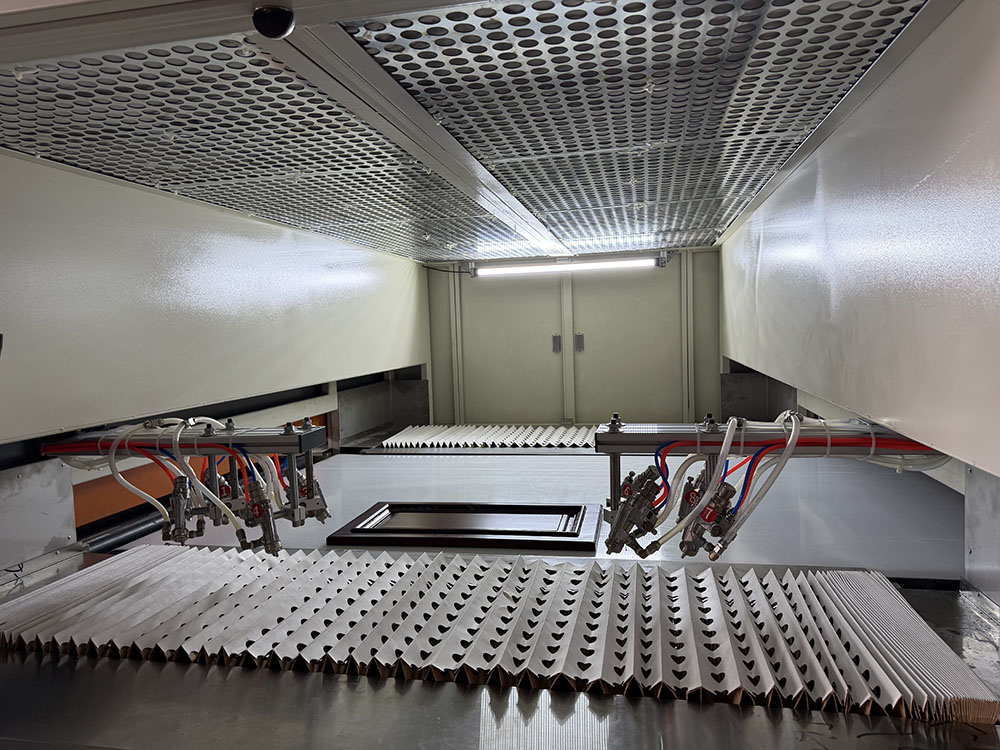
Linear spray painting systems represent the most common type of skirting board painting machine, featuring spray guns mounted in enclosed booths through which skirting board profiles pass on conveyor belts or roller transport systems at controlled speeds. These machines utilize strategically arranged arrays of fixed spray guns and high-speed conveyors to deliver consistent, full-coverage finishing for linear products such as wood moldings, profiles, and trim pieces. The systems typically accommodate profiles up to 300 millimeters in width and can be equipped with multiple spray guns on one or two circuits to coat different surfaces simultaneously. Modern linear systems incorporate automatic profile detection that activates spray guns only when workpieces are present in the spray zone, optimizing material usage and reducing waste significantly. The straightforward design and operation make linear spray machines ideal for high-volume production of standard skirting boards, door frames, window casings, and architectural trim pieces where consistent quality and efficiency drive profitability.
Vacuum coating systems represent advanced technology for skirting board finishing, employing sealed vacuum chambers that generate paint mist and use vacuum suction to draw coating material uniformly onto all exposed surfaces including top, bottom, and side faces in single passes. These systems operate through continuous, fully automated processes where linear profiles are placed onto conveyor belts and transported into sealed vacuum coating chambers at controlled speeds ranging from 0.5 to 40 meters per minute. High-pressure atomization pumps paint from storage tanks to spray heads where it is atomized into fine mist by high-pressure air or hydraulic pressure. Inside vacuum chambers, atomized paint is uniformly drawn onto all exposed surfaces including top, bottom, and side faces, ensuring complete coverage of grooves, recesses, and profiles without runs or misses. Excess paint mist is carried by vacuum airflow to recovery units where it is condensed, filtered, and returned to storage tanks for immediate reuse, creating closed-loop systems that minimize VOC emissions, reduce material waste, and keep workshops clean. Vacuum coating technology offers near 100 percent transfer efficiency compared to 60 to 70 percent for manual or linear spraying, with operating speeds of 60 to 80 meters per minute compared to 20 to 40 meters per minute for conventional spray lines.
Reciprocating spray machines feature spray guns mounted on carriages that move back and forth across the width of conveyor systems, applying coating material as skirting boards pass underneath in controlled, repetitive motion. These systems excel at high-volume production of flat panels, standardized components, and linear workpieces where consistent spray distance and angle can be maintained throughout the coating cycle. The straightforward mechanical design offers excellent reliability, simple operation, and lower initial investment compared to more complex vacuum systems. Reciprocating machines are particularly effective for skirting boards, door frames, window casings, blinds, PVC profiles, and plastic-steel profiles requiring uniform coating coverage. Modern reciprocating systems incorporate automatic profile detection that activates spray guns only when workpieces are present, optimizing material usage and reducing waste while maintaining the speed advantages that make reciprocating systems attractive for high-volume standardized production environments where cost-effectiveness matters and product geometries remain relatively consistent.
Multi-gun profile spraying systems provide advanced capabilities for coating skirting boards and mouldings with complex geometries including decorative profiles, fluted designs, and ornate details. These systems utilize multiple spray guns positioned at different angles to coat various surfaces simultaneously, ensuring complete coverage of complex profile geometries in single automated cycles. The PROFISPRAYER gs4 and similar automatic sprayers are used to spray stain, primer and top coat on profiles, skirting boards, strips, frames and small panels with uniform quality and efficiency. Multiple low-pressure guns arranged strategically around profile paths enable comprehensive coverage of raised details, recessed grooves, and decorative elements that challenge simpler spraying methods. These systems are particularly valuable for manufacturers producing decorative skirting boards, crown mouldings, and architectural trim where complex geometries require multi-angle spray coverage to achieve uniform finishes without missed areas or excessive buildup on raised surfaces.
Conveyor and transport systems serve as the foundation of skirting board painting machines, responsible for moving profiles through coating zones at controlled speeds while maintaining proper orientation and spacing for consistent application. Belt conveyors with high abrasion and chemical resistance provide reliable transport for flat and linear profiles, while roller conveyors accommodate heavier or irregularly shaped workpieces. Variable speed drives allow operators to adjust conveyor speed based on profile geometry, coating type, and desired film thickness, typically ranging from 10 to 150 meters per minute for optimal coverage. Advanced systems incorporate automatic profile detection sensors that activate spray guns or coating applicators only when workpieces are present, optimizing material usage and reducing waste. Some machines feature accumulating conveyors that enable continuous operation even when loading or unloading occurs intermittently, maximizing throughput in production environments. Proper conveyor design ensures smooth, consistent profile movement without vibration or misalignment that could affect coating quality.
Spray gun assemblies in skirting board painting machines are specifically configured for linear profile coating, often featuring multiple guns positioned to coat different surfaces simultaneously. High-volume low-pressure (HVLP) spray guns maximize transfer efficiency while minimizing overspray and material waste, making them popular for profile finishing applications. Nozzle selection depends on coating type, desired finish quality, and production requirements, with options ranging from conventional air spray to airless and electrostatic configurations. Advanced atomization systems break coating materials into fine, uniform particles that create smooth, consistent finishes on profile surfaces without orange peel or texture defects. Automatic gun cleaning mechanisms flush nozzles between cycles, preventing clogging and ensuring consistent spray patterns throughout extended production runs. Some systems feature automatic gun positioning that adjusts spray angles for different profile geometries, ensuring optimal coverage on raised details and recessed areas without manual adjustment.
Modern skirting board painting machines incorporate sophisticated detection and control systems that automatically identify incoming profiles and adjust coating parameters accordingly. Photoelectric sensors, laser scanners, or vision systems detect profile presence, dimensions, and position, triggering spray gun activation at precise moments to ensure complete coverage while minimizing overspray. Programmable logic controllers (PLCs) coordinate conveyor speed, spray gun activation, and coating flow rates based on pre-programmed recipes for different profile types. Human-machine interfaces with color touchscreen displays allow operators to set parameters, monitor system performance, and quickly changeover between different profile geometries by recalling stored recipes. Advanced systems incorporate diagnostic functions that monitor equipment performance, predict maintenance requirements, and alert operators to potential issues before they cause production disruptions, maximizing uptime and productivity. Proper control system calibration ensures sensors respond accurately and controllers activate systems at appropriate thresholds for optimal coating quality.
Vacuum recovery and recycling systems represent the heart of vacuum coating technology, capturing excess paint mist and returning it to storage tanks for immediate reuse in closed-loop operations. Powerful vacuum systems draw excess paint mist from coating chambers to recovery units where it is condensed, filtered, and returned to storage tanks through automated pumping systems. This closed-loop recycling achieves near 100 percent paint utilization compared to 60 to 70 percent for conventional spraying, dramatically reducing material costs and environmental impact. Filtration systems remove contaminants and maintain paint quality throughout recycling cycles, ensuring consistent coating performance. Vacuum systems also capture VOC emissions, reducing environmental impact and improving workplace air quality. The combination of material savings, environmental benefits, and improved workplace conditions makes vacuum recovery systems increasingly attractive for skirting board manufacturers seeking sustainable, cost-effective finishing solutions.
Architectural millwork and moulding production represents the primary application for skirting board painting machines, coating solid wood or composite skirting boards, crown mouldings, door and window casings, wall paneling strips, and other decorative trim with protective and aesthetic finishes. These applications often involve long production runs of standard profiles where consistency and efficiency drive profitability. The ability to handle various profile sizes, geometries, and wood species without extensive setup changes makes automatic systems ideal for manufacturers producing diverse architectural product ranges. Water-based and solvent-based paint compatibility enables manufacturers to meet various performance and environmental requirements for residential, commercial, and institutional applications. Vacuum coating systems excel at complex decorative profiles with deep grooves and raised details, ensuring complete coverage without missed areas or excessive buildup that challenges conventional spraying methods.
Door and window component manufacturers utilize skirting board painting machines for coating door frames, window casings, mullions, and related profiles with protective and aesthetic finishes. These applications often require durable coatings that withstand environmental exposure while maintaining appearance over extended service life. The ability to apply primers, sealers, and topcoats in consistent, controlled layers makes automatic machines suitable for complete finishing processes from initial sealing through final topcoating. High-volume door and window manufacturers often integrate automatic painting systems into complete finishing lines alongside sanding stations, drying tunnels, and material handling conveyors, achieving seamless production workflows from raw profiles to finished components ready for assembly. Consistent coating quality ensures proper adhesion, durability, and appearance that meets building code requirements and customer expectations for long-lasting performance.
PVC and composite profile manufacturers apply skirting board painting machines for coating plastic-steel profiles, WPC trim, vinyl mouldings, and synthetic architectural components with durable finishes that enhance appearance and protect against UV degradation. These applications often involve continuous production of standardized profiles where speed and consistency drive profitability. Automatic systems handle various coating types including specialized paints formulated for plastic substrates, enabling manufacturers to offer diverse color options and finishes that match or exceed natural wood appearance. The ability to coat PVC and composite materials without extensive surface preparation or priming simplifies production workflows and reduces costs compared to manual finishing methods. Consistent coating quality ensures proper adhesion to challenging plastic substrates that conventional paints struggle to bond with effectively.
Custom woodworking shops and specialty profile manufacturers utilize skirting board painting machines for coating unique mouldings, decorative trim, custom skirting boards, and one-of-a-kind architectural elements with finishes that enhance visual appeal while providing protective barriers against wear and environmental damage. These applications often involve short production runs of unique profiles requiring quick changeovers between different geometries and colors. Automatic systems enable custom woodworkers to offer extensive finish options while maintaining reasonable prices and fast turnaround times. The ability to apply consistent finishes on ornate carved profiles, simple flat boards, and everything between makes automated painting valuable for custom woodworking operations serving retail customers, contractors, and commercial clients requiring diverse finishing solutions. Reduced rework rates and consistent quality significantly improve profitability in competitive custom woodworking markets.
Flooring and wall panel manufacturers utilize skirting board painting machines for coating flooring strips, wall panels, baseboards, and related architectural components with protective and aesthetic finishes. These applications often involve long continuous runs where speed and consistency drive profitability. Automatic systems handle various coating types including UV-curable finishes that cure instantly under UV lamps, enabling immediate downstream processing and packaging. The ability to coat flooring and wall panel profiles continuously at high speeds makes automatic systems ideal for large-scale production where throughput and consistency determine profitability. Water-based and solvent-based paint compatibility enables manufacturers to meet various performance and environmental requirements for residential, commercial, and institutional applications where flooring and wall panels must withstand heavy use while maintaining appearance.
Skirting board painting machines deliver consistently high-quality finishes that manual methods cannot match, with uniform coating thickness across entire profile surfaces including flat areas, edges, raised details, and recessed grooves. The precise control over spray gun position, speed, activation timing, and flow rate ensures complete coverage without runs, sags, or dry spots that plague manual applications. This consistency is particularly important for architectural components where appearance directly impacts product value and customer satisfaction, as visible coating defects significantly diminish perceived quality. Automated systems maintain these quality standards continuously throughout extended production runs without degradation from operator fatigue or skill variations, ensuring every profile meets the same high standards regardless of production volume or shift changes. Vacuum coating systems achieve particularly uniform results by drawing paint mist evenly onto all surfaces simultaneously, eliminating the variability inherent in manual or conventional spray application.
Automation dramatically increases production capacity compared to manual finishing methods, with skirting board painting machines operating continuously without breaks and maintaining consistent performance throughout multiple shifts. Processing speeds of 10 to 150 meters per minute enable high throughput while maintaining quality standards, allowing manufacturers to fulfill larger orders and respond more quickly to customer demands. Vacuum coating systems achieve even higher speeds of 60 to 80 meters per minute compared to 20 to 40 meters per minute for conventional spray lines, further amplifying productivity gains. Many facilities report production increases of 200 to 400 percent after implementing automatic skirting board painting systems. The elimination of manual handling between coating stages further reduces cycle time, while fixed cycle times enable reliable production planning and forecasting without factoring in human variability. Continuous operation accelerates production cycles and improves overall equipment effectiveness, enabling manufacturers to compete effectively in fast-paced building materials markets.
Automatic skirting board painting systems significantly reduce labor requirements compared to manual finishing operations, with a single operator often able to manage multiple automatic machines compared to several skilled painters required for equivalent manual production. This reduction in labor dependence also mitigates challenges associated with skilled labor shortages, which increasingly affect woodworking and building materials manufacturing industries globally. The simplified operation of modern automatic machines means that less specialized training is required, further reducing labor costs and improving operational flexibility. Reduced labor costs combined with increased throughput substantially improve cost per profile and overall profitability, enabling manufacturers to offer competitive pricing while maintaining healthy margins in price-sensitive building materials markets. When analyzing operational expenditure, automated spraying systems typically offer return on investment within 8 to 14 months through labor savings alone, not counting material and quality improvements.
Automated skirting board painting optimizes coating transfer efficiency, meaning more sprayed material reaches the workpiece rather than being lost to overspray. Precise control over spray parameters, gun activation timing, and profile detection reduces material consumption by 30 to 50 percent compared to manual spraying. Vacuum coating systems achieve near 100 percent transfer efficiency compared to 60 to 70 percent for conventional spraying, representing dramatic material savings. This efficiency translates directly to lower material costs and reduced environmental impact through decreased VOC emissions and waste generation. On production lines consuming significant volumes of paint and coating materials annually, these savings quickly justify equipment investment through material cost reduction alone. The reduction in overspray also decreases booth filter loading, waste disposal costs, and VOC emissions, creating multiple layers of cost reduction that compound over equipment lifecycles while supporting environmental sustainability goals.
Skirting board painting machines create safer work environments by reducing operator exposure to coating materials, solvents, and airborne particulates. Enclosed spray cabins with integrated filtration systems capture overspray and volatile organic compounds, protecting workers and surrounding environments. Vacuum spraying technology further enhances environmental performance by containing overspray within the machine and recovering excess material for filtration or recycling. These features help manufacturers comply with increasingly stringent occupational health and environmental regulations while reducing liability and insurance costs. Reduced VOC emissions and material waste also support corporate sustainability initiatives and environmental responsibility goals, increasingly important to customers and stakeholders evaluating supplier environmental performance. The combination of improved worker safety, environmental compliance, and material efficiency makes automated skirting board painting an attractive investment for forward-thinking manufacturers.
Successful skirting board painting machine implementation requires careful system selection and sizing to match production requirements, profile geometries, and budget constraints. Linear spray systems suit standard profiles with simple geometries where cost-effectiveness matters most. Vacuum coating systems excel at complex decorative profiles with deep grooves and raised details where complete coverage is critical. Reciprocating systems offer middle ground with good coverage and moderate investment for mixed profile production. Evaluating typical profile widths, thicknesses, and production volumes ensures proper system sizing that avoids undersized equipment that bottlenecks production or oversized systems that waste capital and operating costs. Water quality assessment identifies filtration requirements to prevent nozzle clogging from minerals or debris. Control system selection should match operational requirements including timer-based scheduling, sensor-based automation, or remote monitoring capabilities. Professional system selection ensures optimal performance, efficiency, and return on investment.
Proper installation and commissioning ensures skirting board painting machines perform as designed and deliver expected benefits. Conveyor installation should follow manufacturer specifications for support spacing, alignment, and tension to ensure smooth profile movement without vibration or misalignment. Spray gun mounting at correct heights and orientations ensures proper coverage and minimizes overspray. Electrical connections must comply with applicable codes and standards for industrial equipment and hazardous locations where applicable. System flushing before operation removes installation debris that could clog nozzles or damage pumps. Pressure testing verifies system integrity and identifies leaks before commissioning. Nozzle flow rate verification ensures balanced distribution and proper atomization across all circuits. Control system calibration ensures sensors respond accurately and controllers activate systems at appropriate thresholds. Proper commissioning establishes baseline performance for future comparison and troubleshooting.
Regular maintenance and proper operation maximize skirting board painting machine performance, efficiency, and service life. Nozzle inspection and cleaning prevents clogging from mineral deposits, sediments, or dried paint that degrades spray quality and distribution. Filter replacement maintains paint quality and protects pumps and nozzles from contamination damage. Pump maintenance including oil changes, seal inspection, and vibration monitoring prevents premature failures and maintains efficiency. Conveyor maintenance including belt tensioning, roller lubrication, and drive inspection ensures smooth profile movement. Control system verification ensures sensors remain calibrated and controllers function properly. Vacuum system maintenance including filter replacement and pump inspection maintains recovery efficiency and prevents contamination. Proper maintenance combined with correct operation ensures reliable performance, minimizes downtime, and extends equipment service life while maintaining optimal coating quality for architectural applications.
Successful skirting board painting machine implementation requires appropriate training for operators, maintenance personnel, and production supervisors. Training programs should cover machine operation, parameter adjustment, troubleshooting, spray gun maintenance, and safety procedures. Many equipment suppliers offer comprehensive training including on-site installation support, operator certification programs, and ongoing technical assistance. Investing in thorough training ensures that manufacturers realize the full benefits of their skirting board painting equipment while minimizing operational disruptions and quality issues. Advanced control systems and diagnostic capabilities require specialized training to fully exploit. The transition from manual to automated operations requires workforce development that preserves institutional knowledge about coating processes and quality requirements while embracing new technologies and methodologies that improve efficiency and consistency.
Skirting board painting machines represent mature and highly effective technology for architectural millwork, moulding production, door and window component manufacturing, and building materials finishing. Their ability to deliver superior coating quality, increased production efficiency, reduced labor and material costs, enhanced workplace safety, and improved environmental performance makes automated skirting board painting invaluable for manufacturers seeking to improve competitiveness and profitability. As technology continues to advance with enhanced sensing, adaptive control, and connectivity features, skirting board painting systems will become even more capable and efficient, ensuring their continued importance in the evolving landscape of automated finishing technology for architectural components and building materials.
Q1: What types of profiles can skirting board painting machines handle?
A1: Skirting board painting machines handle diverse linear profiles including skirting boards, baseboards, crown mouldings, door frames, window casings, wall paneling strips, decorative trim, PVC profiles, WPC trim, flooring strips, and architectural mouldings. Different machine types suit different geometries: linear spray systems excel at standard profiles up to 300mm wide, vacuum coating handles complex decorative profiles with deep grooves and raised details effectively, while reciprocating systems work well for mixed profile production. Modern systems accommodate various profile sizes, thicknesses, and materials including solid wood, engineered boards, plastic, and composites.
Q2: How much can automated skirting board painting reduce material consumption?
A2: Automated skirting board painting machines typically reduce coating material consumption by 30 to 50 percent compared to manual spraying through precise control over spray parameters, automatic profile detection, and optimized gun activation timing. Vacuum coating systems can achieve near 100 percent transfer efficiency compared to 60 to 70 percent for conventional spraying, representing dramatic material savings. This efficiency translates to substantial annual material cost savings that often justify equipment investment within 8 to 14 months through reduced paint purchases and waste disposal costs alone.
Q3: Can skirting board painting machines work with water-based and UV coatings?
A3: Yes, modern skirting board painting machines are fully compatible with water-based paints, solvent-based coatings, UV-curable finishes, stains, primers, sealers, and topcoats. Many systems are specifically designed to handle water-based materials' unique viscosity and drying characteristics, enabling environmentally responsible production while maintaining high-quality finishes. UV coating systems incorporate UV curing chambers that instantly cure coatings under ultraviolet lamps, enabling immediate downstream processing and packaging. This compatibility enables manufacturers to meet various performance and environmental requirements for diverse applications.
Q4: What maintenance is required for skirting board painting systems?
A4: Regular maintenance includes daily nozzle inspection and cleaning to prevent clogging, weekly filter replacement and conveyor inspection, monthly pump maintenance including oil changes and seal inspection, and periodic calibration of sensors and controls. Vacuum systems require regular filter replacement and pump inspection to maintain recovery efficiency. Modern systems with automatic cleaning functions and sealed components require less frequent maintenance but still benefit from preventive maintenance programs to maximize uptime and longevity. Operators require training in routine maintenance tasks to identify and address minor issues before they cause production disruptions.
Q5: How quickly can skirting board painting machines changeover between different profile types?
A5: Modern skirting board painting machines with recipe management functions can changeover between different profile types in 5 to 15 minutes by recalling stored parameters for each profile geometry. Advanced systems with automatic profile detection can handle mixed profile batches without manual changeover, further reducing downtime and enabling efficient small-batch production of diverse profile types. This flexibility enables manufacturers to offer extensive product catalogs and custom options without sacrificing production efficiency or quality consistency, supporting responsive customer service and diverse market demands.


