
Views: 287 Author: 广宇大 Publish Time: 2026-09-28 Origin: Site


Content Menu
● Understanding Automatic Spray Coating Machine Technology
>> What Is an Automatic Spray Coating Machine?
>> Core Components of Automatic Spray Coating Systems
● Types of Automatic Spray Coating Machine Configurations
>> Reciprocating Automatic Spray Coating Machines
>> Robotic Automatic Spray Coating Systems
>> Multi-Axis CNC Automatic Spray Coating Machines
>> Integrated Automatic Spray Coating Production Lines
● Automatic Spray Coating Machine vs Manual Spray: Comparative Analysis
>> Coating Quality and Consistency
>> Production Efficiency and Throughput
>> Material Utilization and Waste Reduction
>> Labor Requirements and Skill Levels
● Leading Automatic Spray Coating Machine Manufacturers and Suppliers
>> Shenzhen Xinqinfeng and Dongguan Geetech (China)
>> Hangzhou Color Powder Coating Equipment and Hangzhou Kafan Machinery (China)
>> HICAS Woodworking Machinery and Dezhou Aohai Coating Equipment (China)
>> Dubois Equipment and Tn Coating (USA)
● Key Selection Criteria for Automatic Spray Coating Machine Systems
>> Production Volume and Workpiece Geometry
>> Coating Material Compatibility and Application Requirements
>> Workpiece Dimensions and Tolerance Requirements
● Maintenance and Operational Best Practices
>> Daily Cleaning and Inspection Procedures
>> Scheduled Component Replacement
>> Preventive Maintenance and Calibration
>> What is the difference between reciprocating and robotic automatic spray coating machines?
>> How much coating material can be saved by using automatic spray coating versus manual spray?
>> Can automatic spray coating machines handle both water-based and solvent-borne coatings?
>> What maintenance is required for automatic spray coating machines?
>> How do you select the correct automatic spray coating machine for specific applications?
Modern furniture, door, cabinet, and architectural panel manufacturing demands flawless surface finishes, minimal material waste, and maximum production efficiency to remain competitive in global markets. An automatic spray coating machine has evolved from simple reciprocating spray guns and manual conveyor systems into sophisticated automated systems that integrate precision spray application, real-time process monitoring, robotic manipulation, and intelligent material handling specifically engineered for flat panels, three-dimensional components, and complex assemblies. This comprehensive guide explores leading automatic spray coating machine technologies, system configurations, and selection criteria that transform spray coating operations from labor-intensive bottlenecks into streamlined competitive advantages across furniture, flooring, door, cabinet, metal parts, plastic components, and architectural millwork manufacturing sectors.
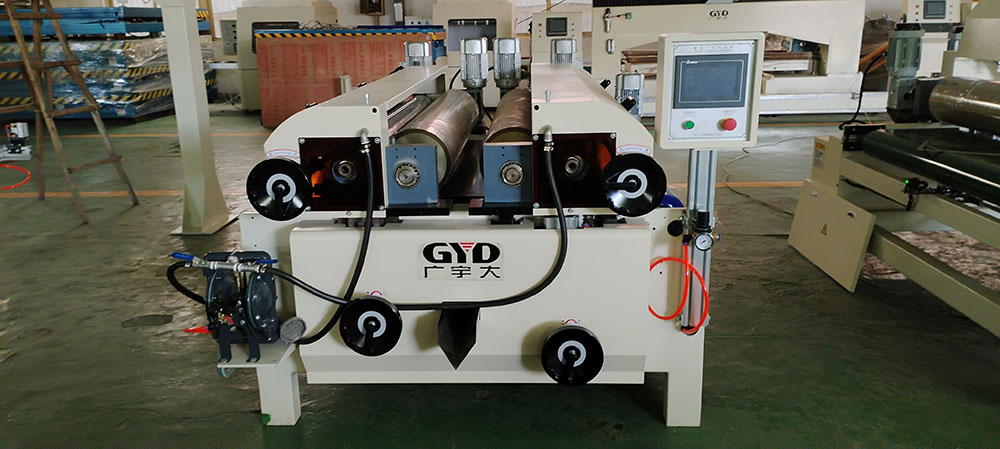
An automatic spray coating machine is an industrial coating application system specifically engineered to apply paints, primers, sealers, lacquers, UV coatings, and protective finishes onto workpieces using automated spray guns mounted on reciprocating mechanisms, robotic arms, or multi-axis manipulators with repeatable precision. Unlike manual spray coating that depends heavily on operator skill and consistency, automatic spray coating machines deliver uniform coating thickness, controlled spray patterns, and optimized material usage across production runs without fatigue-related quality degradation that plagues manual operations during long shifts.
These systems integrate precision spray guns including high-volume low-pressure, airless, air-assisted airless, and electrostatic spray technologies that atomize coatings into fine mists for uniform coverage across flat panels and three-dimensional components. Advanced automatic spray coating machine configurations feature programmable logic controllers, human-machine interfaces, servo-driven reciprocators or robotic manipulators, and real-time viscosity monitoring that maintain optimal application parameters throughout high-volume production cycles, enabling lights-out manufacturing in modern smart factories with minimal operator oversight while achieving coating thickness tolerances far superior to manual spray methods.
Industrial automatic spray coating machines consist of several integrated subsystems working in concert to achieve reliable high-quality finishes at production speeds optimized for diverse workpiece geometries. Spray gun assemblies include precision nozzles, fluid needles, and air caps that atomize coating materials into controlled spray patterns ranging from narrow jets for targeted application to wide fans for broad coverage across large panels and complex assemblies. Reciprocating mechanisms or robotic manipulators position spray guns along programmed paths, ensuring complete coverage without streaks, drips, or missed areas that compromise finish quality and require costly rework.
Fluid delivery systems employ pressure pots, gear pumps, diaphragm pumps, or peristaltic pumps that maintain consistent coating flow to spray nozzles at regulated pressures ranging from 2 to 10 bar depending on material viscosity and desired atomization quality. Conveyor systems transport workpieces through spray zones at controlled speeds ranging from 0.5 to 20 meters per minute depending on coating formulation, workpiece geometry, and desired film thickness, with photoelectric sensors or 3D optical scanning systems detecting workpiece dimensions to trigger automatic spray gun movement and coating application without manual intervention.
Reciprocating automatic spray coating machines represent the most widely deployed automatic spray coating configuration for flat panel and profile coating applications in furniture, cabinet, architectural millwork, and metal fabrication industries. These systems mount spray guns on linear tracks that move back and forth perpendicular to conveyor direction, creating overlapping spray patterns that eliminate banding and ensure uniform coverage across workpiece surfaces from edge to edge without manual touch-up.
Single-arm reciprocating machines suit low to medium volume production with working widths from 800 to 1,300 millimeters, while dual-arm configurations double throughput for high-volume furniture panel, cabinet door, and architectural cladding manufacturing where thousands of components flow through finishing lines daily. Servo-driven reciprocators adjust gun speed, stroke length, and pause positions dynamically to accommodate varying workpiece geometries without mechanical changeover, enabling rapid product transitions in high-mix production environments where door styles, panel sizes, and coating requirements change frequently throughout shifts.
The 2.2 kilowatt explosion proof automated spray painting machine delivers automated, high-precision coating for MDF and wood products with up to 40 percent paint savings compared to manual spray methods. Features include ISO and CE certifications, 1,300 millimeter working width, PLC control, and closed-loop filtration systems that maintain clean spray environment and consistent coating quality across extended production runs.
For complex three-dimensional workpieces requiring variable spray angles and standoff distances, robotic automatic spray coating systems offer unmatched flexibility in automotive, aerospace, furniture, and industrial component finishing. Six-axis articulated robots equipped with specialized spray guns navigate intricate geometries, maintaining optimal coating application parameters across curved surfaces, carved details, and assembled structures that challenge conventional reciprocating equipment limited to linear motion paths and fixed spray angles.
Robotic automatic spray coating machines integrate vision systems that scan workpieces before coating, automatically generating optimized spray paths that minimize overspray while ensuring complete coverage of all exposed surfaces including recessed areas, sharp edges, and complex contours that manual operators struggle to coat consistently. Collision avoidance algorithms prevent accidental contact between spray guns and workpieces, reducing downtime and maintenance costs in high-mix production environments where changeover frequency is high and manual programming would be prohibitively time-consuming for short production runs.
Cobot automatic robotic arm paint spraying machine systems with 10 kilogram payload capacity serve wall painting, furniture coating, and general industrial applications where collaborative robots work alongside human operators without safety fencing, enabling flexible deployment across multiple production cells and rapid reprogramming for new product introductions.
Multi-axis CNC automatic spray coating machines represent specialized configurations that combine reciprocating spray gun movement with multiple axes of workpiece manipulation, enabling complete coverage of complex geometries including raised panel doors, shaker styles with deep grooves, carved decorative elements, and assembled furniture components in single setup operations. These systems integrate servo-driven spray gun manipulators with rotary tables, tilt mechanisms, and linear axes that position workpieces at optimal angles for spray gun access to all surfaces.
The MDF panel CNC wood door painting system automatic spraying machine exemplifies this technology with multi-axis CNC control that automatically adjusts spray gun angle, standoff distance, and fan width based on door profile geometry detected by 3D scanning systems. Working widths from 1,300 to 2,500 millimeters accommodate large architectural doors and panels, while feeding speeds from 0.5 to 10 meters per minute suit diverse production volumes from custom door shops to high-volume architectural door manufacturers.
Fully integrated automatic spray coating production lines combine surface preparation, multi-stage spray application, flash-off zones, drying and curing tunnels, inspection, and stacking in one continuous flow that transforms raw substrates into finished, ready-to-assemble components with minimal manual handling. These complete installations suit mass production environments where parts move automatically from dust removal through spray application, flash-off, drying, curing, inspection, and stacking without intermediate storage or re-fixturing that introduces contamination risks and delays order fulfillment.
A typical integrated automatic spray coating production line for furniture panels follows process sequence including dust removal and surface cleaning, automatic spray primer application at 15 to 25 grams per square meter, flash-off zone for solvent evaporation, automatic spray topcoat application at 20 to 30 grams per square meter, IR or hot air drying tunnels for solvent evaporation, UV curing tunnels for instant polymerization of UV-curable coatings, cooling section, and final inspection before packaging and shipment. Daily production capacity reaches 2,000 large panels measuring 1.22 by 2.44 meters, achieving efficient production that justifies capital investment through dramatic labor savings and material efficiency improvements.
Automatic spray coating machines deliver uniform coating thickness with tolerances of plus or minus 5 microns across full workpiece surfaces, while manual spray coating produces highly variable thickness affected by gun distance, air pressure, traverse speed, and operator fatigue. The automatic spray coating machine adjusts spray and nozzle height and fluid volume as it coats, ensuring a higher-quality coating that is clean and consistent without the streaks, drips, and orange peel that plague manual operations especially during extended shifts when operator fatigue degrades performance.
Reciprocating automatic spray coating machines create overlapping spray patterns that eliminate banding and ensure uniform coverage across workpiece surfaces from edge to edge, while manual operators struggle to maintain consistent overlap and gun distance across large panels, resulting in visible banding, dry spots, and runs that require costly rework. Robotic automatic spray coating systems maintain optimal spray angles and standoff distances across complex three-dimensional geometries that manual operators cannot consistently achieve without extensive training and frequent quality inspections.
Automatic spray coating machines operate at production speeds from 0.5 to 20 meters per minute depending on configuration and coating requirements, significantly faster than manual spray operators who typically achieve 0.5 to 2 meters per minute due to fatigue, repositioning, and quality inspection requirements. Automatic spray coating machines can perform the same tasks as manual ones quicker, requiring less human intervention and monitoring, can spray various liquids and are programmable for different coating types, dramatically increasing production throughput.
Reciprocating automatic spray coating machines work at speeds between 5 to 20 meters per minute which means they can coat surfaces about five to ten times quicker compared to what workers do manually, dramatically increasing production throughput. Robotic automatic spray coating systems achieve similar throughput for complex three-dimensional components while eliminating the skilled labor shortage that constrains manual spray operations in many manufacturing regions.
Automatic spray coating machines achieve paint utilization rate of 70 to 90 percent with advanced systems reaching over 95 percent through precise gun triggering, consistent overlap patterns, and optimized spray parameters that minimize overspray and waste. Many companies prefer automated spray systems because they only use the necessary amount of coating and apply it evenly, reducing material costs and environmental impact compared to manual spray methods where overspray losses typically range from 30 to 50 percent.
Reciprocating automatic spray coating machines with closed-loop filtration and paint recovery systems capture and recycle overspray, further reducing waste and environmental impact. The 2.2 kilowatt explosion proof automated spray painting machine delivers up to 40 percent paint savings compared to manual spray methods through precise gun control, optimized spray patterns, and minimal overspray that eliminates waste and reduces VOC emissions.
Automatic spray coating machines require minimal operator intervention with PLC-controlled systems enabling lights-out manufacturing in modern smart factories, while manual spray coating depends on skilled operators who require extensive training and experience to achieve consistent quality. Automatic spray coating reduces reliance on skilled labor, enabling manufacturers to scale production without proportional increases in labor costs or quality risks from operator turnover and training gaps.
Robotic automatic spray coating systems with vision-based path generation eliminate manual programming requirements, enabling rapid product changeovers without skilled programmers that constrain manual spray operations in high-mix production environments. Collaborative robots work alongside human operators without safety fencing, enabling flexible deployment across multiple production cells and rapid reprogramming for new product introductions without extensive downtime.
Shenzhen Xinqinfeng Industrial Equipment manufactures automatic spray painting machines including MDF board furniture shoe heel automatic reciprocating spray paint machines with prices from 9,800 to 10,000 dollars per set, and automatic spray coating machines for plastic parts, UV coating, and paint spraying systems with prices from 9,800 to 10,000 dollars per set. The company's product portfolio includes linear spray paint machines, automatic spraying machine solutions for wooden panels, MDF sheets, ceramic mug production lines, and glass cups production lines with working widths from 600 to 1,300 millimeters and feeding speeds from 0.5 to 10 meters per minute.
Dongguan Geetech Electrical-Mechanical Equipment produces single-axis reciprocating automatic spray painting equipment and automatic spray painting robots used for flat spray painting with prices from 18,000 dollars per set. The company's automatic spray coating machines feature PLC control, servo-driven reciprocators, and closed-loop filtration systems that maintain clean spray environment and consistent coating quality across extended production runs.
Hangzhou Color Powder Coating Equipment manufactures COLO-2600D constant speed automatic powder coating spray gun reciprocators with prices from 2,150 to 2,350 dollars per set, and automatic powder coating paint reciprocators for aluminum profile, furniture, fence, and metal parts with prices from 45,000 to 49,000 dollars per set. The company's automatic coating reciprocators feature PLC control, remote monitoring, and predictive maintenance capabilities that minimize unplanned downtime and maximize production uptime.
Hangzhou Kafan Machinery produces automatic powder coating machines with electrostatic painting gun reciprocators and robots with prices from 1,480 to 2,180 dollars per piece. The company's automatic spray coating equipment features ISO and CE certifications, explosion-proof construction for solvent-based coatings, and closed-loop filtration systems that maintain clean spray environment and consistent coating quality.
HICAS Woodworking Machinery manufactures 2.2 kilowatt explosion proof automated spray painting machines that deliver automated, high-precision coating for MDF and wood products with up to 40 percent paint savings. Features include ISO and CE certifications, 1,300 millimeter working width, PLC control, and closed-loop filtration systems that maintain clean spray environment and consistent coating quality across extended production runs.
Dezhou Aohai Coating Equipment produces reciprocating automatic powder coating guns for electrostatic painting systems with prices from 800 to 850 dollars per piece, and automatic powder coating spray gun reciprocators with prices from 399 to 499 dollars per piece. The company's automatic spray coating equipment serves powder coating applications for furniture, metal parts, aluminum profiles, and architectural components where consistent coating quality and production efficiency are critical.
Dubois Equipment provides comprehensive guidance on automated spray coating machines, emphasizing benefits including improved productivity, reduced waste, and higher-quality coating through automatic adjustment of spray and nozzle height and fluid volume as the machine coats. The company's automated spray coating systems handle substrates up to 12 inches wide at 100 to 800 feet per minute line speeds, with spray widths up to 52 inches and line speeds up to 10 feet per minute for diverse production requirements.
Tn Coating manufactures innovative spray coating machines for precision coating applications including oscillating, rotary-elliptical machines, and spray booths. The company's automatic spray coaters work without much intervention from people through the use of advanced robotics and programmable settings, enabling uniform coats consistently for high-volume production environments where efficiency and repeatability are critical.
Matching automatic spray coating machine capacity to actual production volumes and workpiece complexity prevents both underutilization of capital equipment and production bottlenecks that delay order fulfillment. Low to medium volume operations processing under 500 panels or components daily benefit from single-arm reciprocating machines or compact robotic systems with manual loading and unloading stations positioned at ergonomic heights.
High-volume manufacturers handling thousands of components daily require dual-arm reciprocating configurations or integrated production lines with automated material handling, quick-change spray gun nozzles, and integrated drying and curing zones that minimize changeover downtime between product styles. Evaluate cycle times including loading, spray application, flash-off, drying, curing, cooling, and unloading phases to calculate realistic daily throughput under actual operating conditions rather than theoretical maximums.
Different coating chemistries demand specific spray gun technologies, fluid delivery pressures, and drying methods to achieve optimal results without incomplete cure, adhesion failures, or finish defects. Water-based coatings require stainless steel fluid paths, ceramic nozzles, and corrosion-resistant seals to prevent rust contamination during extended production runs, while solvent-borne systems need explosion-proof electrical components and adequate ventilation to meet occupational safety and environmental regulations.
UV-curable coatings necessitate spray guns with specialized nozzles that prevent premature curing inside fluid passages, along with integrated UV lamp arrays positioned immediately after spray zones for instant polymerization that enables immediate handling and packaging. Verify that candidate automatic spray coating machines accommodate your specific coating portfolio including primers, sealers, topcoats, and specialty coatings without requiring extensive reconfiguration when switching materials between production runs.
Furniture components, architectural panels, and industrial parts vary dramatically in dimensions and complexity, from small drawer fronts to large wardrobe panels exceeding 2,500 millimeters in length with raised profiles and moulded edges. Ensure that candidate automatic spray coating machines accommodate maximum workpiece dimensions with adequate clearance for spray gun travel, overspray containment, and conveyor tracking without edge contact that damages finishes or creates safety hazards for operators loading and unloading parts.
For shaped components such as raised panel doors, shaker styles with deep grooves, or carved decorative elements, prioritize robotic spray systems or multi-axis CNC configurations that adjust gun angle, standoff distance, and fan width dynamically across varying surface contours. Flat panel-only machines may achieve superior results on simple slab doors but struggle with profiled surfaces, potentially requiring manual touch-up that negates automation benefits and increases labor costs per finished unit.
Consistent daily cleaning prevents coating buildup in spray guns, fluid lines, filters, and recovery systems that degrades finish quality and increases unplanned downtime. Flush spray guns with appropriate solvents at shift end, removing nozzles, air caps, and fluid needles for thorough cleaning to prevent clogging from dried coating residue that alters spray patterns and creates streaks or dry spots on finished parts.
Inspect conveyor chains, drive motors, photoelectric sensors, reciprocating guides, and roller bearings for wear, contamination, or misalignment that could affect positioning accuracy and coating uniformity across workpiece surfaces. Visual inspection should identify buildup or debris that, if unclean, may hinder even application, with soft lint-free cloths used to wipe components to ensure no scratches or damage occurs during cleaning.
Premium automatic spray coating machine producers track component replacement in operating hours and square meters coated rather than calendar time because coating type, workpiece, and line speed determine wear rate. Spray gun nozzles, fluid needles, air caps, filters, and seals have defined service life based on operating hours and material compatibility, with replacement scheduled during planned downtime.
Document all component replacements and maintenance activities in computerized maintenance management systems linked to production records for traceability and warranty compliance. Preventive replacement scheduled before defects impact production avoids unplanned stoppages that delay customer orders and disrupt production schedules in high-volume furniture and architectural panel manufacturing environments.
Preventive maintenance programs implement scheduled inspections based on equipment manuals and operational hours to avoid unexpected downtime. Weekly maintenance includes checking motor load, lubricating bearings, and inspecting spray gun alignment to ensure proper spray pattern overlap and coating thickness control.
Monthly maintenance involves calibrating flow rate sensors, verifying fluid pressure against coating weight targets, checking conveyor speed calibration, and documenting all readings. Annual maintenance overhauls all mechanical systems, updates software, replaces worn components including seals and nozzles, and performs comprehensive system validation before resuming production.
Reciprocating automatic spray coating machines use linear tracks with spray guns moving in straight back-and-forth patterns, ideal for flat panels and simple profiles with minimal edge detail. Robotic automatic spray coating systems employ articulated arms that navigate complex three-dimensional paths, better suited for shaped components, carved details, and assembled structures requiring variable spray angles and standoff distances to achieve uniform coverage without manual touch-up.
Automatic spray coating typically reduces coating consumption by 30 to 50 percent compared to manual spray through precise gun triggering, consistent overlap patterns, and optimized spray parameters that minimize overspray. Advanced systems with closed-loop filtration and paint recovery achieve up to 40 percent paint savings compared to manual spray methods, dramatically reducing material costs and environmental impact.
Yes, most modern automatic spray coating machines accommodate multiple coating types including water-based, solvent-borne, UV-curable, and powder coatings with appropriate spray gun technologies and fluid delivery systems. Water-based coatings require stainless steel fluid paths and corrosion-resistant seals, while solvent-borne systems need explosion-proof electrical systems and enhanced ventilation.
Daily maintenance includes flushing spray guns, cleaning nozzles and air caps, wiping down conveyor systems, and checking fluid levels. Weekly tasks involve lubricating linear guides, verifying spray gun alignment, checking pressure calibration, and inspecting filters. Monthly maintenance calibrates sensors and verifies fluid pressure against coating weight targets.
Automatic spray coating machine selection balances production volume, workpiece geometry, coating requirements, and budget constraints. Reciprocating machines suit flat panels and simple profiles, robotic systems handle complex three-dimensional components, multi-axis CNC configurations serve raised panel doors and carved elements, and integrated production lines deliver maximum throughput for high-volume manufacturers.


