
Views: 239 Author: 广宇大 Publish Time: 2026-09-21 Origin: Site


Content Menu
● Understanding Automatic Sprayer Technology
>> What Is an Automatic Sprayer?
>> Core Components of Automated Spraying Systems
● Types of Automatic Sprayer Configurations
>> Reciprocating Spray Coating Machines
>> Robotic Spray Coating Systems
● Leading Automatic Sprayer Manufacturers
>> Qingdao Zhongfei Intelligent Technology
● Key Selection Criteria for Automatic Sprayer Systems
>> Production Volume and Application Requirements
>> Material Compatibility and Viscosity Range
>> Workpiece Geometry and Field Topography
● Maintenance and Operational Best Practices
>> Daily Cleaning and Preventive Maintenance Protocols
>> Optimizing Application Parameters for Quality and Efficiency
>> What is the difference between an automatic sprayer and a manual spray system?
>> How much material can be saved by using an automatic sprayer versus manual application?
>> What maintenance is required for automatic sprayer systems?
>> How long does it take to install and commission an automatic sprayer?
Modern industrial operations increasingly rely on automatic sprayer systems to achieve precision, efficiency, and consistency across diverse applications ranging from furniture coating to agricultural crop protection. These automated systems have revolutionized how manufacturers apply paints, lacquers, and protective coatings while transforming agricultural practices through drone-based pesticide and fertilizer application. This comprehensive guide explores the technology, applications, and selection criteria for automatic sprayer systems that drive productivity in manufacturing and farming operations.
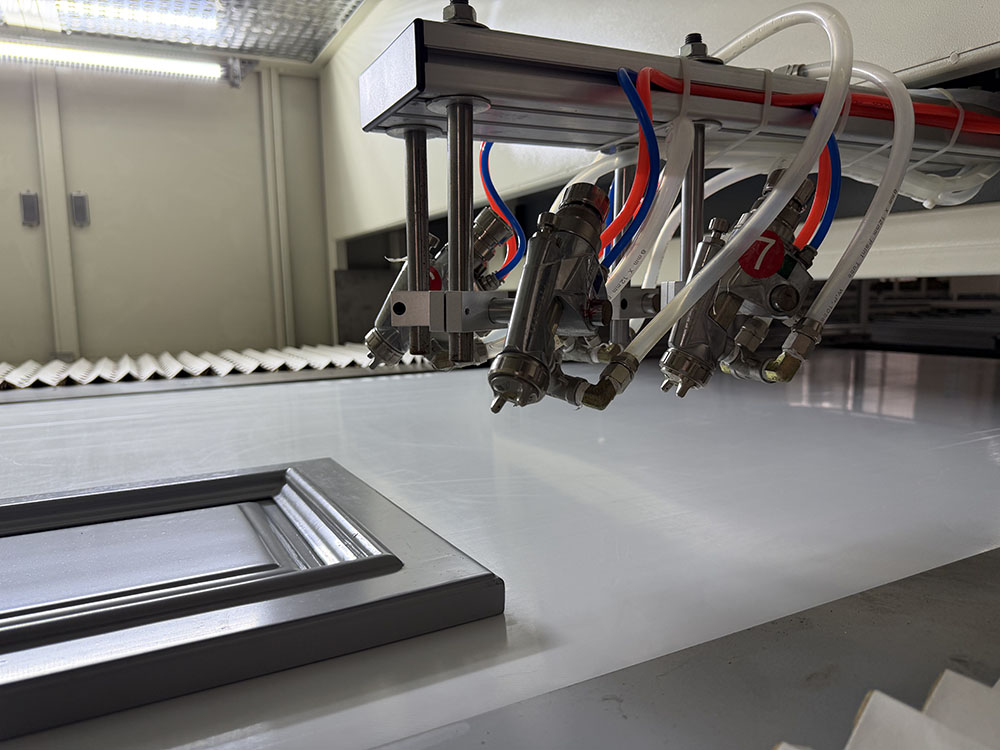
An automatic sprayer is a mechanized system designed to apply liquids such as paints, coatings, pesticides, or fertilizers with precision and repeatability without continuous human intervention. In industrial coating applications, automatic sprayers use programmable spray guns mounted on reciprocating tracks or robotic arms to deliver uniform finishes across furniture panels, cabinet doors, and architectural components. Agricultural automatic sprayers employ ground-based boom systems or aerial drone platforms to distribute crop protection chemicals and nutrients across vast farmland areas with GPS-guided accuracy.
These systems integrate flow control mechanisms, pressure regulation, and automated triggering that maintain consistent application rates regardless of operator fatigue or environmental variations. Advanced configurations feature real-time viscosity monitoring, adaptive spray pattern adjustment, and closed-loop feedback systems that optimize material usage while minimizing waste and environmental impact.
Industrial automatic sprayers consist of several integrated subsystems working in concert to achieve reliable performance. The spray gun assembly includes precision nozzles, fluid needles, and air caps that atomize liquids into controlled spray patterns ranging from narrow jets for targeted application to wide fans for broad coverage. Reciprocating mechanisms or robotic manipulators position spray guns along programmed paths, ensuring complete coverage without streaks, drips, or missed areas that compromise finish quality or crop protection effectiveness.
Fluid delivery systems employ diaphragm pumps, gear pumps, or peristaltic pumps that maintain consistent flow rates to spray nozzles at regulated pressures. Programmable logic controllers coordinate gun triggering, conveyor speeds or drone flight paths, and spray pattern adjustments based on workpiece dimensions detected by photoelectric sensors or GPS waypoint navigation, enabling lights-out production in modern smart factories and precision agriculture operations.
Reciprocating spray coating machines represent the most widely deployed automatic sprayer configuration for flat panel and profile coating applications in furniture, cabinet, and architectural woodwork manufacturing. These systems mount spray guns on linear tracks that move back and forth perpendicular to conveyor direction, creating overlapping spray patterns that eliminate banding and ensure uniform coverage across workpiece surfaces from edge to edge.
Single-arm reciprocating machines suit low to medium volume production with working widths from 800 to 1,300 millimeters, while dual-arm configurations double throughput for high-volume furniture panel, cabinet door, and architectural cladding manufacturing. Servo-driven reciprocators adjust gun speed, stroke length, and pause positions dynamically to accommodate varying workpiece geometries without mechanical changeover, enabling rapid product transitions in high-mix production environments.
For complex three-dimensional workpieces requiring variable spray angles and standoff distances, robotic spray coating systems offer unmatched flexibility in furniture, automotive, and aerospace component finishing. Six-axis articulated robots equipped with specialized spray guns navigate intricate geometries, maintaining optimal coating application parameters across curved surfaces, carved details, and assembled structures that challenge conventional reciprocating equipment limited to linear motion paths.
Robotic automatic sprayers integrate vision systems that scan workpieces before coating, automatically generating optimized spray paths that minimize overspray while ensuring complete coverage of all exposed surfaces. Collision avoidance algorithms prevent accidental contact between spray guns and workpieces, reducing downtime and maintenance costs in high-mix production environments where changeover frequency is high and manual programming would be prohibitively time-consuming.
Agricultural spray drones represent the fastest-growing automatic sprayer segment, transforming crop protection and nutrient management through autonomous aerial application systems. Models such as the DJI Agras T50 and Hongfei HF T10 feature GPS-guided flight control, obstacle avoidance radar, and variable-rate spray systems that adjust application rates based on crop density, terrain elevation, and prescription maps generated from satellite imagery and soil sampling data.
These automatic sprayer drones carry payloads ranging from 10 to 50 liters, covering 6 to 12 hectares per hour with spray widths of 3 to 7 meters depending on nozzle configuration and flight altitude. Swarming capabilities enable multiple drones to coordinate coverage of large fields simultaneously, reducing total application time and ensuring uniform chemical distribution across entire growing areas without overlap gaps that leave crops vulnerable to pest infestations or nutrient deficiencies.
ELASN manufactures reciprocating spray coating machines and automatic spray coating robots designed specifically for woodworking factories, furniture manufacturers, and custom wood product producers. Their reciprocating systems feature servo-controlled spray carriages with adjustable gun configurations that traverse above stable conveyor belts, ensuring uniform coating distribution across wood panels, MDF boards, cabinet doors, and solid wood components.
The company's robotic spray coating systems employ high-precision multi-axis robot arms that simulate human arm movements to achieve uniform coating on complex 3D surfaces, curved components, and irregular wooden parts that exceed the capabilities of flat-panel reciprocating equipment. Application materials include paint, primer, lacquer, and protective coatings suitable for doors, cabinet boards, furniture parts, and customized decorative pieces requiring consistent finish quality across complex geometries.
IMLUCHY produces comprehensive automatic spraying systems and spray painting lines serving automobiles, furniture, hardware, plastics, wood, toys, glass, ceramics, and handicraft industries. Their reciprocating spray painting machines integrate intelligent control systems that automatically regulate spraying stroke, speed, and paint flow based on real-time production requirements and workpiece dimensions detected by photoelectric sensors.
The company's automatic sprayer designs emphasize environmental protection through enclosed spray chambers with negative pressure ventilation, fast-drying configurations with integrated IR or UV curing, and automatic temperature control that maintains optimal coating viscosity throughout production runs. These hands-off automation features ensure consistent film thickness across batches, reduce operator error, and dramatically lower labor costs for high-volume industrial coating lines operating multiple shifts daily.
DJI Agriculture leads the agricultural automatic sprayer drone market with models such as the Agras T50 and T25 that combine precision spraying with granular fertilizer and seed spreading capabilities. The T50 features a 40-liter liquid tank and 16-liter spreader tank with dual-atomizing spray systems that achieve 40 kilograms per minute spreading rates across 7-meter widths for comprehensive crop nutrition management.
These automatic sprayer drones incorporate omnidirectional obstacle avoidance radar, terrain-following flight control, and real-time monitoring systems that transmit application data to cloud-based farm management platforms. Swarm operation support enables coordinated multi-drone missions across large planting bases, improving field coverage uniformity while reducing labor pressure compared to manual knapsack spraying or ground-based boom sprayers that compact soil and damage crops during operation.
Qingdao Zhongfei Intelligent Technology manufactures FPV GPS agriculture pesticide spraying drones equipped with thermal cameras for precision crop health monitoring and targeted pesticide application. Their sprayer drones feature three flight modes including manual, intelligent, and fully automatic operation for flexible deployment across diverse farming scenarios from small family plots to large commercial agricultural enterprises.
Constructed from aviation-grade carbon fiber and aluminum alloys, these automatic sprayers withstand harsh field conditions while maintaining precise flight stability in windy environments that challenge lighter consumer drone platforms. Pump-based spray systems deliver consistent droplet sizes across variable flight speeds, ensuring uniform chemical coverage without runoff or drift that wastes expensive crop protection products and risks environmental contamination of adjacent properties.
Matching automatic sprayer capacity to actual production volumes or field sizes prevents both underutilization of capital equipment and operational bottlenecks that delay order fulfillment or miss critical pest control windows. Low to medium volume furniture operations processing under 500 panels daily benefit from single-arm reciprocating machines with manual loading and unloading stations positioned at ergonomic heights to reduce worker fatigue.
Large-scale agricultural operations managing hundreds of hectares require high-capacity drone swarms or self-propelled boom sprayers with tank capacities exceeding 1,000 liters to minimize refill downtime during peak application periods. Evaluate cycle times including loading, spraying, flash-off or field transit, and unloading phases to calculate realistic daily throughput under actual operating conditions rather than theoretical maximums that ignore real-world constraints.
Different coating chemistries and agricultural formulations demand specific spray gun technologies, fluid delivery pressures, and atomization methods to achieve optimal results without clogging, sagging, or uneven distribution that compromises performance. Water-based coatings require stainless steel fluid paths, ceramic nozzles, and corrosion-resistant seals to prevent rust contamination during extended production runs, while solvent-borne systems need explosion-proof electrical components and adequate ventilation to meet occupational safety regulations.
Agricultural automatic sprayers must accommodate suspension concentrates, emulsifiable concentrates, and granular formulations without clogging nozzles or damaging pump components through abrasive wear. Variable-rate application systems adjust flow rates dynamically based on GPS position and prescription maps, enabling site-specific nutrient management that optimizes crop yields while minimizing fertilizer costs and environmental runoff into waterways.
Furniture components, architectural panels, and industrial parts vary dramatically in dimensions and complexity, from small hardware brackets to large wardrobe panels exceeding two meters in length with raised profiles and moulded edges. Ensure that candidate automatic sprayers accommodate maximum workpiece dimensions with adequate clearance for spray gun travel, overspray containment, and conveyor tracking without edge contact that damages finishes or creates safety hazards.
Agricultural fields present varying topography including slopes, terraces, and irregular boundaries that challenge conventional ground-based sprayers limited to flat terrain operation. Aerial spray drones navigate complex field shapes and elevation changes without soil compaction or crop damage, accessing terraced rice paddies, steep orchard slopes, and fragmented plots that mechanized ground equipment cannot reach effectively without risking operator safety and equipment stability on challenging terrain.
Consistent daily cleaning prevents coating buildup or chemical residue accumulation in spray guns, fluid lines, filters, and recovery systems that degrades performance and increases unplanned downtime. Flush spray guns with appropriate solvents or clean water at shift end, removing nozzles, air caps, and fluid needles for thorough cleaning to prevent clogging from dried material that alters spray patterns and application rates.
Inspect conveyor chains, drive motors, photoelectric sensors, reciprocating guides, and drone propulsion systems for wear, contamination, or misalignment that could affect positioning accuracy and coating uniformity or flight stability. Weekly preventive maintenance should include lubrication of linear guides with manufacturer-specified greases, verification of spray gun alignment using laser tools, calibration of flow meters against certified standards, and battery health checks for drone platforms to prevent mid-flight power failures.
Achieving optimal coating quality or crop protection effectiveness while minimizing material consumption requires careful balancing of spray gun air pressure, fan width adjustment, fluid flow rate, gun traverse speed or drone flight velocity, and standoff distance from target surfaces. Start with manufacturer-recommended baseline settings for your specific coating type or agricultural formulation and substrate or crop canopy density, then conduct systematic test applications on sample panels or field strips to evaluate coverage uniformity, droplet size distribution, and penetration into target zones.
Use wet film thickness gauges during coating setup or water-sensitive paper cards in agricultural applications to verify that applied materials meet specification requirements before full-scale production or field treatment, preventing costly rework from under or over-application. Document successful parameter combinations for each material type and workpiece geometry or crop variety, creating standardized setup sheets and flight plans that reduce changeover times and ensure consistent results across shifts, operators, and production facilities or farming seasons.
An automatic sprayer uses mechanized spray guns mounted on reciprocating tracks, robotic arms, or drone platforms that follow programmed paths with repeatable precision, eliminating operator fatigue and variability between applications. Manual spray systems depend on human skill for consistent gun distance, angle, and traverse speed or walking pace, resulting in greater film thickness variation, uneven chemical distribution, and higher training requirements for acceptable quality results.
Automatic sprayers typically reduce material consumption by 20 to 40 percent compared to manual spraying through precise gun triggering, consistent overlap patterns, and optimized application parameters that minimize overspray and drift. Integrated overspray recovery systems in industrial coating applications further reduce waste by capturing and filtering excess material for proper disposal or recycling in compliance with environmental regulations, while agricultural drones reduce chemical usage through targeted application only where needed based on crop scouting data.
Yes, most modern automatic sprayers accommodate multiple material types with appropriate component configurations and material selections that resist chemical attack and corrosion. Water-based coatings require stainless steel fluid paths and corrosion-resistant seals, while solvent-borne systems need explosion-proof electrical systems and enhanced ventilation. Agricultural automatic sprayers handle suspension concentrates, emulsifiable concentrates, and granular formulations with abrasion-resistant pump components and self-cleaning nozzle designs that prevent clogging from suspended particles or crystallized residues.
Daily maintenance includes flushing spray guns, cleaning nozzles and air caps, wiping down conveyor systems or drone frames, and checking fluid levels in pressure pots, supply tanks, or spray reservoirs. Weekly tasks involve lubricating linear guides and reciprocating mechanisms, verifying spray gun alignment and nozzle wear, checking pressure regulator calibration, and inspecting drone propellers and motor bearings for cracks or imbalance. Monthly inspections should cover overspray recovery systems, electrical connections, safety interlocks, conveyor drive components, and drone battery health to identify wear before failure causes production stoppages or in-flight emergencies.
Installation and commissioning timelines vary by system complexity and site preparation, typically ranging from two to eight weeks for industrial coating lines and one to three days for agricultural spray drones requiring minimal setup. Simple reciprocating machines may be operational within days after delivery if utilities and foundations are ready, while complete turnkey coating lines with conveyor integration, curing systems, and material handling automation require extended commissioning periods including operator training, production trials, and process optimization to achieve target quality and throughput levels. Agricultural drones arrive ready-to-fly with pre-configured flight control systems requiring only battery charging, tank filling, and mission planning before first autonomous operation.


