
Views: 265 Author: 广宇大 Publish Time: 2026-09-21 Origin: Site


Content Menu
● Understanding Cabinet Door Painting System Technology
>> What Is a Cabinet Door Painting System?
>> Core Components of Automated Cabinet Door Finishing Lines
● Types of Cabinet Door Painting System Configurations
>> Reciprocating Spray Painting Machines
>> Five-Axis CNC Spray Painting Systems
>> Hybrid Flat-Line Spray Systems
● Leading Cabinet Door Painting System Manufacturers
● Key Selection Criteria for Cabinet Door Painting Systems
>> Production Volume and Door Style Mix
>> Coating Material Compatibility and Curing Requirements
>> Door Geometry and Size Constraints
● Maintenance and Operational Best Practices
>> Daily Cleaning and Preventive Maintenance Protocols
>> Optimizing Spray Parameters for Quality and Efficiency
>> Can cabinet door painting systems handle both water-based and solvent-borne coatings?
>> What maintenance is required for cabinet door painting systems?
>> How long does it take to install and commission a cabinet door painting system?
Modern cabinet manufacturing demands flawless paint finishes, rapid throughput, and minimal material waste to remain competitive in crowded markets. A cabinet door painting system has become essential equipment for kitchen cabinet manufacturers, furniture producers, and architectural millwork shops seeking to replace manual spraying with automated precision. This comprehensive guide explores leading cabinet door painting system technologies, configuration options, and selection criteria that transform finishing operations from labor-intensive bottlenecks into streamlined competitive advantages.
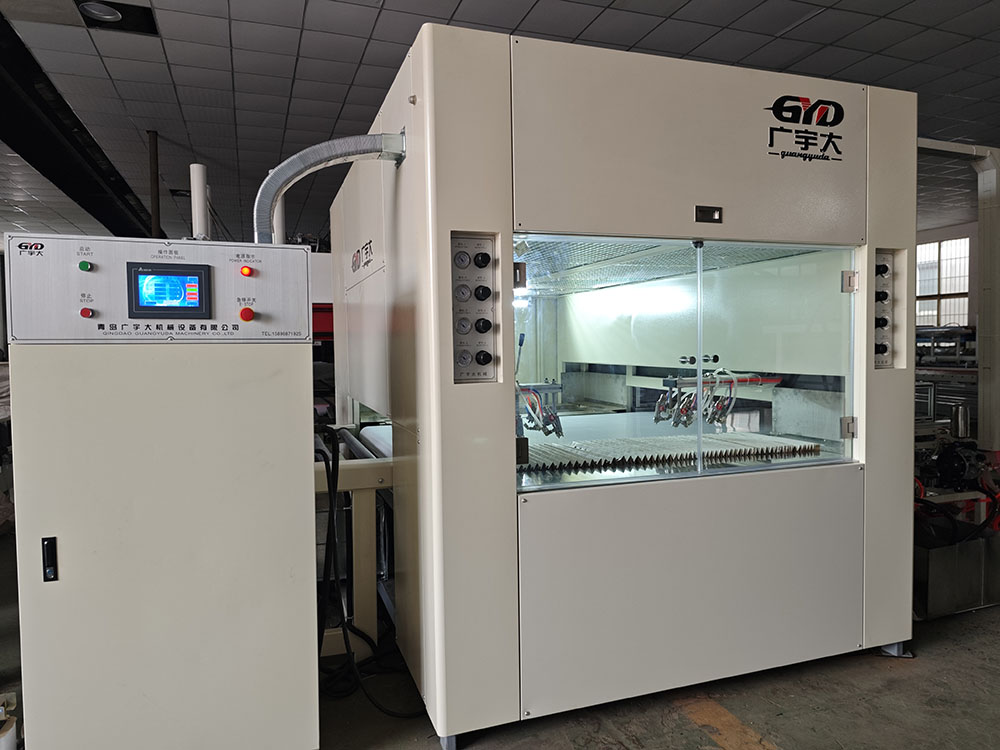
A cabinet door painting system is an integrated automated coating line specifically engineered to apply primer, sealer, stain, and topcoat finishes to kitchen cabinet doors, furniture panels, and architectural woodwork components with repeatable quality and minimal manual intervention. Unlike generic spray booths designed for varied workpieces, cabinet door painting systems incorporate specialized conveying mechanisms, spray gun configurations, and curing arrangements optimized for the dimensions, geometries, and production volumes typical of cabinet door manufacturing.
These systems integrate reciprocating spray arms, multi-axis robotic manipulators, or hybrid flat-line configurations that navigate raised panels, shaker profiles, slab doors, and moulded edges without manual repositioning. Advanced cabinet door painting systems feature automatic size reading, intelligent spray path generation, and quick-change fixture systems that accommodate door thicknesses from 15 to 50 millimeters and widths up to 600 millimeters without time-consuming mechanical adjustments between production runs.
Industrial cabinet door painting systems consist of several integrated subsystems working in concert to achieve reliable high-quality finishes. The conveying system employs chain-on-edge conveyors, paper conveyor belts, or overhead monorail tracks that transport doors through spray zones at controlled speeds ranging from 2 to 15 meters per minute depending on coating requirements and cure times. Rotary carousels or indexing tables position doors vertically or horizontally for optimal spray gun access to faces, edges, and profiles without shadowing or missed areas.
Reciprocating spray arms mounted on linear tracks move spray guns in synchronized patterns perpendicular to conveyor direction, creating overlapping spray fans that eliminate streaks and ensure uniform film thickness across entire door surfaces. Programmable logic controllers coordinate gun triggering, conveyor indexing, carousel rotation, and spray pattern adjustments based on door dimensions detected by photoelectric sensors or 3D optical scanning systems, enabling lights-out production in modern smart factories with minimal operator oversight.
Reciprocating spray painting machines represent the most widely deployed cabinet door painting system configuration for medium to high-volume kitchen cabinet production. These systems feature one or two spray arms equipped with four to eight spray guns that traverse above or beside conveyor paths, applying coatings to door faces and edges in continuous pass-through operation. Single-arm reciprocators suit production volumes up to 300 doors per shift, while twin-arm configurations double throughput for high-volume manufacturers producing thousands of doors daily.
Servo-driven reciprocating mechanisms adjust gun speed, stroke length, and pause positions dynamically to accommodate varying door profiles from flat slab designs to complex raised panel and shaker styles without mechanical changeover. Large filtration systems with double-stage filtering maintain clean spray environments that prevent dust nibs and contamination from settling on wet coatings, reducing rework rates and ensuring consistent gloss levels across production batches.
For cabinet doors with complex three-dimensional geometries including carved details, moulded edges, and assembled frame-and-panel constructions, five-axis CNC spray painting systems offer unmatched flexibility and precision. These cabinet door painting systems employ intelligent five-axis spray painting mechanisms that mimic human arm movements, cooperating with automatic rotating and turnover working tables that present every door surface to spray guns at optimal angles and standoff distances.
Pneumatic rotary double-positioning feeding and automatic turnover mechanisms enable five-axis systems to paint all six sides of cabinet doors in single setups, eliminating secondary operations that slow conventional lines. Production capacities reach 150 to 250 wood doors per eight-hour shift with only two operators required for loading and unloading, dramatically reducing labor costs while achieving finish quality superior to manual spraying that varies with operator skill and fatigue levels throughout shifts.
Hybrid flat-line spray systems combine reciprocating spray technology with continuous conveyor operation, creating compact cabinet door painting systems ideal for shops entering automatic finishing for the first time or established manufacturers seeking space-efficient solutions. Models such as the SPM1300H feature twin-arm reciprocating sprayers with three independent high-pressure fluid circuits that handle water-based or solvent-based coatings including primers, sealers, and topcoats without cross-contamination between material types.
These cabinet door painting systems configure for simultaneous surface and edge coverage, eliminating the need for separate edge banding or manual touch-up operations that slow production flow. Feed speeds adjust from 3 to 12 meters per minute to match coating requirements and cure times, enabling manufacturers to optimize throughput without sacrificing finish quality or forcing premature handling that damages wet coatings.
GODN Finishing specializes in cabinet door painting systems designed for medium production volumes and just-in-time manufacturing environments where flexibility and rapid changeover are critical. Their SPD2500 series cabinet door painting systems accommodate maximum working dimensions of 2,500 by 1,300 millimeters with door thicknesses up to 150 millimeters and weights to 50 kilograms, covering the full range of kitchen cabinet, wardrobe, and furniture door sizes.
The company's cabinet door painting systems feature two reciprocating spray arms with up to four plus four spray guns per arm, delivering high-precision coating application with gun movement speeds reaching 100 meters per minute. Working efficiency ranges from 1.5 to 3 minutes per working area with carousel rotation times of only 10 seconds, enabling rapid indexing between doors that maximizes equipment utilization in high-mix production environments where door styles and dimensions change frequently throughout shifts.
IMLUCHY manufactures customized cabinet door spraying machines and complete automatic spraying lines serving furniture, kitchen cabinet, architectural millwork, and industrial wood product manufacturers. Their smart 3D optical scanning systems enable zero programming operation where operators simply load doors and initiate spray cycles, with the cabinet door painting system automatically scanning door geometries and generating optimized spray paths that ensure complete coverage without manual teaching or CAD model imports.
The company's reciprocating automatic spray painting machines integrate dust removal, reciprocating painting, and drying in single pass-through configurations that reduce floor space requirements and material handling between process steps. These all-in-one automated systems suit mass production of wooden doors, cabinet panels, solid wood boards, and composite panels where continuous flow and minimal work-in-progress inventory are critical for meeting tight delivery schedules in competitive markets.
Qingdao Yich Machinery produces automatic kitchen cabinet door painting machines that spray color stain, sealer, primer, and topcoat for cabinet doors manufactured from wood, MDF, WPC, and composite materials. Their cabinet door painting systems realize automatic size reading, automatic feeding, and automatic paint spraying with continuous working capability across different work shafts that eliminates bottlenecks between preparation, coating, and curing operations.
Two reciprocating spray arms in the spraying room each accommodate up to four spraying guns for totals of eight guns that apply coatings simultaneously to multiple door surfaces. This configuration improves working efficiency dramatically compared to manual spraying while maintaining consistent film thickness and coverage uniformity that meets demanding quality standards for high-end kitchen cabinet brands and architectural millwork specifications.
Foshan Taisan Machinery manufactures five-axis CNC automatic spray painting machines specifically designed for complex cabinet door geometries including raised panels, carved details, and moulded edges that challenge conventional reciprocating equipment. Their cabinet door painting systems spray five sides of products at one time with 100 percent paint recycling that saves labor and material costs while eliminating overspray emissions that create environmental compliance challenges in urban manufacturing districts.
Standard reciprocators only spray flat surfaces or simple edges effectively, leaving complex profiles under-coated or requiring manual touch-up that negates automation benefits. Taisan's five-axis cabinet door painting systems navigate intricate geometries with servo-controlled spray guns that maintain optimal standoff distance and spray angle across varying surface contours, achieving uniform coverage that meets premium brand quality requirements without secondary operations.
Matching cabinet door painting system capacity to actual production volumes and door style complexity prevents both underutilization of capital equipment and production bottlenecks that delay order fulfillment and frustrate customers. Low to medium volume operations producing under 200 doors daily benefit from compact reciprocating machines with manual loading stations and quick-change fixtures that accommodate diverse door styles without extended changeover downtime.
High-volume manufacturers processing thousands of doors daily require five-axis CNC systems or hybrid flat-line configurations with automated material handling, robotic loading and unloading, and quick-change nozzle systems that minimize changeover downtime between door styles. Evaluate cycle times including loading, spraying, flash-off, curing, and unloading phases to calculate realistic daily throughput under actual operating conditions rather than theoretical maximums that ignore real-world constraints such as material handling delays and quality inspection requirements.
Different coating chemistries demand specific spray gun technologies, fluid delivery pressures, and curing methods to achieve optimal results without sagging, orange peel, or inadequate cure that compromises durability and appearance. Water-based coatings require stainless steel fluid paths, ceramic nozzles, and corrosion-resistant seals to prevent rust contamination during extended production runs, while solvent-borne systems need explosion-proof electrical components and adequate ventilation to meet occupational safety and environmental regulations.
UV-curable coatings necessitate spray guns with specialized nozzles that prevent premature curing inside fluid passages, along with integrated UV lamp arrays positioned immediately after spray zones for instant polymerization that enables immediate handling and packaging. Verify that candidate cabinet door painting systems accommodate your specific coating portfolio including primers, stains, sealers, and topcoats without requiring extensive reconfiguration or component replacement when switching materials between production runs.
Cabinet doors vary dramatically in dimensions and profiles, from small drawer fronts measuring 300 by 400 millimeters to large pantry doors exceeding 600 by 2,400 millimeters with raised panels, shaker profiles, or moulded edges. Ensure that candidate cabinet door painting systems accommodate maximum door dimensions with adequate clearance for spray gun travel, overspray containment, and conveyor tracking without edge contact that damages finishes or creates safety hazards for operators loading and unloading doors.
For shaped components such as raised panel doors, shaker styles with deep grooves, or carved decorative elements, prioritize five-axis CNC spraying systems or hybrid configurations with edge-spray attachments that adjust gun angle, standoff distance, and fan width dynamically across varying surface contours. Flat panel-only machines may achieve superior results on simple slab doors but struggle with profiled surfaces, potentially requiring manual touch-up that negates automation benefits and increases labor costs per finished door.
Consistent daily cleaning prevents coating buildup in spray guns, fluid lines, filters, and recovery systems that degrades finish quality and increases unplanned downtime that disrupts production schedules. Flush spray guns with appropriate solvents at shift end, removing nozzles, air caps, and fluid needles for thorough cleaning to prevent clogging from dried coating residue that alters spray patterns and creates streaks or dry spots on finished doors.
Inspect conveyor chains, drive motors, photoelectric sensors, reciprocating guides, and rotary carousel bearings for wear, contamination, or misalignment that could affect positioning accuracy and coating uniformity across door surfaces. Weekly preventive maintenance should include lubrication of linear guides with manufacturer-specified greases, verification of spray gun alignment using laser tools, calibration of fluid pressure regulators against certified gauges, and inspection of filtration media to ensure adequate airflow through spray booths that prevents overspray accumulation and fire hazards.
Achieving optimal coating quality while minimizing material consumption requires careful balancing of spray gun air pressure, fan width adjustment, fluid flow rate, gun traverse speed, and conveyor velocity to match coating viscosity and door geometry. Start with manufacturer-recommended baseline settings for your specific coating type and door profile, then conduct systematic test sprays on sample doors to evaluate coverage uniformity, orange peel severity, and film thickness consistency across faces, edges, and profiles.
Use wet film thickness gauges during setup to verify that applied coatings meet specification requirements before entering flash-off or curing stages, preventing costly rework from under or over-application that wastes material and delays order shipments. Document successful parameter combinations for each coating type and door geometry, creating standardized setup sheets that reduce changeover times and ensure consistent results across shifts, operators, and production facilities that maintain brand quality standards regardless of where doors are manufactured.
A reciprocating cabinet door painting system uses linear tracks with spray guns moving in straight back-and-forth patterns, ideal for flat slab doors and simple shaker profiles with minimal edge detail. A five-axis CNC system employs articulated spray arms that navigate complex three-dimensional paths, better suited for raised panel doors, carved details, and moulded edges requiring variable spray angles and standoff distances to achieve uniform coverage without manual touch-up.
Automated cabinet door painting systems typically reduce paint consumption by 20 to 40 percent compared to manual spraying through precise gun triggering, consistent overlap patterns, and optimized spray parameters that minimize overspray and waste. Integrated paint recycling systems in five-axis configurations capture and filter 100 percent of overspray for reuse, further reducing material costs and environmental compliance burdens associated with hazardous waste disposal from conventional spray booths.
Yes, most modern cabinet door painting systems accommodate multiple coating types with appropriate component configurations and material selections that resist chemical attack and corrosion. Water-based coatings require stainless steel fluid paths and corrosion-resistant seals, while solvent-borne systems need explosion-proof electrical systems and enhanced ventilation. Many manufacturers offer convertible systems that can be adapted for different coating chemistries with component changes and safety upgrades that extend equipment service life as regulations evolve.
Daily maintenance includes flushing spray guns, cleaning nozzles and air caps, wiping down conveyor systems and rotary carousels, and checking fluid levels in pressure pots or supply tanks. Weekly tasks involve lubricating linear guides and reciprocating mechanisms, verifying spray gun alignment and nozzle wear, checking pressure regulator calibration, and inspecting filtration media for clogging that reduces airflow. Monthly inspections should cover overspray recovery systems, electrical connections, safety interlocks, conveyor drive components, and rotary bearings to identify wear before failure causes production stoppages that delay customer orders.
Installation and commissioning timelines vary by system complexity and site preparation, typically ranging from four to twelve weeks depending on foundation requirements, utility connections, and integration with existing material handling systems. Simple reciprocating machines may be operational within weeks after delivery if utilities and floor space are ready, while complete turnkey cabinet door painting lines with conveyor integration, curing systems, and robotic material handling require extended commissioning periods including operator training, production trials, and process optimization to achieve target quality and throughput levels that justify capital investment.


