
Views: 282 Author: 广宇大 Publish Time: 2026-09-24 Origin: Site


Content Menu
● Understanding Curtain Coater Technology
>> Core Components of Curtain Coater Systems
● Types of Curtain Coater Configurations
>> Single-Head Curtain Coaters for Primer and Basecoat
>> High-Speed Curtain Coaters for Topcoat and Mirror Finishes
>> Multi-Head Curtain Coaters for Sequential Application
>> Integrated Curtain Coating and UV Curing Production Lines
● Curtain Coater vs Roller Coater: Comparative Analysis
>> Surface Finish Quality and Gloss Levels
>> Production Efficiency and Throughput
>> Material Utilization and Waste Reduction
>> Application Range and Substrate Compatibility
● Leading Curtain Coater Manufacturers and Suppliers
>> Taisan Machinery and ZZCHRYSO (China)
>> Cefla Finishing and Ceflar Finishing Concepts (Italy and Portugal)
>> Tomanin Impianti and Purete Mac (Italy and China)
>> Barberan and Infurma (Spain)
● Key Selection Criteria for Curtain Coater Systems
>> Production Volume and Panel Geometry
>> Coating Material Compatibility and Curing Requirements
>> Panel Dimensions and Tolerance Requirements
● Maintenance and Operational Best Practices
>> Daily Cleaning and Inspection Procedures
>> Scheduled Component Replacement
>> Preventive Maintenance and Calibration
>> What is the difference between curtain coater and roller coater?
>> How much coating material can be saved by using curtain coating versus spray application?
>> Can curtain coaters handle both UV and solvent-based coatings?
>> What maintenance is required for curtain coaters?
>> How do you select the correct curtain coater for specific applications?
Modern furniture, cabinet, and architectural panel manufacturing demands mirror-like finishes, minimal material waste, and maximum production efficiency to remain competitive in global markets. Curtain coater technology has evolved from simple flow coaters and manual application stations into sophisticated automated systems that integrate precision UV-curable or solvent-based coating application, waterfall-like film formation, and instant ultraviolet or thermal curing. This comprehensive guide explores leading curtain coater technologies, system configurations, and selection criteria that transform high-gloss finishing operations from labor-intensive bottlenecks into streamlined competitive advantages across furniture, flooring, door, cabinet, and architectural panel manufacturing sectors.
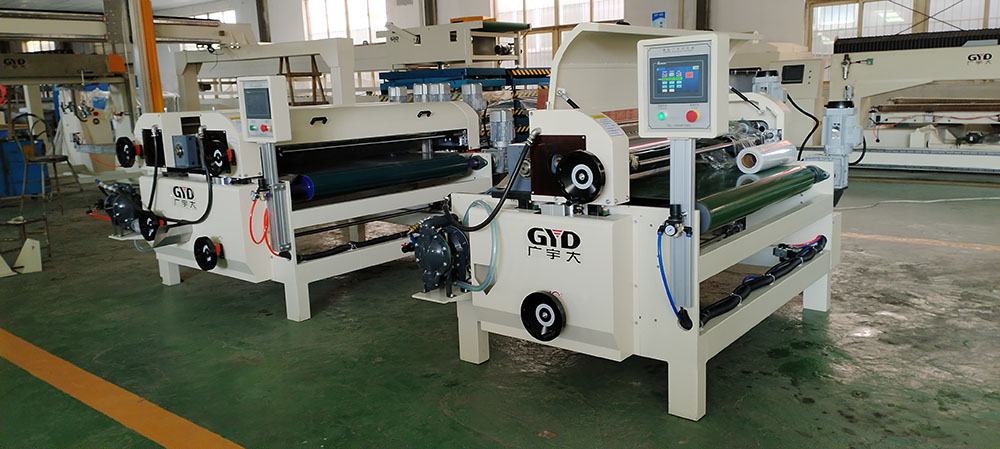
A curtain coater is an industrial coating application machine where liquid coating material flows from a precision slot die or knife head as a continuous, waterfall-like film onto flat substrates moving on a conveyor beneath the coating curtain. Unlike roller coating methods that create uniform but potentially textured films through mechanical contact, curtain coaters pump coating material to precision die heads that form stable liquid curtains, ensuring exceptional uniformity and superior visual finish with mirror-like gloss that showcases premium quality and craftsmanship in high-end furniture and architectural applications.
These systems integrate precision pumping systems, die head assemblies with adjustable slot widths, conveyor systems with vacuum hold-down or belt transport, and integrated UV curing tunnels or thermal drying zones that maintain optimal application parameters throughout high-volume production cycles. Advanced curtain coater configurations feature automatic thickness control, viscosity monitoring systems, and real-time curtain stability adjustment that enables lights-out manufacturing in modern smart factories with minimal operator oversight while achieving gloss levels exceeding 95 units at 60 degree measurement angles.
Industrial curtain coaters consist of several integrated subsystems working in concert to achieve reliable high-quality mirror finishes at production speeds. Application modules employ precision die heads or knife heads with adjustable slot widths that form stable liquid curtains as coating material flows under controlled pressure from precision gear pumps or peristaltic pumping systems. Coating viscosity is maintained within narrow tolerances using temperature-controlled reservoirs and in-line viscosity sensors that trigger automatic solvent addition or heating adjustments to prevent curtain breakup or uneven flow that creates defects.
Conveyor systems transport workpieces through application and curing zones at controlled speeds ranging from 0 to 100 meters per minute depending on coating formulation, substrate type, and desired film thickness. Vacuum hold-down tables or precision belt conveyors ensure panels remain perfectly flat during curtain application, preventing warping or edge lift that would cause coating to pool unevenly or miss areas entirely. Integrated UV curing tunnels employ mercury vapor lamps or LED UV sources positioned immediately after the curtain application zone to instantly polymerize coatings in 3 to 10 seconds, enabling immediate handling and secondary processing within seconds rather than the hours required for air-dry or thermal cure systems.
Single-head curtain coaters represent entry-level configurations suitable for low to medium volume operations where capital investment must be minimized while still achieving dramatic improvements over roller coating or spray application methods. These compact machines feature working widths from 600 to 1,300 millimeters with feeding speeds from 0 to 20 meters per minute, fully automating application of UV primers, basecoats, and fillers with exceptional uniformity that effectively replaces inconsistent manual methods or roller coating systems that cannot achieve mirror-like gloss levels.
A typical single-head curtain coater applies UV primer at 15 to 30 grams per square meter using precision die heads with adjustable slot widths and controlled flow rates that maintain stable curtain formation across the full working width. The electrical box is separated from the main structure with anti-collision design where feeding anti-collision plates avoid wood damaging the die head or conveyor system, ensuring consistent coating quality across extended production runs without operator intervention that interrupts workflow and reduces overall equipment effectiveness.
High-speed curtain coaters enhance curtain coater capabilities by enabling application rates from 25 to 100 meters per minute for high-volume furniture, cabinet, door, and architectural panel production where throughput is critical for competitiveness in demanding domestic and export markets. Working widths from 800 to 2,500 millimeters with working thickness from 2 to 80 millimeters accommodate large cabinet doors, wardrobe panels, and architectural components without secondary operations that introduce contamination risks and delay order fulfillment.
The Taisan Machinery TS-1420 curtain coater exemplifies this technology with working width of 1,320 millimeters, working height from 2 to 80 millimeters, minimum working length of 200 millimeters, and convey speed from 5 to 60 meters per minute for standard UV, PU, and PE coatings. When operating independently, high-speed curtain coaters can achieve maximum production efficiency of 60 to 100 meters per minute, and when used in conjunction with UV curing machines, coatings can be dried in just 3 to 10 seconds, saving considerable drying space and enabling immediate handling and secondary processing.
Multi-head curtain coaters represent advanced configurations where two or more curtain coating heads are arranged sequentially along the conveyor path, enabling sequential application of primer and topcoat in single pass-through operations without intermediate handling. Working widths from 1,300 to 2,500 millimeters with feeding speeds from 10 to 60 meters per minute allow manufacturers to process large cabinet doors, wardrobe panels, and architectural components with multi-layer finishes in continuous flow.
The sequential application process applies primer and topcoat layers in rapid succession before UV curing, allowing chemical bonding between layers that enhances adhesion and durability compared to sequential curing between coats. Total film thickness ranges from 30 to 60 grams per square meter depending on desired finish quality and substrate porosity, with gloss levels exceeding 95 units at 60 degree measurement angles that create mirror-like reflections showcasing premium craftsmanship and attention to detail in high-end furniture and architectural applications.
Fully integrated curtain coating and UV curing production lines combine surface preparation, multi-stage curtain application, flash-off zones, UV curing, intermediate sanding, and final finishing in one continuous flow that transforms raw substrates into finished, ready-to-assemble components with minimal manual handling. These complete installations suit mass production environments where parts move automatically from dust removal through curtain coating application, UV curing, sanding, and final topcoat application without intermediate storage or re-fixturing that introduces contamination risks.
A typical integrated curtain coating production line for high-gloss furniture panels follows process sequence including dust removal and surface cleaning, UV primer curtain coating at 15 to 25 grams per square meter, UV curing with lamp power 10 to 15 kilowatts adjusted to ensure UV lamp intensity between 200 to 300 milliwatts per square centimeter and energy density between 150 to 300 millijoules per square centimeter, intermediate sanding with wide-belt sanders to level primer surface, UV topcoat curtain coating at 20 to 30 grams per square meter, final UV curing with lamp power 15 to 20 kilowatts to ensure complete polymerization, then cooling and inspection before packaging and shipment. Daily production capacity reaches 2,000 large boards measuring 1.22 by 2.44 meters, achieving efficient production that justifies capital investment through dramatic labor savings and material efficiency improvements.
Curtain coaters produce exceptionally even film thickness across the entire substrate surface with resulting finish that is smooth, glossy, and free from transverse stripes, making them ideal for high-gloss mirror finishes. This uniformity is difficult to achieve with manual spraying or roller coating methods where roller marks or texture variations may compromise appearance in premium applications requiring flawless mirror-like reflections.
Roller coaters including Barberan's special designed roller technology can apply high gloss UV finish that was previously only possible by spraying guns or curtain coaters, achieving mirror finish quality with best values in transparency and depth. However, curtain coaters remain the benchmark for ultra-high gloss applications where absolute uniformity and freedom from any texture or pattern is critical for customer satisfaction in luxury furniture and architectural panel markets.
Curtain coaters can become the highest output machine of all in finishing lines, with speeds ranging between 60 and 100 meters per minute enabling high-throughput production lines for high-volume furniture, cabinet, door, and architectural panel manufacturing. Roller coating machines are more efficient for mass production of standard finishes where mirror-like gloss is not required, whereas curtain coaters are better suited for products requiring premium high-gloss surface finishing with exceptional uniformity.
Curtain coaters achieve coating speed from 5 to 60 meters per minute for standard configurations, with high-speed models reaching 80 to 100 meters per minute for maximum throughput. Roller coaters typically operate at 0 to 25 meters per minute for furniture and architectural panel applications, with metal coil coating lines reaching 10 to 150 meters per minute depending on configuration and automation level, making roller coaters more suitable for continuous web applications where speed is paramount.
Curtain coating process produces exceptionally even film thickness with minimal waste since coating flows directly onto substrates without overspray or atomization losses. Spreading amount with every head varies from about 40 to 500 grams per square meter depending on coating formulation and desired film thickness, with precise control over coating volume through adjustment of slot gap and pump pressure.
Roller coating achieves paint utilization rate of over 99 percent with virtually no waste, while curtain coating similarly minimizes waste through direct application without overspray. Both technologies significantly reduce material consumption compared to spray application where overspray losses typically range from 20 to 40 percent, making curtain and roller coating preferred choices for environmentally conscious manufacturers seeking to minimize VOC emissions and material costs.
Curtain coaters are suitable for coating all plane surfaces including wood panels, metal, glass, board, rubber, and leather with any kind of solvent basis and water basis paints. Working widths up to 2,500 millimeters accommodate large architectural panels and wide-format substrates that require premium high-gloss surface finishing for luxury furniture, high-end cabinetry, and architectural applications.
Roller coaters handle diverse substrates including wood, MDF, plywood, metal coils, plastic films, and composite panels with working widths from 600 to 2,400 millimeters depending on configuration. While roller coaters excel at primer and basecoat application where speed and material efficiency are paramount, curtain coaters dominate high-gloss topcoat applications where mirror-like finish quality is the primary requirement for customer satisfaction.
Taisan Machinery manufactures curtain coating machines with mirror finish capabilities including TS-1420 model with working width of 1,320 millimeters, working height from 2 to 80 millimeters, minimum working length of 200 millimeters, and convey speed from 5 to 60 meters per minute. The company's curtain coaters apply high-gloss UV finishes with exceptional uniformity suitable for furniture, cabinet, door, and architectural panel manufacturers requiring premium surface quality.
ZZCHRYSO produces fully automatic curtain coating machines with working widths of 600, 900, and 1,300 millimeters, working heights from 2 to 80 millimeters, minimum working lengths of 200 millimeters, and feeding speeds from 0 to 20 meters per minute. The automatic curtain coating machine is a precision coating system designed for applying seamless, waterfall-like films of paint or finish onto flat substrates including furniture boards, cabinet doors, bathroom doors, showcase boards, door frames, and window frames with broad operational flexibility.
Cefla Finishing manufactures curtain coating systems based on the ability of liquid lacquers to form uniform coats as they fall on items, allowing lacquer to transfer onto products with exceptional uniformity. A curtain coater can become the highest output machine of all, with speeds ranging between 60 and 100 meters per minute enabling high-throughput production lines for high-volume furniture and architectural panel manufacturing.
Ceflar Finishing Concepts produces curtain coaters equipped with edge savers and safety guards to evenly coat panels of wood, leather, cardboard, plastic, or other materials with working widths up to 2,500 millimeters. The TM95 MATIC precision curtain coater is suitable for coating stacks of panels with single or double infeed belt for loading synchronization, while the TM95 MAXI heavy duty structure curtain coater handles maximum working width up to 2,500 millimeters for wide-format architectural applications.
Tomanin Impianti manufactures curtain coaters that are easy to use with low costs, suitable for coating all plane surfaces including wood panels, metal, glass, board, rubber, or leather with any kind of solvent basis and water basis paints. Spreading amount with every head varies from about 40 to 500 grams per square meter, with useful width of 1,300 millimeters for standard models and up to 3,900 millimeters for heavy-duty configurations.
Purete Mac produces L10A curtain coating production lines that are multifunctional UV high-gloss coating systems designed for mirror-surface plate finishing. The L10A-1950 curtain coating production line is specially designed for wide-format, large-scale substrates that require premium high-gloss surface finishing, with customizable belt speed and roller width for high-gloss finishes on furniture, cabinet, and architectural panels.
Barberan has developed specific roller coaters that achieve, with single application, the finish quality that was previously only possible when spraying guns or lacquer curtains are used. The special designed roller technology from Barberan is capable of applying high gloss UV finish with mirror finish quality, perfect adhesion of UV high gloss products on melamine, and extremely economic system with overall cost lower than curtain coater alternatives.
Working widths from 600 millimeters up to 2,400 millimeters accommodate diverse panel geometries from narrow trim components to wide architectural boards. The BHG roller coater for thick high gloss UV application is a unique machine designed for application of thick high gloss UV lacquer coat on flat surfaces in Barberan finishing lines, offering alternative to curtain coaters for manufacturers seeking high gloss finishes with roller coating efficiency.
Matching curtain coater capacity to actual production volumes and panel complexity prevents both underutilization of capital equipment and production bottlenecks that delay order fulfillment. Low to medium volume operations processing under 500 panels daily benefit from single-head curtain coaters or compact configurations with manual loading and unloading stations positioned at ergonomic heights.
High-volume manufacturers handling thousands of components daily require high-speed configurations or integrated production lines with automated material handling, quick-change die heads, and integrated UV curing zones that minimize changeover downtime between product styles. Evaluate cycle times including loading, coating application, UV curing, cooling, and unloading phases to calculate realistic daily throughput under actual operating conditions rather than theoretical maximums.
Different coating chemistries demand specific die head geometries, pumping systems, and curing methods to achieve optimal results without incomplete cure, adhesion failures, or finish defects. UV coatings require precision gear pumps and temperature-controlled reservoirs that maintain stable viscosity for consistent curtain formation, while water-based and solvent-based coatings require stainless steel fluid paths and corrosion-resistant seals.
UV gelation processes apply intermediate cure levels between coating layers to ensure optimal intercoat adhesion for subsequent layers without fully curing primer or basecoat. Verify that candidate curtain coaters accommodate your specific coating portfolio including primers, fillers, sealers, and topcoats without requiring extensive reconfiguration when switching materials between production runs.
Furniture components, architectural panels, and flooring products vary dramatically in dimensions from small drawer fronts to large wardrobe panels exceeding 2,500 millimeters in width. Ensure that candidate curtain coaters accommodate maximum panel dimensions with adequate clearance for die head positioning, UV lamp placement, and conveyor tracking without edge contact.
For shaped components such as raised panel doors, shaker styles with deep grooves, or textured flooring surfaces, prioritize curtain coaters with programmable die head positioning that adjusts height, flow rate, and curtain width dynamically. Flat panel-only machines may achieve superior results on simple slab doors but struggle with profiled surfaces, potentially requiring manual touch-up.
Consistent daily cleaning prevents coating buildup in die heads, fluid lines, filters, and UV lamp housings that degrades finish quality. Flush die heads with appropriate solvents at shift end, removing slot inserts for thorough cleaning to prevent clogging from dried coating residue that alters curtain formation.
Inspect conveyor chains, drive motors, photoelectric sensors, roller bearings, and UV lamp housings for wear, contamination, or misalignment. Visual inspection should identify buildup or debris that, if unclean, may hinder even application, with soft lint-free cloths used to wipe components to ensure no scratches or damage occurs during cleaning.
Premium curtain coater producers track component replacement in operating hours and meters coated rather than calendar time because coating type, substrate, and line speed determine wear rate. Die heads and slot inserts typically require replacement based on wear indicators and coating quality degradation, with preventive replacement scheduled before defects impact production.
Pump seals, filters, and conveyor belts have defined service life based on operating hours and material compatibility, with replacement scheduled during planned downtime to avoid unplanned stoppages. Document all component replacements and maintenance activities in computerized maintenance management systems linked to production records for traceability and warranty compliance.
Preventive maintenance programs implement scheduled inspections based on equipment manuals and operational hours. Weekly maintenance includes checking motor load, lubricating bearings, and inspecting die head alignment to ensure proper curtain formation and coating thickness control.
Monthly maintenance involves calibrating flow rate sensors, verifying pump pressure against coating weight targets, and documenting all readings. Annual maintenance overhauls all mechanical systems, updates software, and replaces worn components before they cause coating defects or unplanned downtime.
Curtain coaters apply coating as continuous waterfall-like film that flows onto panel surfaces, creating seamless mirror-finish coatings without roller marks or texture variations. Roller coaters use precision applicator rollers and dosing rollers that meter exact coating quantities onto surfaces, creating uniform films that may show subtle roller patterns but offer superior material efficiency for primer and basecoat applications.
Curtain coating typically reduces coating consumption by 20 to 40 percent compared to spray application through precise flow control, consistent curtain formation, and minimal overspray. Spreading amount varies from 40 to 500 grams per square meter depending on coating formulation, with precise control through slot gap and pump pressure adjustment.
Yes, most modern curtain coaters accommodate multiple coating types including UV, PU, PE, water-based, and solvent-based formulations with appropriate pumping systems and die head configurations. UV coatings require UV lamp curing systems, while water-based and solvent-based coatings require IR drying tunnels or forced-air convection ovens.
Daily maintenance includes flushing die heads, cleaning slot inserts, wiping down conveyor systems, and checking fluid levels. Weekly tasks involve lubricating linear guides, verifying die head alignment, checking flow rate calibration, and inspecting UV lamp output. Monthly maintenance calibrates sensors and verifies pump pressure against coating weight targets.
Curtain coater selection balances production volume, panel dimensions, coating requirements, and budget constraints. Single-head coaters suit low to medium volume operations, while high-speed and multi-head configurations serve high-volume manufacturers. Working widths from 600 to 2,500 millimeters accommodate diverse panel geometries, with integrated UV curing for instant polymerization and immediate handling.


