
Views: 269 Author: 广宇大 Publish Time: 2026-09-24 Origin: Site


Content Menu
● Understanding Roll Coater Market Landscape
>> Types of Roll Coaters Available for Sale
● New Roll Coater for Sale: Features and Pricing
>> Entry-Level and Semi-Automatic Roll Coaters
>> Mid-Range Automated Roll Coating Systems
>> Full Turnkey Coil Coating Lines
● Used Roll Coater for Sale: Inspection and Valuation
>> Used Roll Coater Price Ranges and Market Sources
>> Used Roll Coater Inspection Checklist
>> Refurbished vs As-Is Used Roll Coaters
● Key Selection Criteria for Roll Coater Purchases
>> Production Volume and Substrate Geometry
>> Coating Material Compatibility and Viscosity Requirements
>> Substrate Dimensions and Tolerance Requirements
>> Total Cost of Ownership Analysis
● Leading Roll Coater Manufacturers and Suppliers
>> Chinese Manufacturers: SENLIAN, Godn Finishing, HICAS, WEHO
>> European and American Manufacturers: Nordson, Graco, Bürkle, Hymmen
>> Online Marketplaces: Made-in-China, Machineseeker, Resale.info
● Maintenance and Operational Best Practices
>> Daily Cleaning and Inspection Procedures
>> Scheduled Roll Replacement Based on Meters Coated
>> Preventive Maintenance and Calibration
>> What is the price range for roll coaters for sale?
>> What should I inspect when buying a used roll coater?
>> Can roll coaters handle both solvent-based and water-based coatings?
>> What maintenance is required for roll coaters?
>> How do I calculate total cost of ownership for a roll coater purchase?
Modern manufacturing across furniture, flooring, metal coil, flexible packaging, and architectural panel sectors demands exceptional coating uniformity, precise thickness control, and minimal material waste to remain competitive in global markets. When searching for a roll coater for sale, buyers must navigate a complex landscape of new and used equipment options, varying configurations including direct, reverse, gravure, and multi-roll systems, and price ranges spanning from entry-level manual units to fully automated production lines. This comprehensive guide explores roll coater technologies, system configurations, pricing benchmarks, inspection checklists, and selection criteria that transform equipment purchasing from risky gambles into informed investments that deliver competitive advantages across pre-painted metal, architectural panels, flexible packaging, adhesive tapes, furniture panels, and decorative laminate manufacturing sectors.
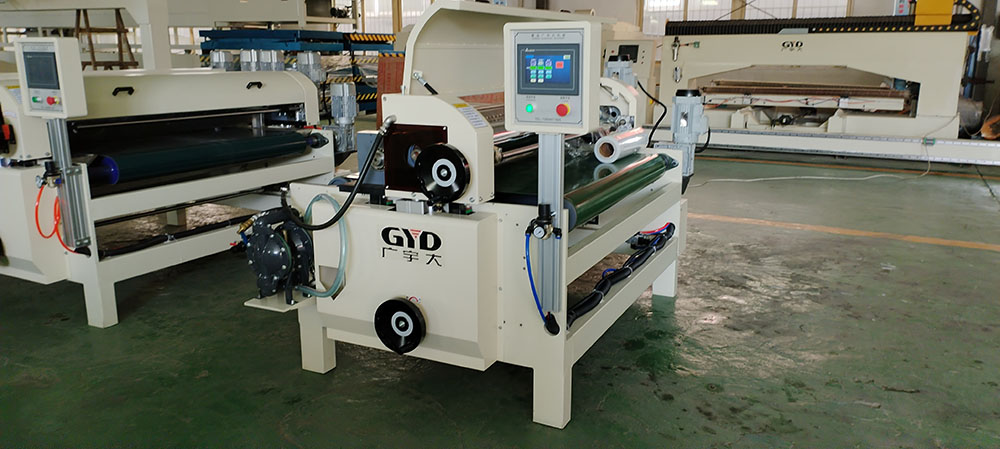
A roll coater is an industrial coating application machine where liquid coatings including paints, primers, adhesives, varnishes, and functional materials are transferred onto flat substrates using rotating rollers that meter and apply coating with precise thickness control. Unlike spray coating that atomizes paint into fine mists creating overspray waste and requiring extensive masking, roll coating is a contact-based precision transfer coating process that eliminates paint atomization, splashing, and drift loss, achieving a paint utilization rate of over 99 percent, far exceeding traditional coating processes.
These systems integrate precision applicator rollers, metering rolls, doctor blades, and backup rolls that control coating thickness with tolerances of plus or minus 0.1 mil depending on application requirements and substrate characteristics. When searching for a roll coater for sale, buyers encounter configurations ranging from single-head manual units priced from 5,000 to 15,000 dollars for small-batch production to fully automated multi-station lines exceeding 100,000 to 300,000 dollars for professional tape, label, and converting manufacturers requiring slot-die or multi-method lines with gear pumps, zonal temperature control, chill rolls, splicing, and full automation.
The roll coater for sale market encompasses diverse configurations including direct roll coaters where the applicator roller rotates in the same direction as substrate travel, reverse roll coaters where both applicator and metering rollers rotate in the same direction but at different speeds, gravure roll coaters employing engraved rollers with precise cell patterns, kiss coaters for delicate substrates, and multi-roll systems including three-roll and four-roll coaters for demanding applications.
Single roller coaters feature effective processing widths of 620, 920, or 1,320 millimeters with minimum processing length of 300 millimeters, transport speed from 0 to 20 meters per minute, and power ratings from 0.55 to 0.75 kilowatts per motor. Double roller coaters and three-roll UV coaters expand capabilities with working widths from 240 to 1,300 millimeters, working speed from 0 to 30 meters per minute, and profile or board thickness from 1 to 150 millimeters, suitable for UV, PU, and water-based coatings with paint thickness from 5 to 10 grams per square meter.
Entry-level roll coaters for sale include manual or semi-automatic spray booths priced from 5,000 to 20,000 dollars and entry-level roll coaters from 15,000 to 50,000 dollars suitable for small to medium volume operations where capital investment must be minimized while still achieving dramatic improvements over manual methods. These machines feature working widths from 600 to 1,300 millimeters with feeding speeds from 0 to 20 meters per minute, fully automating application of UV primers, sealers, and basecoats with exceptional uniformity.
Manual drawdown and lab coaters priced from 500 to 3,000 dollars with some lab coaters featuring digital control around 2,000 dollars provide flat heated platen or small bench coater with hand-operated blade or motorized drawdown bar, plus or minus 20 percent repeatability, and a few square meters per day output suitable for R and D, proof-of-concept, customer samples, and education applications. Entry and semi-automatic roll coaters priced from 5,000 to 15,000 dollars offer desktop or small heated-roll coaters with motorized transport, basic temperature control, 150 to 300 millimeter coating width, and plus or minus 10 to 15 percent accuracy for small-batch production up to approximately 500 to 1,000 square meters per week.
Mid-range automated roll coaters for sale priced from 75,000 to 200,000 dollars include systems with curing tunnels, INOVANCE PLC control, hard chrome rollers with HRC 60 plus hardness, and 5-year roller life suitable for furniture, flooring, door, cabinet, and architectural panel manufacturers requiring consistent finish quality at production speeds that justify capital investment. These machines feature working widths from 600 to 1,300 millimeters with feeding speeds from 5 to 25 meters per minute, accommodating diverse panel geometries from thin decorative laminates to substantial solid wood doors and architectural panels.
Nordson IDEAL roll coaters for flat panel coating achieve speeds from 50 to 300 feet per minute at approximately 85,000 dollars with precision metering rolls, while Graco EcoAir Pro II spray coating systems operate at variable speeds in batch mode at approximately 18,000 dollars with energy-efficient air motors. Refurbished production machines priced from 15,000 to 40,000 dollars offer 5 to 10-year-old industrial machines from manufacturers like Nordson and Valco Melton that are cleaned and reconditioned, featuring 600 to 1,600 millimeter widths, up to approximately 200 meters per minute line speed, slot-die plus or minus 2 to 5 percent accuracy, and PLC controls versus 80,000 to 200,000 dollars for new equipment.
Full turnkey coil coating lines priced at 500,000 dollars and above represent the highest tier of roll coater for sale options, integrating decoilers, chemical pretreatment, reverse roll coating application, flash-off zones, thermal curing ovens, cooling sections, and recoilers in one continuous flow that transforms raw metal coils into finished pre-painted products with minimal manual handling. These complete installations suit mass production environments where metal coils move automatically through the entire coating process without intermediate storage that introduces contamination risks.
New industrial production lines priced from 80,000 to 200,000 dollars and above for fully automatic multi-station lines include slot-die or multi-method lines with gear pumps, zonal temperature control, chill rolls, splicing, and full automation suitable for professional tape, label, and converting manufacturers. When evaluating full turnkey lines, buyers must assess total cost of ownership including purchase price, installation, energy consumption, consumables, and maintenance to ensure return on investment justifies capital expenditure over equipment service life.
Used roll coaters for sale are available through online marketplaces including Machineseeker, Resale.info, Used-Machines.com, and Surplus Record with price ranges varying dramatically based on age, condition, working width, and included features. Used Hymmen roller coaters from 2001 with 1,300 millimeter working width are available at approximately 3,450 euros, while used Bürkle SLC 1300 roller coaters with 1,300 millimeter working width and 80 millimeter passage height are available at higher price points reflecting brand reputation and remaining service life.
Used leather finishing roller coaters with 1.8 meter working width typically range from 18,000 to 55,000 euros with the biggest swing factor being cylinder inventory and engraving condition. Used lacquer machines including roller coaters for solvent-free UV varnish with 1,300 millimeter working width, 80 millimeter passage height, and conveying speed from 6 to 30 meters per minute are available through Resale.info with 134,293 lacquer machines listed online, providing extensive selection for buyers seeking value-conscious acquisitions.
When evaluating a used roll coater for sale, buyers must conduct thorough inspections focusing on critical components that determine remaining service life and coating quality. Roller coaters apply finish by engraved cylinder, and common failure points include cylinder engraving worn flat, doctor blade scored, and feed belt stretched that compromise coating uniformity and thickness control.
Before paying, run a hide or test panel through the machine and check coat weight uniformity edge to edge, asking for engraving depth versus original specification to assess remaining cylinder life. Inspect applicator rolls, metering rolls, and backup rolls for scoring, pitting, contamination, and excessive wear that could affect coating uniformity across substrate surfaces. Visual inspection should identify buildup or debris that, if unclean, may hinder even application, with soft lint-free cloths used to wipe rolls and all surfaces to ensure no scratches or damage occurred during previous operation.
Refurbished roll coaters for sale priced from 15,000 to 40,000 dollars offer significant value versus new equipment priced from 80,000 to 200,000 dollars, with 5 to 10-year-old industrial machines from manufacturers like Nordson and Valco Melton that are cleaned and reconditioned to deliver production capability at fraction of new equipment cost. Refurbished machines typically include 600 to 1,600 millimeter widths, up to approximately 200 meters per minute line speed, slot-die plus or minus 2 to 5 percent accuracy, and PLC controls that satisfy value-conscious converters needing real production capability.
As-is used roll coaters priced lower but sold without warranty or refurbishment carry higher risk of hidden defects including worn cylinders, scored doctor blades, and stretched feed belts that require immediate investment in repairs and replacement parts. Buyers must weigh upfront savings against potential downtime and repair costs, requesting maintenance records, hours of operation, and reason for sale to assess remaining service life and total cost of ownership including anticipated repairs and upgrades.
Matching roll coater capacity to actual production volumes and substrate complexity prevents both underutilization of capital equipment and production bottlenecks that delay order fulfillment. Low to medium volume operations processing under 500 panels or coils daily benefit from single head roll coaters or compact configurations with manual loading and unloading stations positioned at ergonomic heights, priced from 15,000 to 50,000 dollars for entry-level automated systems.
High-volume manufacturers handling thousands of meters daily require multi-roll configurations or integrated production lines with automated material handling, quick-change roll assemblies, and integrated curing zones that minimize changeover downtime between product styles, priced from 75,000 to 200,000 dollars for mid-range automated systems and 500,000 dollars plus for full turnkey coil coating lines. Evaluate cycle times including loading, coating application, flash-off, curing, cooling, and unloading phases to calculate realistic daily throughput under actual operating conditions rather than theoretical maximums.
Different coating chemistries demand specific roll materials, metering configurations, and viscosity ranges to achieve optimal results without ribbing, orange peel, or thickness variation. Solvent-based and water-based paints with 35 to 50 percent solids content and operating viscosity of 35 to 90 seconds through FORD-4 viscosity cup are ideal for roll coating, while high viscosity coatings benefit from multi-roll configurations with doctor blade metering.
Roll coating handles coating viscosity from 1 to 50,000 centipoise depending on configuration, with gravure coaters suitable for low viscosity from 1 to 500 millipascal-seconds and multi-roll reverse coaters handling high viscosity from 1,000 to 50,000 centipoise. Verify that candidate roll coaters accommodate your specific coating portfolio including primers, topcoats, adhesives, and specialty coatings without requiring extensive reconfiguration when switching materials between production runs.
Metal coils, architectural panels, furniture components, and flexible webs vary dramatically in dimensions from narrow tapes measuring 600 millimeters wide to substantial architectural panels exceeding 1,300 millimeters in width with varying thickness from 1 to 150 millimeters. Ensure that candidate roll coaters accommodate maximum substrate dimensions with adequate clearance for applicator roll contact, metering roll positioning, and web tracking without edge contact that damages finishes.
For sensitive substrates including thin plastic films and delicate paper webs, prioritize roll coaters with precision web tension control and soft applicator rolls that prevent substrate damage. Standard metal coil coating machines may achieve superior results on robust metal substrates but require careful tension control for thin films, potentially requiring specialized configurations for flexible packaging applications where substrate damage must be avoided.
When evaluating roll coaters for sale, buyers must assess total cost of ownership including purchase price, installation, energy consumption, consumables, and maintenance to ensure return on investment justifies capital expenditure. Entry-level roll coaters priced from 15,000 to 50,000 dollars may appear attractive but require evaluation of energy efficiency, roller life, and maintenance costs that impact long-term profitability.
Mid-range automated systems priced from 75,000 to 200,000 dollars with curing tunnels and PLC controls deliver higher throughput and lower labor costs per unit produced, justifying higher initial investment through improved productivity and reduced waste. Full turnkey coil coating lines priced at 500,000 dollars plus require detailed financial modeling including payback period, net present value, and internal rate of return to ensure capital allocation delivers acceptable returns versus alternative investments.
SENLIAN manufactures roller coaters including single head, double head, and multi-roll configurations with working widths from 600 to 1,300 millimeters and feeding speeds from 0 to 25 meters per minute, priced from 6,500 to 10,000 dollars per set depending on configuration and automation level. The company emphasizes high coating utilization rate over 99 percent, energy saving and eco-friendly operation with virtually no waste, far exceeding traditional coating processes.
Godn Finishing produces roller coating machines that deliver fast, precise, and uniform coating for wood panels, doors, cabinets, and metal sheets with working widths of 600, 800, and 1,300 millimeters. HICAS manufactures HCGT series automatic UV roller coating machines with 6 models including 600 and 1,300 millimeter widths with 1, 2, or 3 roll configurations, INOVANCE PLC control, hard chrome rollers with HRC 60 plus hardness, and 5-year roller life.
Nordson IDEAL roll coaters for flat panel coating achieve speeds from 50 to 300 feet per minute at approximately 85,000 dollars with precision metering rolls, while Graco EcoAir Pro II spray coating systems operate at variable speeds in batch mode at approximately 18,000 dollars with energy-efficient air motors. Bürkle roller coaters including RCL M 1300 models from 2021 with working widths of 1,300 millimeters and passage heights up to 80 millimeters represent premium German engineering with exceptional build quality and longevity.
Hymmen roller coaters from 2001 with 1,300 millimeter working width available at approximately 3,450 euros on used equipment marketplaces demonstrate enduring value of European-manufactured roll coaters that maintain coating quality and reliability across decades of service. When evaluating European and American manufacturers, buyers benefit from established service networks, comprehensive training programs, and warranty coverage that reduce operational risk and downtime.
Made-in-China.com presents reliable roller coating machine manufacturers with prices ranging from 2,000 to 200,000 dollars per piece depending on configuration, automation level, and included features. Machineseeker lists 42 used roller coaters for sale with prices starting from 4.49 euros for small units up to premium machines reflecting brand reputation and remaining service life.
Resale.info features 134,293 lacquer machines including roller coaters for solvent-free UV varnish with 1,300 millimeter working width, 80 millimeter passage height, and conveying speed from 6 to 30 meters per minute. Used-Machines.com lists used Hymmen roller coaters and other premium brands with detailed specifications and pricing that enable buyers to compare options and negotiate informed purchases.
Consistent daily cleaning prevents coating buildup on applicator rolls, metering rolls, and doctor blades that degrades finish quality and increases unplanned downtime. Wipe down rolls with appropriate solvents at shift end, removing doctor blades for thorough cleaning to prevent clogging from dried coating residue that alters metering gap and creates streaks or thickness variation.
Inspect applicator rolls, metering rolls, and backup rolls for scoring, pitting, contamination, and excessive wear that could affect coating uniformity. Visual inspection should identify buildup or debris that, if unclean, may hinder even application, with soft lint-free cloths used to wipe rolls and all surfaces to ensure no scratches or damage occurs during cleaning.
Premium roll coater producers track roll replacement in meters coated rather than calendar days because coating type, substrate, and line speed determine wear rate far more accurately than time-based schedules. Applicator rolls typically require replacement every 500,000 to 750,000 meters for high-speed premium product lines where surface finish on worn rolls creates coating weight variation above tolerance limits.
Backup and metering rolls last 750,000 to 1,500,000 meters due to lower contact stress, but crown profile tracking is mandatory since a flat roll on a crowned strip creates edge-heavy coating. Crown profile must be measured quarterly regardless of metered life, since localized wear creates coating weight variation before rolls reach metered replacement points.
Preventive maintenance programs implement scheduled inspections based on equipment manuals and operational hours to avoid unexpected downtime. Weekly maintenance includes checking motor load, lubricating bearings, and inspecting roller alignment to ensure proper nip pressure and coating thickness control.
Monthly maintenance involves calibrating sensors, verifying nip pressure against coating weight targets, and documenting all readings in computerized maintenance management systems. Annual maintenance overhauls all mechanical systems, updates software, and replaces worn components before they cause coating defects or unplanned downtime.
Roll coaters for sale range from 500 to 3,000 dollars for manual and lab coaters, 5,000 to 15,000 dollars for semi-automatic roll coaters, under 10,000 dollars for basic imports, 15,000 to 40,000 dollars for refurbished production machines, 15,000 to 50,000 dollars for entry-level automated systems, 75,000 to 200,000 dollars for mid-range automated systems with curing tunnels, and 500,000 dollars plus for full turnkey coil coating lines.
When buying a used roll coater, inspect cylinder engraving for wear, doctor blades for scoring, feed belts for stretching, and run test panels to check coat weight uniformity edge to edge. Ask for engraving depth versus original specification, maintenance records, hours of operation, and reason for sale to assess remaining service life and total cost of ownership including anticipated repairs.
Yes, most modern roll coaters accommodate multiple coating types including solvent-based and water-based paints with 35 to 50 percent solids content. Roll coating handles viscosity from 1 to 50,000 centipoise depending on configuration, with gravure coaters for low viscosity and multi-roll reverse coaters for high viscosity coatings.
Daily maintenance includes wiping down applicator rolls, metering rolls, and doctor blades, checking web tension, and inspecting for coating buildup. Weekly tasks involve checking motor load, lubricating bearings, and inspecting roller alignment, while monthly maintenance calibrates sensors and verifies nip pressure against coating weight targets.
Total cost of ownership includes purchase price, installation costs, energy consumption based on motor ratings and operating hours, consumables including rollers and doctor blades, maintenance labor and parts, and anticipated downtime costs. Compare entry-level systems priced from 15,000 to 50,000 dollars against mid-range automated systems from 75,000 to 200,000 dollars by modeling payback period, net present value, and internal rate of return to ensure capital allocation delivers acceptable returns.


