
Views: 274 Author: 广宇大 Publish Time: 2026-09-23 Origin: Site


Content Menu
● Understanding Single Roller Coating Machine Technology
>> What Is a Single Roller Coating Machine?
>> Core Components of Single Roller Coating Systems
● Types of Single Roller Coating Machine Configurations
>> Standard Single Roller Coaters for Primer and Sealer Application
>> Reverse Doctor Roller Single Coaters for Precision Topcoat
>> Stain and Primer Single Roller Coaters for Penetrating Finishes
>> Mobile Single Roller Coaters for Flexible Production
● Leading Single Roller Coating Machine Manufacturers
>> Ceflar Finishing Concepts and Sorbini (Portugal and Italy)
>> Winrich Machinery and Other Chinese Manufacturers (China)
● Key Selection Criteria for Single Roller Coating Machine Systems
>> Production Volume and Panel Geometry
>> Coating Material Compatibility and Curing Requirements
>> Panel Dimensions and Tolerance Requirements
● Maintenance and Operational Best Practices
>> Daily Cleaning and Preventive Maintenance Protocols
>> Optimizing Application Parameters for Quality and Efficiency
>> What is the difference between single roller and double roller coating machines?
>> Can single roller coating machines handle both UV and water-based coatings?
>> What maintenance is required for single roller coating machines?
>> How long does it take to install and commission a single roller coating machine?
Modern furniture and architectural panel manufacturing demands uniform coating thickness, minimal material waste, and maximum production efficiency to remain competitive in global markets. A single roller coating machine has evolved from simple manual roller applicators into sophisticated automated systems that integrate precision coating application, adjustable dosing control, and instant ultraviolet curing. This comprehensive guide explores leading single roller coating machine technologies, system configurations, and selection criteria that transform coating operations from labor-intensive bottlenecks into streamlined competitive advantages across furniture, flooring, door, cabinet, and architectural panel manufacturing sectors.
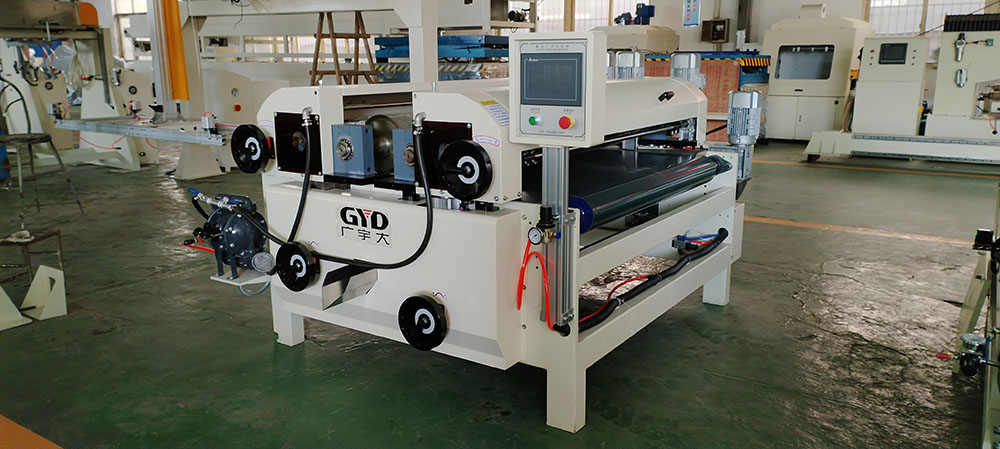
A single roller coating machine is an industrial coating application system specifically engineered to apply uniform coatings onto flat material surfaces using a single set of coating heads consisting of applicator rollers and dosing rollers. Unlike multi-pass manual methods or spray systems that create overspray waste, single roller coating machines use a combination of dosing and application rollers to enable users to apply coatings evenly and precisely by adjusting individual roller speeds and rotational direction of the dosing roller, ensuring consistent coating thickness and eliminating uneven application across extended production runs.
These systems integrate precision applicator rollers, dosing rollers, and doctor blades that meter exact coating quantities onto workpiece surfaces, creating uniform films ranging from 5 to 100 microns depending on application requirements and substrate characteristics. Advanced single roller coating machine configurations feature touch-screen controls to manage all production parameters, variable frequency drives for precise speed control, and optional reverse doctor roller configurations that enable application of sealers, top coats, stains, primers, and hard wax on diverse substrates including parquet, plinths, stairs, furniture panels, and architectural components.
Industrial single roller coating machines consist of several integrated subsystems working in concert to achieve reliable high-quality finishes at production speeds optimized for flat panels and strip materials. Application modules employ single-head roller coaters with applicator rollers, dosing rollers, and optional doctor blades that deposit controlled coating volumes onto flat panels, doors, flooring, and architectural components. The dosing roller meters coating material from the reservoir while the applicator roller transfers measured amounts onto workpiece surfaces, with adjustable pressure and speed settings that fine-tune coating thickness and uniformity.
Conveyor systems transport workpieces through application and curing zones at controlled speeds ranging from 0 to 20 meters per minute depending on coating formulation, substrate type, and desired film thickness. Working widths from 600 to 1,300 millimeters with thickness capacities from 3 to 80 millimeters accommodate diverse panel geometries from thin decorative laminates to substantial solid wood doors and architectural panels. Total power ratings from 5 to 10 kilowatts drive precision servo motors that maintain synchronous speeds between transport and application rollers, guaranteeing streak-free finishes across extended production runs without operator intervention that interrupts workflow.
Standard single roller coaters represent entry-level configurations suitable for low to medium volume operations where capital investment must be minimized while still achieving dramatic improvements over manual methods. These machines feature working widths from 600 to 1,300 millimeters with feeding speeds from 0 to 20 meters per minute, fully automating application of UV primers, sealers, and basecoats with exceptional uniformity that effectively replaces inconsistent manual methods or spray systems that create overspray waste and require extensive masking.
A typical standard single roller coater applies primer or sealer at 10 to 30 grams per square meter using precision applicator and dosing rollers with adjustable pressure and speed settings. The Trivec Single Roller Coater exemplifies this technology as a coating machine used for applying oxidative oils, UV oils, lacquer, stains, and hard wax on parquet, plinths, stairs, and furniture with adjustable coat weight and easy cleaning that minimizes changeover downtime between product styles and coating types.
Reverse doctor roller single coaters enhance single roller coating machine capabilities by employing a reverse-rotating doctor roller that further increases precision and enables application of sealers and top coats with exceptional uniformity required by high-end furniture and architectural panel specifications. The Smartcoater MF Evo by Sorbini represents this configuration as a single head roller coater with reverse doctor roller suitable to apply either sealers or top coats with touch-screen control managing all production parameters for consistent results across shifts and operators.
This configuration uses a combination of dosing and application rollers where the reverse doctor roller rotates opposite to workpiece travel direction, creating shearing forces that level coating films and eliminate roller marks for ultra-smooth finishes. Working widths from 600 to 1,300 millimeters with thickness capacities from 3 to 80 millimeters and feeding speeds from 0 to 20 meters per minute suit diverse production volumes, while touch-screen controls enable operators to store and recall recipe parameters for different products, reducing setup times and ensuring consistent results regardless of operator skill level.
Stain and primer single roller coaters represent specialized configurations optimized for applying penetrating stains, pigmented primers, and oil-based finishes that require controlled absorption into wood fibers rather than surface film build. The Smartcoater M Evo by Sorbini exemplifies this technology as a single head roller coater designed to apply stains, primers, and sealers with precision control over coating volume and penetration depth that showcases natural wood grain while providing uniform color across panel surfaces.
These machines feature sponge rollers or specialized applicator rollers that work stain into wood pores while removing excess from surfaces, creating uniform color penetration with minimal waste. Adjustable roller pressure and speed settings enable operators to fine-tune stain absorption based on wood species porosity and desired color depth, while easy cleaning systems minimize changeover downtime when switching between different stain colors or transitioning from stain to primer application in multi-stage finishing sequences.
Mobile single roller coaters represent compact configurations mounted on wheels for flexible deployment across multiple production lines or shared use between departments within large manufacturing facilities. The Smartcoater Evo series by Ceflar features machines on wheels with touch-screen control to manage all production parameters, enabling operators to roll the coater to different locations as needed without permanent installation that limits flexibility in high-mix production environments.
These mobile units feature working widths from 600 to 1,000 millimeters with thickness capacities from 3 to 50 millimeters and feeding speeds from 0 to 15 meters per minute, suitable for low to medium volume operations or prototype finishing where capital investment in permanent installations cannot be justified. Quick-connect fluid lines and electrical plugs enable rapid setup and teardown, while integrated coating reservoirs and pump systems eliminate the need for external fluid delivery infrastructure that complicates mobile deployment.
Trivec manufactures the Single Roller Coater Basic, a single-head roller coater for precise lacquer and primer application on flat panels with adjustable coat weight and easy cleaning. The machine is used for applying oxidative oils, UV oils, lacquer, stains, and hard wax on parquet, plinths, stairs, and furniture with a combination of dosing and application rollers that enable users to apply coatings evenly and precisely by adjusting individual roller speeds and rotational direction of the dosing roller.
The company's single roller coater features working widths from 600 to 1,300 millimeters with thickness capacities from 3 to 80 millimeters and feeding speeds from 0 to 20 meters per minute, suitable for diverse production volumes across furniture, flooring, and architectural panel manufacturing sectors. Technical support encompasses installation, operator training, and ongoing maintenance services across European and international markets, ensuring customers achieve target quality and throughput levels that justify capital investment in automated finishing technology.
Ceflar Finishing Concepts manufactures the Smartcoater Evo series, roller coaters suitable for many applications and industries with machines available in fixed and floating head models. All Evo machines feature touch-screen control to manage all production parameters, with machines on wheels for flexible deployment across multiple production lines or shared use between departments within large manufacturing facilities.
Sorbini produces the Smartcoater M Evo as a single head roller coater to apply stains, primers, and sealers, the Smartcoater MF Evo as a single head roller coater with reverse doctor roller suitable to apply either sealers or top coats, and the Smartcoater 2M Evo as a twin head roller coater to apply wet on wet stains, primers, and sealers. These machines serve furniture, flooring, door, cabinet, and architectural panel manufacturers with equipment that delivers consistent finish quality at production speeds that justify capital investment over manual or semi-automated methods.
Dubois Equipment produces reverse fill roll coating machines that are excellent choices for pushing liquid into open or porous surfaces like particleboard, flooring, and veneers with single rotating configurations considered basic, cost-efficient machines for less demanding coating projects. These machines work best when applying UV, water, and solvent-based coatings with working widths from 600 to 1,300 millimeters and feeding speeds from 0 to 20 meters per minute for diverse production volumes.
The company's single roller coating machines feature precision applicator rollers, dosing rollers, and optional doctor blades that maintain consistent coating application across extended production runs without manual intervention that interrupts workflow and reduces overall equipment effectiveness. Technical support encompasses installation, operator training, and ongoing maintenance services across North American markets, ensuring customers achieve target quality and throughput levels across extended equipment service life.
Winrich Machinery and other Chinese manufacturers produce single-layer coating machines classified according to coating times, where single-layer coating machines only coat one layer while double-layer machines coat two layers in sequential or simultaneous operations. These machines serve furniture, flooring, door, cabinet, and architectural panel manufacturers with working widths from 600 to 1,300 millimeters and feeding speeds from 0 to 20 meters per minute for diverse production volumes.
Chinese manufacturers offer competitive pricing with delivery times typically ranging from 15 to 25 days and price ranges that reflect equipment complexity, automation level, and included features. Technical support encompasses installation, operator training, and ongoing maintenance services across global markets, ensuring customers achieve target quality and throughput levels that justify capital investment in automated finishing technology rather than continuing with inefficient manual methods.
Matching single roller coating machine capacity to actual production volumes and panel complexity prevents both underutilization of capital equipment and production bottlenecks that delay order fulfillment and frustrate customers. Low to medium volume operations processing under 500 panels daily benefit from standard single roller coaters or mobile configurations with manual loading and unloading stations positioned at ergonomic heights to reduce worker fatigue during extended shifts.
High-volume manufacturers handling thousands of components daily require reverse doctor roller configurations or integrated production lines with automated material handling, quick-change roller assemblies, and integrated UV curing zones that minimize changeover downtime between product styles. Evaluate cycle times including loading, coating application, UV curing, cooling, and unloading phases to calculate realistic daily throughput under actual operating conditions rather than theoretical maximums that ignore real-world constraints such as material handling delays and quality inspection requirements.
Different coating chemistries demand specific roller materials, fluid delivery systems, and UV lamp wavelengths to achieve optimal results without incomplete cure, adhesion failures, or finish defects that compromise durability and appearance. UV coatings, water-based paints, solvent-borne finishes, oxidative oils, stains, and hard wax require compatible roller materials and curing parameters to ensure optimal adhesion and finish quality on diverse substrates including wood, MDF, plywood, particleboard, flooring, veneers, and architectural panels.
UV gelation processes apply intermediate cure levels between coating layers to ensure optimal intercoat adhesion for subsequent layers without fully curing primer or basecoat that would prevent chemical bonding with topcoat layers. Verify that candidate single roller coating machines accommodate your specific coating portfolio including primers, sealers, stains, topcoats, and specialty finishes without requiring extensive reconfiguration or component replacement when switching materials between production runs.
Furniture components, architectural panels, and flooring products vary dramatically in dimensions and complexity, from small drawer fronts to large wardrobe panels exceeding 1,300 millimeters in width with raised profiles and moulded edges. Ensure that candidate single roller coating machines accommodate maximum panel dimensions with adequate clearance for applicator roller contact, UV lamp positioning, and conveyor tracking without edge contact that damages finishes or creates safety hazards for operators loading and unloading panels.
For shaped components such as raised panel doors, shaker styles with deep grooves, or textured flooring surfaces, prioritize single roller coating machines with programmable applicator roller positioning that adjusts pressure, standoff distance, and coating volume dynamically across varying surface contours. Standard flat panel coating machines may achieve superior results on simple slab doors but struggle with profiled surfaces, potentially requiring manual touch-up that negates automation benefits and increases labor costs per finished unit.
Consistent daily cleaning prevents coating buildup in applicator rollers, dosing rollers, doctor blades, and UV lamp housings that degrades finish quality and increases unplanned downtime that disrupts production schedules. Wipe down rollers with appropriate solvents at shift end, removing doctor blades for thorough cleaning to prevent clogging from dried coating residue that alters application patterns and creates streaks or dry spots on finished panels.
Inspect conveyor chains, drive motors, photoelectric sensors, roller bearings, and UV lamp housings for wear, contamination, or misalignment that could affect positioning accuracy and coating uniformity across panel surfaces. Weekly preventive maintenance should include lubrication of linear guides with manufacturer-specified greases, verification of applicator roller alignment, calibration of gap settings against certified gauges, and inspection of UV lamp output to ensure adequate curing energy that prevents incomplete polymerization and finish defects.
Achieving optimal coating quality while minimizing material consumption requires careful balancing of applicator roller pressure, dosing roller speed, conveyor velocity, and UV lamp intensity to match coating viscosity, substrate porosity, and desired film thickness. Start with manufacturer-recommended baseline settings for your specific coating type and substrate, then conduct systematic test applications on sample panels to evaluate coverage uniformity, orange peel severity, and film thickness consistency across faces, edges, and profiles.
Use wet film thickness gauges during setup to verify that applied coating volumes meet specification requirements before entering UV curing stages, preventing costly rework from under or over-application that wastes material and delays order shipments. Document successful parameter combinations for each coating type and substrate, creating standardized setup sheets that reduce changeover times and ensure consistent results across shifts, operators, and production facilities that maintain brand quality standards regardless of where products are manufactured.
Single roller coating machines apply coating using one set of applicator and dosing rollers, suitable for general primer, sealer, and topcoat application on flat surfaces with simple finishing requirements. Double roller coating machines employ two sets of coating heads that complete the coating process in single pass-through operations, ensuring consistent coating thickness and eliminating uneven application while dramatically increasing throughput compared to single-pass configurations that require intermediate handling between coats.
Single roller coating machines typically reduce coating consumption by 20 to 40 percent compared to spray application through precise metering, consistent application patterns, and minimal overspray that eliminates waste. Integrated coating recovery systems further reduce waste by capturing and recycling excess material for reuse, dramatically reducing material costs and environmental impact compared to spray methods where overspray losses are unavoidable and create cleanup burdens.
Yes, most modern single roller coating machines accommodate multiple coating types including UV, water-based, solvent-borne, oxidative oils, stains, and hard wax formulations with appropriate roller materials and curing parameters. UV coatings require UV lamp curing systems emitting at specific wavelengths for photopolymerization, while water-based coatings require IR drying tunnels or forced-air convection ovens that evaporate water carriers at controlled temperatures without premature skinning or finish defects.
Daily maintenance includes wiping down applicator rollers, dosing rollers, and doctor blades, cleaning UV lamp housings, and checking conveyor tracking. Weekly tasks involve lubricating linear guides, verifying roller alignment, checking gap settings, and inspecting UV lamp output to ensure adequate curing energy. Monthly inspections should cover electrical connections, safety interlocks, conveyor drive components, and UV lamp service life to identify wear before failure causes production stoppages that delay customer orders.
Installation and commissioning timelines vary by system complexity and site preparation, typically ranging from two to six weeks depending on foundation requirements, utility connections, and integration with existing material handling systems. Simple standard single roller coaters may be operational within weeks after delivery if utilities and floor space are ready, while complete turnkey single roller coating production lines with conveyor integration, multi-stage application, UV curing systems, and automated material handling require extended commissioning periods including operator training and production trials.


