
Views: 291 Author: 广宇大 Publish Time: 2026-10-21 Origin: Site


Content Menu
● What Is a Wood Grain Wire Brush Machine?
>> Grain Brushing Versus Sanding
● Main Types of Grain Brush Machines for Furniture
>> Single-Head Wire Brush Machines
>> Wire Brush and Sanding Combination Machines
>> Polishing Machines With Brush Heads
>> Automated Furniture Brushing Lines
● Key Components That Affect Results
>> Wire Brushes
>> Abrasive Nylon and Nonwoven Brushes
>> Contact Pressure and Feed Speed
● Choosing Brushes and Abrasives
>> Start With the Target Appearance
>> Match Brush Media to the Species
>> Use a Controlled Brushing Sequence
● Building a Repeatable Furniture Brushing Process
>> Inspect Incoming Components
>> Establish the Starting Surface
>> Establish a Representative Trial
>> Refine and Clean the Surface
● Common Furniture Textures and How to Achieve Them
>> Deep Relief and Distressed Texture
>> Reclaimed and Antique Appearance
● Quality Control and Troubleshooting
>> Establish an Approved Reference Sample
>> Standardize Inspection Lighting
>> Measure What the Specification Requires
● Safety and Environmental Management
>> Guard Rotating Brushes and Spindles
>> Manage Fire and Explosion Risks
>> Use Appropriate Personal Protective Equipment
● Maintenance and Equipment Purchasing
>> Preventive Maintenance Priorities
>> Evaluate Real Production Capacity
>> Compare Total Ownership Cost
>> What Is a Wood Grain Wire Brush Machine for Furniture?
>> Can It Brush Every Wood Species?
>> Is Brushing the Same as Sanding?
>> Can Wire Brushing Damage Thin Veneer?
>> Why Is Dust Extraction Important?
>> Why Does Brushed Furniture Become Fuzzy?
>> What Should Buyers Check Before Purchasing?
A wood grain wire brush machine for furniture uses rotating wire brushes, abrasive nylon brushes, and sometimes sanding or polishing heads to emphasize natural grain, create texture, remove loose fibers, and prepare furniture components for finishing. Manufacturers use this equipment to produce rustic, brushed, reclaimed, antique, or naturally textured furniture surfaces.
The machine does not simply roughen wood. A successful grain-brushing process removes selected material in a controlled way so the harder earlywood and softer latewood create visible depth without damaging the component's structure, edges, or coating performance. The desired result depends on timber species, moisture condition, brush construction, abrasive grit, feed speed, contact pressure, and dust extraction.
This guide explains how wood grain wire brush machines work, the main configurations, how to select brushes and abrasives, how to build a repeatable furniture-finishing process, and how to manage the safety and quality risks associated with textured furniture production.
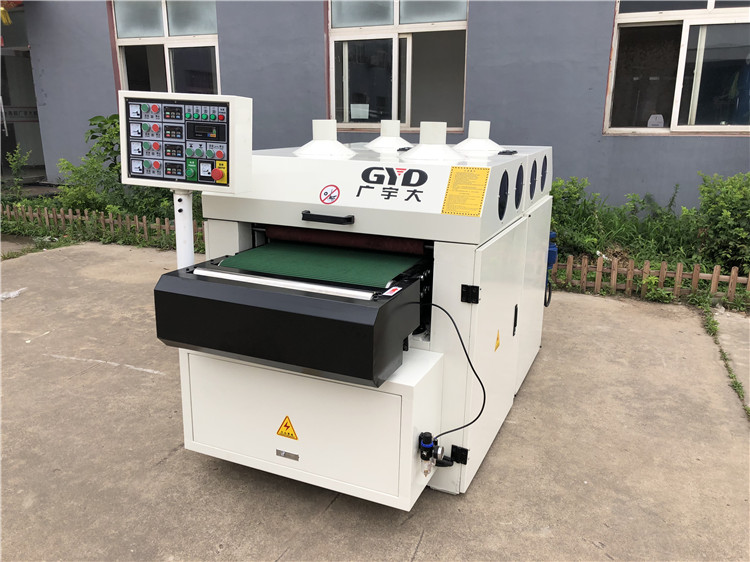
A wood grain wire brush machine modifies the surface of furniture components to create texture and visual depth.
It may remove softer earlywood more quickly than harder latewood, emphasize natural grain, open the surface for staining, or create a deliberate rustic appearance. The process can also remove loose fibers and prepare the component for coating.
The intended result may be subtle grain enhancement or pronounced relief. Each result requires different brush media, abrasive selection, feed speed, and pressure.
Ordinary sanding aims to create a smooth, uniform surface. Grain brushing intentionally creates controlled variation in surface height and texture.
A sanding operation may follow brushing to remove loose fibers or refine the texture. However, sanding should not erase the relief effect unless a smoother finish is specifically required.
The process sequence must define which operation creates the texture and which operation refines it.
Oak, ash, hickory, pine, and other species respond differently to brushing because of differences in grain density, hardness, and growth-ring structure.
Species with pronounced earlywood and latewood contrast often develop visible relief more readily. Dense or uniform-grain species may require different brush media or process settings.
Moisture content also matters. Wood that is too wet or too dry can behave unpredictably, affecting fiber removal, surface fuzzing, and dimensional stability.
Single-head machines use one rotating brush to texture, clean, or lightly refine a surface.
They can suit repair work, small batches, and furniture components that require operator control. They are also common for preliminary brushing or final surface conditioning.
Single-head machines are often easier to maintain and operate, but they may require multiple passes to achieve a complex surface requirement.
Multi-head machines use two or more brush heads in one pass. A common arrangement uses a wire brush for initial texturing, followed by abrasive nylon or nonwoven brushes for refinement.
This configuration can improve repeatability when incoming components, fixtures, and consumables are controlled. It can also reduce handling and repeated passes.
Multi-head systems still require process development. A poorly validated sequence can efficiently reproduce defects across an entire production batch.
Some machines combine wire brushing with belt, drum, or pad sanding. The wire brush creates texture, while the sanding element removes loose fibers and refines the surface.
This arrangement is common in furniture and rustic wood product production. The sanding stage must be controlled so it does not erase the intended relief.
The brush and sanding heads should be validated as a complete sequence rather than adjusted independently without inspection.
Polishing machines may use brush heads along with pads or compounds to refine coated surfaces.
On furniture, polishing is generally performed on a sufficiently cured coating. The polishing stage must be compatible with the coating and the brushed surface.
A compound suitable for one coating may not be appropriate for another. Validate the complete sequence on representative furniture components.
Automated lines use conveyors, robotic handling, vision systems, or programmed tool paths to process repeatable furniture components.
Automation can reduce manual handling and improve consistency when incoming parts, fixtures, and consumables are controlled.
Automation does not eliminate process development. A robot can efficiently reproduce an unsuitable brushing sequence just as easily as a good one.
Wire brushes use steel, stainless steel, brass, or other wire filaments to cut into the wood surface.
They can create pronounced relief, but they can also tear fibers or damage thin veneer if used too aggressively. Brush condition and wire type strongly influence the result.
Inspect brushes for broken wires, uneven wear, contamination, and loss of stiffness. Replace them before they create inconsistent texture or surface damage.
Abrasive nylon brushes combine nylon filaments with abrasive grain. Nonwoven brushes use flexible abrasive material to blend texture and reduce sharp edges.
These brushes can remove loose fibers, refine texture, and create a more controlled surface than wire brushing alone.
The abrasive grit, filament stiffness, and brush speed determine how much refinement occurs.
Sanding units remove loose fibers, smooth sharp ridges, and refine the brushed surface. They may use abrasive belts, rollers, pads, or brushes depending on the machine design.
Sanding after brushing can soften the texture while retaining grain definition. Sanding before brushing can prepare the component and remove machining marks.
The sequence should be validated on representative furniture components. A process that works for one species or thickness may not work for another.
Contact pressure and feed speed determine how much material is removed and how the surface looks.
Too much pressure can tear fibers, damage edges, or remove excessive material. Too little pressure can produce weak, inconsistent texture.
The correct settings are the minimum that produce stable brushing within the validated process.
Brushing and sanding generate fine wood dust and loose fibers. Effective extraction protects workers, keeps brushes clear, and helps maintain consistent texture.
OSHA identifies local exhaust ventilation as the primary method of controlling wood dust and recommends locating exhaust hoods close to the emission source. [2222]
Extraction must be designed for the machine, material, and production conditions. A running fan does not prove that collection performance is adequate.
Brush and abrasive selection should begin with the required visual result.
A subtle brushed furniture surface requires a different approach from a deeply distressed antique finish. Define acceptable texture depth, grain definition, edge condition, and surface cleanliness before selecting tooling.
Use approved reference samples rather than relying only on verbal descriptions such as "rustic" or "natural."
Wire brushes, abrasive nylon brushes, and nonwoven brushes behave differently on different species.
A wire brush that creates attractive relief on oak may damage a softwood or thin veneer. A nylon brush may refine one species effectively but fail to create enough texture on another.
Test the complete combination of species, moisture content, brush type, and machine settings.
A controlled sequence may begin with more aggressive texturing and progress to refinement.
The objective is to remove loose fibers and create a stable texture without leaving fuzz, torn grain, or excessive edge damage.
Change one significant variable at a time during trials so the effect of each change can be identified.
Brush wear changes texture over time. Worn wire brushes may lose cutting action, while contaminated brushes can smear or scratch the surface.
Establish replacement criteria based on texture quality, machine load, feed rate, and brush condition.
Keep spare brushes available for critical production equipment, especially where long lead times could interrupt output.
Check furniture components for machining defects, moisture problems, contamination, loose material, damaged edges, delamination, and insufficient thickness allowance.
Confirm that the component fits within the machine's handling limits. Material that cannot feed securely should not enter routine production.
Establish incoming inspection criteria and quarantine materials that fail them.
The starting surface determines the first brush or abrasive stage. A rough sawn board may require a different approach from a machined furniture panel with light tool marks.
Avoid starting too fine if coarse defects remain. The machine cannot efficiently remove a deep defect using only a mild polishing pad.
Record the starting condition because it forms part of the process specification.
Choose components that reflect the actual species, grade, moisture condition, thickness, and expected grain variation.
Begin with approved operating limits and adjust one significant variable at a time. Record brush type, abrasive grit, feed speed, contact depth, and inspection results.
A trial should include component ends, edges, profiles, and varied grain patterns, not only a convenient central section.
Use the selected brush configuration to create the intended texture.
Maintain controlled feed and avoid excessive dwell or pressure. Watch for torn fibers, burn marks, uneven relief, and edge damage.
If the target texture is not achieved, investigate whether the brush type, component preparation, or feed settings were appropriate rather than simply increasing pressure.
Use the approved sanding or brushing refinement stage to remove loose fibers and stabilize the texture.
The goal is a clean, consistent surface without losing the intended relief. Clean or replace brushes as specified, and avoid contamination from previous stages.
Inspect after cleaning. A component may look acceptable until loose fibers and dust are removed.
Textured furniture surfaces may require adjusted coating application because the surface has more area and recessed grain.
Verify that the coating reaches recesses, edges, and grain lines. Insufficient coverage can reduce durability and make cleaning difficult.
Follow the coating supplier's instructions for viscosity, application rate, curing, and handling.
A light brushed texture emphasizes grain while retaining a relatively smooth feel.
It may require a fine wire brush or abrasive nylon brush followed by light sanding. The goal is definition without deep relief.
This finish is often suitable for contemporary furniture where a natural appearance is desired.
A medium brushed texture creates more visible grain depth and surface variation.
It may require a more aggressive wire brush followed by refinement to remove loose fibers. The result should remain consistent across components and batches.
Approve samples under lighting conditions similar to the final application.
Deep relief and distressed textures create pronounced surface variation.
They require careful control to avoid splinters, torn grain, thin edges, or structural weakness. The process may use multiple brushing heads and refinement stages.
Define acceptable limits for fiber tear-out, edge damage, and surface roughness before production begins.
Reclaimed and antique appearances use deliberate irregularities to imitate aged or hand-finished wood.
Machine-produced versions require tooling or brush arrangements that create controlled variation rather than random damage.
The result should meet the design specification while remaining safe and durable in furniture use.
A reference sample helps translate descriptions such as "light brushed" or "deep relief" into an observable standard.
Include acceptable limits for texture depth, grain definition, fiber tear-out, edge appearance, and surface cleanliness.
Store the reference carefully and review it periodically. A damaged sample can become a misleading production standard.
Lighting strongly influences the visibility of texture, fuzz, scratches, and color variation.
Use consistent inspection conditions and viewing methods. Where the customer's application involves strong directional lighting, include a comparable check during approval.
A component should not pass merely because defects are difficult to see in one workshop position.
Where contracts require texture depth, gloss, color, or coating thickness measurements, use the specified method and calibrated instruments.
Visual texture, surface roughness, and gloss are related but not identical characteristics. A high gloss reading does not by itself establish that every appearance requirement has been met.
Combine appropriate measurements with controlled visual inspection.
Record accepted output, rejected components, brushing time, brush life, abrasive use, and repeated defects.
These data help reveal whether problems originate in brushing, sanding, material preparation, or handling.
The useful production measure is accepted finished furniture components, not simply the number of parts that pass through the machine.
Common defects include fuzzing, torn grain, uneven texture, burn marks, edge damage, and insufficient relief.
Investigate the complete process rather than assuming the brushing machine caused every problem.
Compare unbrushed, brushed, sanded, and coated samples to determine where variation begins.
Rotating brushes, spindles, rollers, and drive components can catch hands, clothing, or jewelry.
OSHA states that one or more methods of machine guarding must protect workers from hazards created by point of operation, ingoing nip points, rotating parts, flying chips, and sparks. [2271]
Rotating shafts can grip hair and clothing even when they appear smooth, and exposed projections on rotating parts can increase the danger. [2270]
Keep guards in place and correctly adjusted. Do not bypass interlocks or remove guards to improve access or recover production time.
Brushing and sanding can generate fine wood dust that requires effective collection.
OSHA recommends local exhaust ventilation that removes dust at or near its source, with hoods positioned close to the machine or emission point. [2222]
Maintain ducts, collectors, fans, and filters according to the manufacturer's instructions. Inspect for loose, broken, or damaged ductwork and for fan-drive slippage or breakage. [2222]
Wood dust can accumulate on floors, ledges, and equipment. Keep the work area clean and follow the facility's combustible-dust controls.
Do not allow dust to accumulate near motors, electrical components, or hot surfaces.
Use approved cleaning methods and avoid compressed air where it can disperse dust into the breathing zone.
Eye protection, hearing protection where required, and respiratory protection may be necessary depending on the material and exposure assessment.
PPE must match the hazard. A glove suitable for handling sharp wood may be unsafe near rotating machinery if it creates an entanglement risk.
Follow the machine manufacturer's instructions and the workplace protection program.
Maintain brushes, abrasives, contact rollers, conveyors, bearings, drives, filters, guards, and safety devices.
Inspect for wear on critical parts such as brush spindles, bearings, belts, and drive components. Keep critical spare parts for components with long lead times.
Include brushes, sensors, seals, filters, and control-system backups in the maintenance strategy.
Advertised feed speed is not the same as accepted production output.
Include loading, unloading, inspection, brush changes, cleaning, coating, and rework when assessing capacity. Test the actual product mix rather than only large, easy-to-handle panels.
Report accepted furniture components per shift or accepted surface area per hour using clearly defined conditions.
Include installation, extraction, brushes, abrasives, maintenance, labor, training, spare parts, and rejected material.
A lower-priced machine may be expensive if it produces inconsistent texture or damages expensive furniture components.
The best investment is the configuration that reliably meets the product specification at the required production volume.
It is a woodworking machine that uses rotating wire brushes, abrasive brushes, and sometimes sanding or polishing heads to emphasize wood grain and create controlled texture on furniture components.
No. Oak, ash, hickory, pine, and other species respond differently because of grain density and hardness. Always validate the process on the actual species, grade, moisture condition, and component construction.
No. Brushing creates or emphasizes texture, while sanding generally refines surface condition. Many furniture processes use both operations in sequence.
Yes. Aggressive wire brushing can remove excessive material or damage thin veneer. Use controlled brush media, reduced pressure, and representative trials before production.
Brushing and sanding generate fine wood dust and loose fibers. OSHA identifies local exhaust ventilation as the primary method of controlling wood dust and recommends placing hoods close to the emission source. [2222]
Fuzzing can result from excessive brushing, unsuitable brush media, high moisture content, or inadequate refinement after brushing. Use the approved sanding or nylon-brush refinement stage and inspect after cleaning.
Check species compatibility, component size limits, brush life, texture quality, dust extraction, guarding, service support, and total operating cost. A documented trial using actual furniture components provides stronger evidence than specifications alone.


