
Views: 274 Author: 广宇大 Publish Time: 2026-10-13 Origin: Site


Content Menu
● What Is a Glue Spreader Machine?
>> Why Controlled Spreading Matters
● How a Roller Glue Spreader Works
>> Applicator and Metering Rollers
>> Single-Sided and Double-Sided Application
>> Feeding and Thickness Adjustment
● Main Types of Glue Spreader Machines
>> Roller Coaters for Specialty Adhesives
>> Nozzle, Curtain, and Bead Applicators
>> Veneer and Laminate Bonding
>> Furniture, Doors, and Joinery
>> Plywood and Engineered Panels
>> Sandwich Panels and Insulation Products
● Selecting the Right Glue Spreader Machine
>> Define the Substrate and Product
>> Specify Capacity and Automation
>> Consider Cleaning and Changeovers
>> Prepare Materials and Adhesive
>> Set Roller Gap and Glue Film
>> Establish a Validated Recipe
● Quality Control and Bond Verification
>> Bond Tests
● Troubleshooting Common Problems
>> Roller Marks and Surface Defects
● Safety, Cleaning, and Maintenance
>> What Is a Glue Spreader Machine Used For?
>> What Is the Difference Between a Two-Roller and Four-Roller Glue Spreader?
>> Can a Glue Spreader Apply Adhesive to Both Sides?
>> How Do I Measure Adhesive Spread Rate?
>> Which Adhesives Work in a Glue Spreader Machine?
>> How Often Should Glue Spreader Rollers Be Cleaned?
>> Why Is My Glue Spreader Producing Uneven Coating?
A glue spreader machine applies a controlled, uniform adhesive film to flat materials before they are assembled, laminated, veneered, or pressed. It is widely used in woodworking, furniture production, plywood and panel manufacture, door making, flooring, insulation products, and composite-panel lines. By replacing inconsistent hand application with controlled rollers or other metering systems, a glue spreader machine can improve bond consistency, reduce adhesive waste, and increase throughput.
The machine is only one part of the bonding process. Adhesive selection, substrate condition, spread rate, open time, assembly time, press pressure, curing conditions, and inspection all determine the final bond. This guide explains glue spreader machine types, operating principles, applications, selection criteria, setup, quality control, cleaning, maintenance, and troubleshooting.
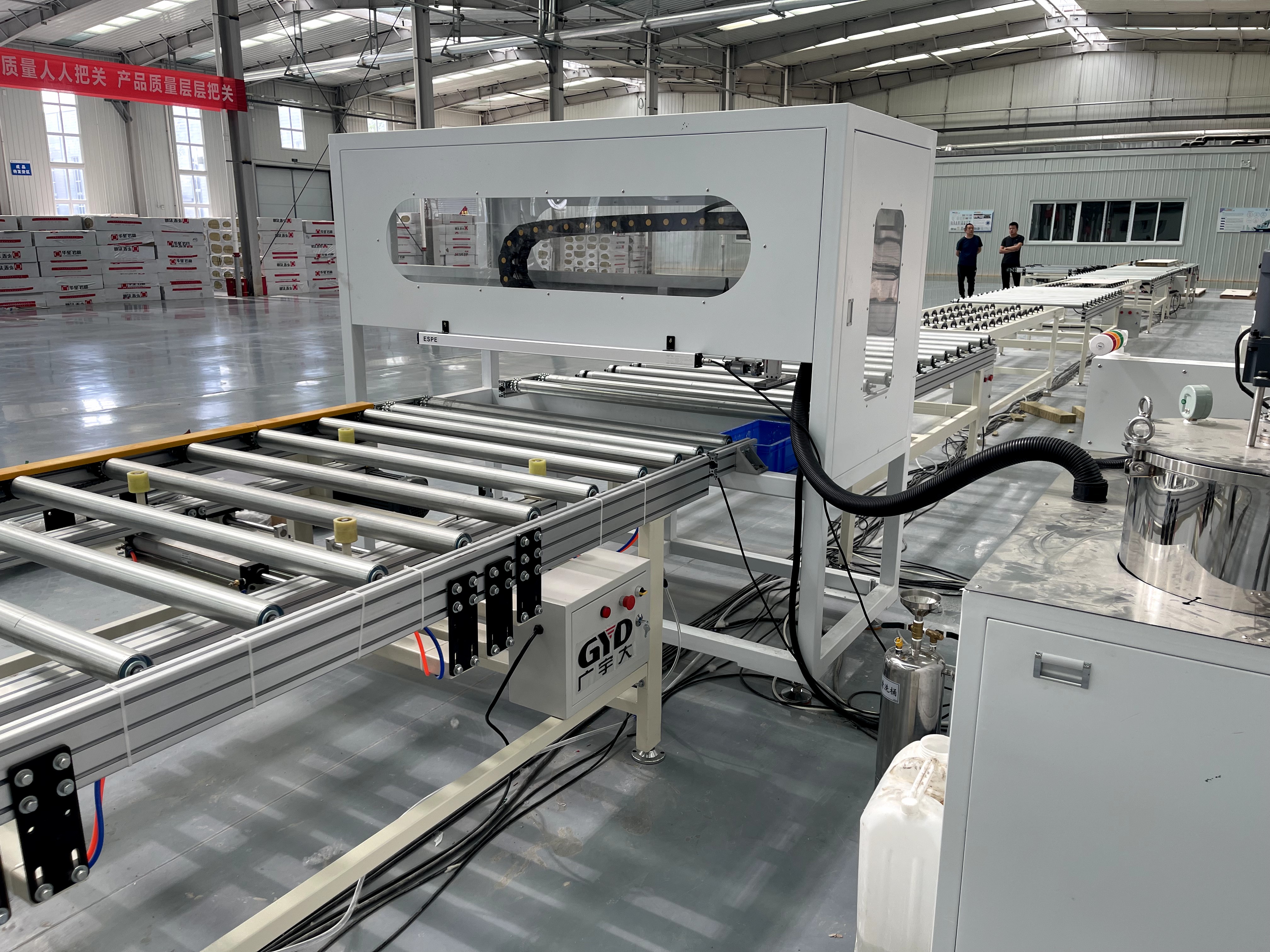
A glue spreader machine transfers adhesive from a reservoir or feed system to one or both faces of a panel, board, veneer, or other component. In the most common roller configuration, applicator rollers pick up adhesive and deposit it as the workpiece passes through the nip. Metering rollers regulate the amount of adhesive transferred, helping create a repeatable film across the working width.
Industrial glue spreaders are used to apply adhesive uniformly to flat or embossed surfaces before assembly or coating. Depending on the process, suppliers offer roller, nozzle, and curtain-coating arrangements, including customized systems for wood, paper, plastics, composites, and technical materials.
Too little adhesive can cause dry spots, poor wetting, weak bonds, and delamination. Too much adhesive increases material cost, creates squeeze-out, contaminates machine parts, lengthens cleanup, and can affect pressing or finishing. Uniform application allows the adhesive to wet both surfaces without excessive accumulation at panel edges.
Commercial roller spreaders are designed to regulate adhesive volume more accurately than hand spreading. A supplier notes that controlled application can reduce glue consumption and reduce squeeze-out, making trimming easier after pressing.
A typical roller glue spreader uses rubber-coated applicator rollers and metering or dosing rollers. Adhesive is supplied to the roller zone, the metering roller controls the adhesive film, and the applicator roller transfers adhesive onto the passing workpiece. Some machines use grooved applicator rollers to help distribute material evenly across the width.
The roller surface, hardness, groove geometry, speed relationship, nip setting, and adhesive viscosity all influence the final spread. A machine that works well with thin PVA may require a different setting or roller combination for a more viscous adhesive. Setup must be established through measured trials rather than assumed from a previous product.
Single-sided machines apply adhesive to one face of a substrate. They are useful when a veneer, laminate, foil, or second component will be joined to a single coated panel. Double-sided machines apply adhesive to both sides in one pass, which can be useful for panel assembly, multilayer products, and certain lamination workflows.
Roller spreader suppliers offer one-sided and dual-sided configurations. A four-roller system can provide controlled distribution and may be selected for larger panels, demanding coverage standards, or higher-volume lamination. [1985]
The workpiece enters the machine through feed rollers or a guided infeed zone. Thickness adjustment establishes the passage height and roller contact for the material. If the setting is too tight, the machine can mark, crush, or deflect a panel. If it is too loose, coverage may be poor or irregular.
Some machines use manual thickness adjustment; others use motorized settings, digital readouts, automatic feeding, and integrated conveyors. Variable-speed options can help match the adhesive application stage to pressing, laminating, and material-handling operations downstream.
Two-roller machines are common in workshops and smaller production environments. They are relatively simple, economical, and suitable for many water-based adhesive applications. A two-roller setup can deliver a consistent film across the width when it is correctly adjusted and maintained.
Examples of commercial two-roller machines span working widths from 400 to 1,600 millimeters, with stated glue-application ranges of 65 to 280 grams per square meter depending on adhesive and roller fluting. These values are model-specific examples, not universal recommendations.
Four-roller machines typically provide greater control over glue distribution and can be useful for wider panels, larger production volumes, or applications that require more consistent metering. The added rollers can help separate adhesive pickup, dosing, and transfer functions.
A four-roller machine should not be chosen solely because it has more rollers. The correct decision depends on substrate width, panel flatness, adhesive type, target spread rate, line speed, production volume, and cleaning requirements. Suppliers describe four-roller arrangements as a way to provide precise and uniform application for panels and wood components. [1981]
Some glue spreader machines are designed for specific adhesive families, including hot-melt PUR, liquid polyurethane, phenolic, urea, EVA, EPI, and water-dispersion adhesives. Hot-melt systems may use heated reservoirs, temperature-controlled rollers, and insulated components; liquid systems may use pumps, filters, or mixing equipment.
Do not use an adhesive in a machine unless the supplier confirms compatibility with rollers, seals, hoses, pumps, temperature limits, and cleaning method. Solvent-based, moisture-reactive, and heated materials can require specialized equipment and safety controls.
Although roller machines are common, other glue spreader equipment may use nozzles, curtain coating, slot dies, or bead application. These methods can be selected for shaped parts, narrow profiles, highly controlled patterns, difficult adhesives, or processes where full-width roller coating is not suitable.
A nozzle system can apply defined beads rather than a full surface film. It may reduce adhesive use in selected joints, but it requires accurate part positioning and careful control of nozzle cleanliness, pressure, and start-stop timing.
Glue spreader machines are widely used to apply adhesive before veneering wood panels or laminating decorative sheets. Controlled glue application helps reduce uneven penetration, discoloration, and bonding variation. Roller coaters may be used with plywood, chipboard, MDF, HDF, flooring materials, and other flat substrates.
The adhesive film must match the veneer thickness, porosity, substrate surface, press cycle, and required finished appearance. A porous veneer may need a different adhesive or spread rate than a dense laminate. Always conduct trial assemblies before launching production.
Furniture factories use glue spreaders for cabinet parts, table tops, doors, worktops, solid-wood assemblies, wall panels, and interior fittings. A machine can apply adhesive to rails, stiles, boards, veneers, and panels before they enter clamps or presses. Four-roller systems are often used for controlled full-surface bonding in such workflows.
For frame-and-panel doors or narrow components, a full-width roller machine may not be the best choice. A bead applicator, nozzle system, or profile-specific gluer can apply adhesive only where the joint requires it, reducing cleanup and waste.
Plywood, particleboard, MDF, composite panels, and laminated construction products can require accurate adhesive distribution across large surfaces. A glue spreader supports repeatable coverage before hot pressing, cold pressing, or other consolidation steps. Panel lines may integrate infeed conveyors, spreaders, layup stations, presses, trimming, and stacking equipment.
The adhesive, substrate, and press schedule must be developed as one process. A perfect glue film cannot compensate for incorrect press temperature, insufficient dwell time, excessive moisture, poor veneer quality, or incompatible substrate surfaces.
Glue spreaders can apply adhesive for sandwich panels using EPS, XPS, mineral wool, foam, metal, OSB, fibre-cement, or decorative skins. Equipment suppliers list applications involving chipboard, MDF, OSB, EPS, and other panel materials, including hot-melt PUR systems for difficult-to-bond surfaces. [1987]
Foam and insulation materials may be easily compressed or damaged, so nip pressure, roller hardness, feed alignment, and adhesive chemistry require special attention. Test the panel for bond uniformity, core damage, delamination, and dimensional stability after curing.
Start with the maximum and minimum panel width, thickness, length, weight, flatness, surface texture, and material type. Identify whether the factory processes solid wood, plywood, MDF, particleboard, metal, plastic, foam, veneer, laminate, or composite products. Consider the most difficult production case rather than only average workpieces.
The machine's working width must cover the largest panel with reasonable clearance. Its passage height must accommodate the thickest part. For example, commercial lines commonly list passage capacities up to 100 millimeters for specific models, but buyers should verify the exact machine specification and real production tolerance.
Provide the adhesive technical data sheet to the machine supplier. Confirm viscosity, solids content, recommended spread rate, working temperature, pot life, open time, cleaning method, and compatibility with roller materials. Determine whether the adhesive is water-based, reactive PUR, hot melt, urea-formaldehyde, phenolic, EPI, or another chemistry.
A water-based roller spreader should not automatically be used for solvent, reactive, or hot-melt products. For example, some spreaders are explicitly designed for water-soluble adhesives, while specialty equipment may be needed for PUR hot-melt or other materials.
Calculate hourly demand based on panel count, size, required adhesive-coated area, changeovers, and cleaning time. Then decide whether a standalone machine is sufficient or whether conveyors, automatic glue feeding, thickness setting, washing, and stacking are justified.
A workshop that processes irregular custom panels may value flexibility and quick cleaning. A high-volume plant may prioritize consistent feed, automatic dosing, recipe control, integrated material handling, and data collection. Avoid paying for automation that does not solve a real production constraint.
Cleaning is not a minor detail. Adhesive residue can harden on rollers, damage surface quality, block nozzles, and increase downtime. Ask whether the machine has integrated wash brushes, roller-cleaning devices, drainage, adhesive recovery, or a defined changeover procedure.
Some commercial roller spreaders include manual wash systems that direct water onto rollers through brushes, reducing cleanup time for compatible water-based adhesives. This feature may not be suitable for every adhesive chemistry.
Inspect panels for dust, oil, moisture, loose particles, warpage, or damage. Bring adhesive to the supplier's recommended temperature and mix components accurately if using a two-part product. Verify shelf life, pot life, and storage conditions.
Do not introduce contaminated adhesive into the machine. Use clean containers, filters where appropriate, and dedicated tools. If changing adhesive types, confirm that the system is fully cleaned and that seals and rollers are compatible with the new material.
Adjust the passage height and roller settings to the actual panel thickness. Start with the machine supplier's guidance and the adhesive manufacturer's target spread rate. Run trial panels, weigh them before and after coating, and calculate adhesive mass per unit area.
Use consistent units, such as grams and square meters, to report grams per square meter. Repeat measurements across the width and between production batches to verify uniformity.
Record adhesive type, batch, temperature, viscosity if applicable, roller settings, line speed, spread rate, panel type, and operator. Press trial assemblies at the intended conditions and test bonding performance after the required cure period.
A good recipe includes limits, not merely a target. Define acceptable ranges for spread rate, open time, press pressure, press time, and material condition. When a measured value is outside its limit, stop and correct the process before producing more panels.
Inspect the coating pattern at startup, after adjustments, and at defined intervals. Look for skipped strips, dry edges, heavy bands, roller marks, bubbles, contamination, and uneven coverage. Check whether the coating is reaching the panel edges when full-surface bonding is required.
Weigh sample panels to confirm the applied amount. Verify roller cleanliness, panel alignment, adhesive temperature, feed speed, and machine settings. Do not use only visual inspection; an apparently uniform film may still be outside the approved mass-per-area range.
After spreading, assemble parts within the adhesive's open time. Apply the manufacturer-recommended press pressure, temperature, and dwell time. If the assembly waits too long, the adhesive can lose wetting ability; if it is pressed too soon or at the wrong pressure, the bond can be compromised.
Control conditions after pressing as well. Some adhesives reach handling strength quickly but require longer time to develop final properties. Do not machine, sand, package, or ship bonded panels before the adhesive has reached the required cure condition.
Use tests appropriate to the product: visual checks after destructive separation, peel testing, shear testing, delamination testing, moisture exposure, or other recognized product-specific tests. The test method and acceptance criteria should be established by engineering, customer requirements, applicable standards, and the adhesive supplier's recommendations.
Record test outcomes by batch and link them to raw materials and machine settings. If failures occur, isolate affected production and investigate adhesive spread, materials, press conditions, and curing history.
Uneven coverage can result from dirty rollers, worn or damaged roller surfaces, incorrect metering settings, inconsistent adhesive viscosity, poorly aligned panels, or a substrate that varies in thickness. Clean and inspect rollers first, then verify the gap, adhesive condition, and feed alignment.
Measure spread rate at several locations across the panel. If only one side is light, inspect roller parallelism and support bearings. If the entire panel is inconsistent, investigate adhesive supply, temperature, viscosity, and machine-speed stability.
Squeeze-out may be caused by excessive spread rate, overly high press pressure, poor joint design, or use of an adhesive with unsuitable viscosity. Reduce the spread rate only after confirming the bond retains sufficient coverage. Do not compensate for bad pressing practice simply by starving the joint of adhesive.
Controlled roller application can reduce excessive edge squeeze-out compared with manual spreading, but correct press settings and part fit remain essential.
Weak bonds can stem from insufficient glue, expired adhesive, incorrect mix ratio, excessive open time, cold materials, high moisture content, contaminated surfaces, inadequate press pressure, or insufficient curing. Review process records rather than making assumptions from the failure appearance.
Separate material failures from bonding failures. If wood fibers tear away from the panel during a destructive test, the adhesive bond may be stronger than the substrate. If the surfaces separate cleanly at the glue line, investigate wetting, adhesive chemistry, spread, open time, and press conditions.
Roller marks can occur when the roller surface is damaged, the glue film is too heavy, material is too soft, or feed pressure is excessive. Change roller settings, inspect roller hardness and groove condition, and confirm that the panel surface is suitable for the selected application method.
For decorative veneer and high-gloss laminates, validate the process on representative samples. A bond can be strong but visually unacceptable if adhesive telegraphs through a thin decorative surface.
Glue spreader machines contain rotating rollers, nips, conveyors, drives, and sometimes heated components. Use guarding, emergency stops, safe feeding procedures, and lockout/tagout controls during cleaning and maintenance. Keep hands, gloves, tools, and loose clothing away from moving roller nips.
Train operators on startup, normal operation, emergency stops, adjustment, cleaning, and adhesive hazards. Do not bypass guards for faster panel feeding or cleanup. The small time saved is not worth the injury risk.
Review every adhesive safety data sheet. Use suitable gloves, eye protection, protective clothing, and ventilation. Reactive polyurethane and hot-melt products can have additional inhalation, skin-sensitization, temperature, and moisture-control risks. Maintain spill kits and approved waste-disposal procedures.
Water-based adhesive does not automatically mean harmless. Follow the supplier's handling, cleaning, and disposal instructions for every material used in the plant.
Clean rollers and glue-contact surfaces promptly using the approved method. Inspect roller coatings for cuts, swelling, hardening, wear, and contamination. Check bearings, gears, chains, motors, belts, seals, pumps, sensors, and guards on a preventive schedule.
Calibrate thickness adjustment and verify roller alignment. Keep records of cleaning, maintenance, roller replacement, adhesives used, and production problems. Routine maintenance is less costly than producing a large batch of defective panels.
A glue spreader machine applies a controlled adhesive film to panels, boards, veneers, laminates, and other components before assembly or pressing. Typical uses include furniture, doors, flooring, plywood, panel lamination, and composite products.
Two-roller machines are often suitable for straightforward applications and smaller production needs. Four-roller machines can provide additional control for wider panels, demanding coverage requirements, or higher-volume work. The correct choice depends on adhesive, substrate, target spread rate, and throughput.
Yes. Many roller machines are configured for single-sided or double-sided application. Choose the configuration based on whether one or both surfaces require adhesive before assembly.
Weigh a known panel area before and after coating, calculate the adhesive mass increase, and divide that mass by the coated area. Report the result in grams per square meter and compare it with the validated production target.
Compatibility depends on the machine. Water-based PVA and similar adhesives are common in standard roller spreaders, while hot-melt PUR, liquid polyurethane, urea, phenolic, EPI, and other products may require specialized machines, components, or temperature control.
Clean them according to the adhesive supplier's allowable working time and the machine manufacturer's instructions—typically at the end of a shift, before an adhesive change, and immediately if buildup affects coverage. Do not allow adhesive to cure on roller surfaces.
Common causes include dirty or worn rollers, incorrect gap settings, improper adhesive viscosity or temperature, poor feed alignment, and variation in substrate thickness. Inspect, clean, measure, and adjust one factor at a time.


