
Views: 271 Author: 广宇大 Publish Time: 2026-09-14 Origin: Site


Content Menu
● The Shift from Manual to Automated Finishing
● Trend One: Labor Shortages Are Accelerating Automation
● Trend Two: Quality Requirements Are Becoming More Strict
>> Automation and Digital Quality Control
● Trend Three: Material Waste Is Becoming a Financial and Environmental Issue
● Trend Four: Robotics Are Expanding Beyond Automotive
● Trend Five: AI Vision and Closed-Loop Control
● Trend Six: Water-Based and Low-VOC Coatings
● Trend Seven: Integrated Coating Lines
● Trend Eight: Modular Automation Is Growing
>> When Modular Automation Makes Sense
● New Expert Insight: Automate the Bottleneck, Not the Most Visible Machine
● New Expert Insight: Product Mix Determines Automation Level
● How Industrial Buyers Should Evaluate Automation
● Applications for GYD Machinery Customers
>> Wooden Doors
>> Furniture and Cabinet Doors
>> Flooring
>> Glass
>> Fibre Cement
● Safety and Environmental Requirements
● Visual Content Recommendations
● What Manufacturers Should Do Next
>> Request an Automation Assessment
>> 1. How is automation changing industrial finishing?
>> 2. Does every manufacturer need a robot?
>> 3. What is the main benefit of automated spray painting?
>> 4. Are water-based coatings driving automation?
>> 5. Is automation suitable for wooden doors and cabinet doors?
>> 6. Can automation be implemented in stages?
>> 7. How should manufacturers calculate automation ROI?
The spray painting machine market is moving from standalone manual equipment toward automated, robotic, and digitally connected finishing systems. Manufacturers are making this transition because they need more consistent quality, lower material waste, higher throughput, better worker safety, and stronger control over production costs.
Market estimates vary by definition and research method. One 2026 forecast estimates the global robotic painting, coating, and finishing market at US$3.8 billion in 2026, growing to US$9.0 billion by 2036 at a 9.0% compound annual growth rate. Another estimate projects the painting-robot market to grow from US$3.5 billion in 2026 to US$7.0 billion by 2035, driven by labor costs and skilled-worker shortages. [futuremarketinsights]
These figures are market-research projections, not audited industry totals. However, they point to a clear direction: automation is becoming a core industrial-finishing strategy rather than a luxury reserved for large automotive plants.
For manufacturers of wooden doors, furniture, cabinet doors, flooring, glass, fibre cement, and other products, automation does not mean every factory needs a robot immediately. The practical question is: Which level of automation improves your production economics without creating unnecessary complexity?
GYDFinishing—also known as GYD Machinery—is a machinery manufacturer delivering comprehensive products and surface-finishing solutions for wood, glass, fibre cement, and a wide range of materials. Founded in 2007, GYD Machinery combines worldwide practical experience with more than two decades of technological heritage. Its solutions range from individual machines to complete turnkey coating lines.
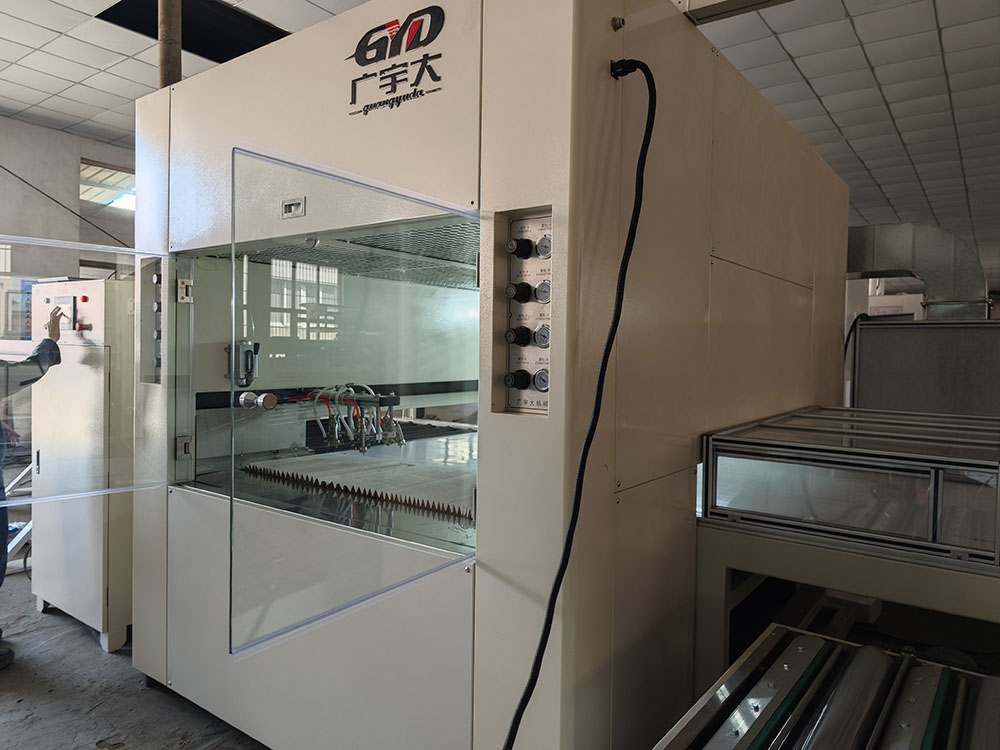
Traditional finishing relies heavily on operator judgement. The painter controls:
- Gun distance.
- Spray angle.
- Travel speed.
- Overlap.
- Fluid pressure.
- Air pressure.
- Number of passes.
- Edge coverage.
- Trigger timing.
A skilled operator can achieve excellent results. But manual performance may vary because of fatigue, training, lighting, workload, coating temperature, and shift changes.
An automated system uses programmed equipment to repeat:
- Spray paths.
- Gun distance.
- Fluid flow.
- Pressure.
- Product spacing.
- Conveyor speed.
- Trigger timing.
- Drying residence time.
Graco identifies five major benefits of paint automation: reducing cost, improving quality, reducing waste, increasing flexibility, and reducing labor costs. [graco]
Industrial spray finishing requires experienced operators. These workers understand coating behavior, surface preparation, atomization, film thickness, flash-off, and defect prevention.
Manufacturers are facing:
- Skilled-worker shortages.
- Retirement of experienced painters.
- Rising labor costs.
- Higher training requirements.
- Increased competition for technical workers.
- Worker reluctance to perform repetitive or solvent-heavy tasks.
Automation allows factories to reduce dependence on manual spraying while moving employees into roles involving:
- Line supervision.
- Quality inspection.
- Maintenance.
- Recipe management.
- Process improvement.
- Coating preparation.
Automation does not eliminate people. It increases the value of technical people.
Customers increasingly expect consistent:
- Color.
- Gloss.
- Film thickness.
- Adhesion.
- Edge coverage.
- Surface smoothness.
- Curing quality.
Manual spray finishing can produce high quality, but the result depends heavily on individual technique.
Automation can improve repeatability by controlling:
- Gun movement.
- Spray speed.
- Fluid volume.
- Air pressure.
- Overlap.
- Product position.
- Drying time.
Cefla explains that automated coating can improve production efficiency, lacquer savings, and consistency while reducing labor requirements. [ceflafinishing]
Modern systems may include:
- Recipe management.
- Product recognition.
- Automatic parameter adjustment.
- Vision inspection.
- Film-thickness monitoring.
- Defect classification.
- Batch records.
- Alarm history.
- Remote diagnostics.
Automation does not correct poor coating preparation. The coating, substrate, spray equipment, and drying process must still be engineered together.
Coating waste directly affects operating cost. It may result from:
- Overspray.
- Extra passes.
- Poor overlap.
- Spraying between products.
- Excessive film thickness.
- Worn tips.
- Incorrect pressure.
- Rework.
- Color-change flushing.
- Cleaning losses.
Automatic systems can reduce waste through:
- Product detection.
- Automatic triggering.
- Stable spray distance.
- Repeatable gun movement.
- Controlled flow.
- Recipe-based settings.
- Consistent product spacing.
Graco states that paint automation can reduce material consumption by up to 30% in suitable applications. This figure should be validated through a factory trial because actual savings depend on coating chemistry, geometry, transfer efficiency, and settings. [graco]
The most reliable measurement is coating consumed per accepted, fully cured product.
Robotic painting was historically associated with automotive production. It is now expanding into:
- Furniture.
- Cabinet doors.
- Wooden doors.
- Flooring.
- General industrial equipment.
- Glass.
- Fibre cement.
- Composite products.
- Aerospace components.
- Consumer products.
Painting robots can provide:
- Multi-axis movement.
- Repeatable gun distance.
- Consistent spray angle.
- Flexible product recipes.
- Reduced operator exposure.
- Better access to complex surfaces.
Future Market Insights projects the painting-robots market to grow from US$5.9 billion in 2026 to US$14.2 billion by 2036, citing automation, labor shortages, safety requirements, quality standards, and AI-enabled systems as growth factors. [futuremarketinsights]
The next stage of finishing automation is not simply "replace a painter with a robot."
It is the connection of:
- Machine vision.
- Product recognition.
- Path planning.
- Film-thickness measurement.
- Defect inspection.
- Automatic parameter correction.
- Production analytics.
AI-enabled inspection can identify:
- Missed areas.
- Sagging.
- Orange peel.
- Uneven gloss.
- Contamination.
- Edge buildup.
- Color variation.
Closed-loop systems can use inspection data to improve future coating cycles. This is especially valuable for products with high rejection costs.
However, AI should be evaluated carefully. Buyers should ask:
- What defect types can the system detect?
- What lighting is required?
- How is the system trained?
- Can it distinguish coating defects from substrate defects?
- How are false positives handled?
- Can data be exported to factory systems?
Manufacturers are increasingly evaluating:
- Water-based coatings.
- High-solids materials.
- Powder coatings.
- Low-VOC systems.
- Fast-drying formulations.
- Low-temperature curing coatings.
These materials may require changes in:
- Viscosity control.
- Atomization.
- Fluid pressure.
- Flash-off.
- Drying.
- Humidity management.
- Film-thickness control.
- Cleaning procedures.
Rohner identifies water-based coatings, powder coatings, low-temperature curing, recovery systems, robotics, and labor challenges as important paint-finishing trends in 2026. [rohnerspraybooths]
The spray system must be selected with the coating supplier's technical data sheet and actual application trial.
Manufacturers are moving beyond individual spray guns toward integrated finishing systems.
A complete line may connect:
- Loading.
- Dust removal.
- Sanding.
- Spraying.
- Flash-off.
- Drying.
- Curing.
- Inspection.
- Stacking.
- Packaging.
- Production data.
Integration can reduce:
- Manual transfer.
- Waiting time.
- Product damage.
- Work-in-process inventory.
- Process variation.
- Unplanned downtime.
For GYD Machinery customers, complete lines can be designed for wooden doors, furniture, cabinet doors, flooring, glass, and fibre cement. The correct layout depends on product geometry, coating layers, output, curing requirements, and available factory space.
Not every factory is ready for a full turnkey line.
A modular path may begin with:
- Automatic spray machine.
- Reciprocator.
- Conveyor.
- Product detection.
- Automatic drying.
- Inspection camera.
- Automatic stacking.
This approach allows manufacturers to automate the largest bottleneck first.
Modular automation is practical when:
- Demand is growing but not fully stable.
- Product families are partly standardized.
- Capital must be controlled.
- Existing equipment can be reused.
- The factory wants to reduce project risk.
- Future integration is planned from the beginning.
The original layout should reserve capacity for future utilities, conveyors, controls, ventilation, drying, and handling.
A common purchasing mistake is automating the spray booth without studying the entire workflow.
The actual bottleneck may be:
- Surface preparation.
- Dust removal.
- Spray application.
- Flash-off.
- Drying.
- Curing.
- Inspection.
- Stacking.
- Color change.
- Manual product handling.
A faster spray gun will not increase finished output if the drying tunnel is too small. A robot will not improve delivery performance if loading and unloading remain slow.
Before purchasing equipment:
1. Map the complete process.
2. Measure each stage.
3. Identify waiting time.
4. Calculate accepted output.
5. Automate the constraint.
6. Re-measure after commissioning.
Automation should match product repeatability.
Fixed guns or reciprocators are often suitable for:
- Standardized doors.
- Cabinet panels.
- Flooring boards.
- Flat fibre cement panels.
- Repeated coating recipes.
Robotic systems are more suitable for:
- Profiled wooden doors.
- Irregular furniture components.
- Recessed panels.
- Mixed geometries.
- Multi-angle surfaces.
- Frequent recipe changes.
Manual or semi-automatic equipment may remain appropriate for:
- Prototypes.
- Special colors.
- Short production runs.
- Process development.
- Oversized or unusual products.
A hybrid factory can combine all three levels.
Use this process:
1. Define product families and annual volume.
2. Record product dimensions and orientation.
3. Identify coating chemistry, viscosity, and solids.
4. Set film-thickness and finish requirements.
5. Measure current labor hours.
6. Weigh coating consumption.
7. Record rework, scrap, and rejection.
8. Measure color-change and cleaning time.
9. Identify the production bottleneck.
10. Run actual product trials.
11. Compare manual, semi-automatic, robotic, and integrated options.
12. Calculate cost per accepted product.
13. Include energy, maintenance, training, and downtime.
14. Select equipment with a documented upgrade path.
Ask for:
- Actual coating-trial results.
- Tested throughput.
- Coating viscosity range.
- Transfer-efficiency method.
- Film-thickness distribution.
- Utility requirements.
- Color-change time.
- Cleaning procedure.
- Maintenance schedule.
- Spare-parts list.
- Operator training.
- Warranty scope.
- Acceptance criteria.
- Future integration options.
Automation can provide repeatable spray paths, edge coverage, drying, inspection, and recipe management. Robotic or manual systems may be better for custom profiles.
Cabinet doors often provide sufficient repeatability for automation. Robotic systems add flexibility for complex furniture components.
Flooring production can benefit from continuous conveying, consistent spray width, stable line speed, and integrated drying.
Glass coating requires controlled handling and contamination prevention. Automation improves repeatability for standardized panels.
Fibre cement may require high-build protective coating and reliable coverage. Automatic equipment can support high-volume production and consistent film build.
Both manual and automated spray systems require suitable ventilation and safe operating procedures.
OSHA identifies spray operations as presenting physical and health hazards. Relevant requirements address:
- Mechanical ventilation.
- Flammable and combustible materials.
- Ignition sources.
- Electrical equipment.
- Booth construction.
- Exhaust systems.
- Fire protection.
- PPE.
- Maintenance and cleaning. [osha]
Manufacturers must also review local fire codes, coating safety data sheets, and customer-specific requirements.
Automatic systems should include:
- Ventilation interlocks.
- Emergency stops.
- Guarding.
- Access-door interlocks.
- Pressure-relief procedures.
- Fire detection or suppression where required.
- Lockout/tagout.
- Safe maintenance access.
Automation can reduce direct exposure but does not eliminate training, PPE, ventilation, inspection, and safe chemical handling.
Add these visual elements:
- Automation timeline: Show the progression from manual booth to smart coating line.
- Technology infographic: Compare manual, semi-automatic, reciprocating, robotic, and integrated systems.
- AI inspection diagram: Illustrate product detection, spraying, inspection, and feedback.
- Market-trend chart: Present cited market projections with publication dates.
- Factory video: Demonstrate automated finishing on a wooden door or cabinet panel.
- Factory-layout illustration: Show loading, spraying, drying, inspection, and stacking.
Photorealistic future-ready industrial finishing factory, showing manual spray booth, semi-automatic reciprocating spray machine, six-axis robotic spray cell, AI vision inspection, conveyorized coating line, drying tunnel, wooden doors, furniture panels, cabinet doors, flooring boards, glass and fibre cement products, clean modern engineering environment, professional B2B editorial style, no logos, no text.
Manufacturers should not automate simply because the market is growing.
Begin with a documented review:
- Measure labor.
- Measure coating consumption.
- Measure rework.
- Measure accepted output.
- Measure downtime.
- Define product standardization.
- Test the coating.
- Compare equipment options.
- Calculate cost per accepted product.
- Build a phased implementation plan.
Automation is most valuable when it improves the complete finishing process—not only the spray application step.
Contact GYDFinishing / GYD Machinery with your product drawings, coating data sheets, annual output, product mix, finish standards, available floor space, and current production challenges. GYD Machinery can recommend manual, semi-automatic, robotic, or complete automated coating equipment for wood, glass, fibre cement, furniture, cabinet doors, and flooring.
Automation is improving repeatability, production planning, material control, worker ergonomics, inspection, data collection, and integration between spraying, drying, and handling.
No. A reciprocator, automatic spray machine, semi-automatic line, or manual booth may be more suitable depending on product geometry, volume, and flexibility requirements.
The main benefit is usually repeatability. Consistent movement, flow, pressure, and timing can reduce variation, waste, and rework.
They are one factor. Water-based and low-VOC coatings may require more precise control of application, drying, humidity, and film thickness. [rohnerspraybooths]
Yes, particularly when product sizes and coating recipes repeat. Robotic or manual systems may remain better for custom profiles and short runs.
Yes. Manufacturers can begin with spraying or conveying and add drying, inspection, stacking, and digital controls later.
Include labor, coating, waste, rework, energy, maintenance, downtime, training, and accepted output. The most useful metric is cost per accepted, fully cured product.
1. [Future Market Insights — Robotic Painting, Coating and Finishing Market] — Market-size estimates, growth outlook, automation drivers, and industry trends.
2. [Global Market Insights — Painting Robot Market] — Market projections and drivers including labor costs, skilled-worker shortages, AI inspection, and closed-loop process control.
3. [Future Market Insights — Painting Robots Market] — Market projections, application segments, robot types, and the shift toward controlled manufacturing coating systems.
4. [Graco — Robot Painting and Automatic Painting] — Discusses automation benefits including cost, quality, waste, flexibility, labor, and potential material-consumption reduction.
5. [Cefla Finishing — Three Reasons to Move from Manual to Automated Spray Coating] — Discusses transfer efficiency, lacquer savings, productivity, and labor reduction.
6. [Rohner Spray Booths — Top Trends Shaping Paint Finishing in 2026] — Discusses water-based coatings, powder coatings, low-temperature curing, recovery, robotics, and labor challenges.
7. [ChemQuest — The Future of Application: Drones, Robotics, and AI] — Discusses robotics, AI-enabled application, safety, labor shortages, and sustainable coating processes.
8. [OSHA Technical Manual — Spray Finishing Operations] — Technical guidance on spray-finishing hazards, ventilation, and exposure control.
9. [OSHA — 29 CFR 1910.107 Spray Finishing] — Requirements for spray booths, ventilation, flammable materials, fire protection, and electrical safety.


