
Views: 291 Author: 广宇大 Publish Time: 2026-11-24 Origin: Site


Content Menu
● What Is an Automatic Linear Spray Painting Line?
>> Define the Product Before the Machine
>> Define the Complete Supply Boundary
● How a Linear Spray Line Can Increase Production Capacity
>> Reduce Unnecessary Handling
>> Repeat Validated Spray Movements
>> Coordinate the Whole Sequence
● Find the Bottleneck Before Increasing Conveyor Speed
>> Measure the Current Process
>> Check Drying and Handling Readiness
>> Include Product Spacing and Multiple Passes
● Improve Profitability Through Coating Control
>> Optimize Transfer Efficiency
>> Avoid Excessive Pressure and Oversized Patterns
>> Compare Equivalent Efficiency Claims
● Labor Productivity Is More Than Headcount Reduction
>> Plan Redeployment Realistically
● Turn Additional Capacity into Additional Profit
>> Separate Capacity from Demand
>> Use Contribution, Not Sales Revenue
● Changeovers Can Determine the Real Return
>> Measure the Complete Changeover
>> Group Production Where Practical
● Safety and Environmental Controls Support Reliable Operation
>> Specify Ventilation and Grounding
>> Separate Overspray Filtration from VOC Treatment
>> Include Cleaning and Maintenance Access
● Validate Performance Before Full Production
>> Run a Representative Acceptance Trial
>> Define Acceptance Criteria in Writing
>> Plan the Production Ramp-Up
● Discuss Your Finishing Project with GYDFinishing
>> 1. How does an automatic linear spray painting line increase capacity?
>> 2. Does faster conveyor speed mean greater profitability?
>> 3. Does automation eliminate overspray?
>> 4. Can one line process different coatings?
>> 5. How quickly will the investment pay back?
>> 6. What should an acceptance trial measure?
An automatic linear spray painting line can improve production capacity and profitability by coordinating product handling, coating application, drying or curing, and inspection. The commercial benefit comes from producing more acceptable products with controlled resource consumption—not simply moving parts faster.
For furniture, wooden doors, cabinet components, and compatible profiles, automation can make spraying more repeatable. Graco identifies consistent distance, orientation, and triggering as important application practices and notes that robotic spraying can repeat technique consistently. [2761]
However, a faster sprayer does not automatically create a more profitable factory.
My recommended starting point is to identify what currently limits accepted output. Then design and validate the line around that constraint.
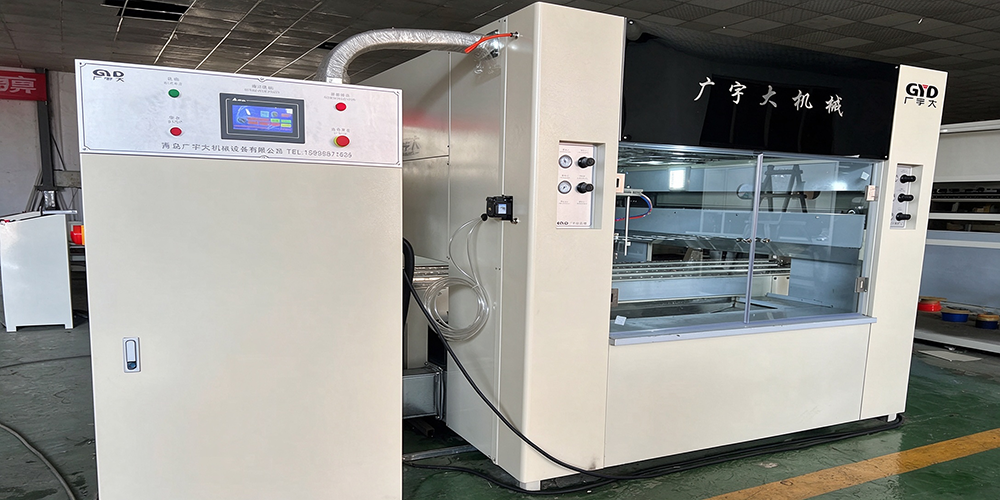
For this guide, a linear spray painting line means an in-line arrangement that moves products through sequential finishing operations.
Depending on the application, it may include preparation, feeding, automatic spraying, leveling, drying or curing, cooling, inspection, and unloading. The applicators may be fixed, reciprocating, or otherwise programmed.
Document dimensions, geometry, materials, required coated surfaces, and appearance standards.
A flat cabinet component and a routed wooden door present different coverage requirements. Neither should be qualified solely through a demonstration on a convenient flat board.
Specify which equipment and services belong in the proposal.
Clarify responsibility for conveyors, extraction, material delivery, drying, controls, utilities, installation, training, and commissioning. "Turnkey" should describe an agreed scope, not replace one.
A coordinated layout can replace separate transfers with a defined flow between operations.
Evaluate loading, orientation changes, intermediate storage, and unloading. Avoid assuming that a conveyor removes all manual handling; some products still require fixtures, masking, turning, or inspection.
Automatic control can repeat an approved application sequence.
Graco explains that gun distance, perpendicular orientation, and trigger timing influence transfer efficiency. Repeatability is valuable when those settings have been correctly established. [2761]
A stored program does not independently establish a suitable finish.
If improved application reduces avoidable defects, fewer products need respraying, sanding, or additional handling.
Treat this as a result to measure rather than a guaranteed percentage. Record defect type and rework time before and after installation.
The practical objective is a balanced flow from loading to accepted output.
Increasing spray speed while products accumulate before drying merely relocates the bottleneck.
This is the most important capacity question: which operation limits the complete line?
Record processing time, waiting time, staffing, downtime, defects, and work-in-progress at each stage.
Separate occasional disruptions from persistent constraints. A loading shortage requires a different response from insufficient drying capacity.
Confirm the coating supplier's requirements for leveling, drying or curing, and subsequent handling.
A product leaving the spray section is not necessarily ready to stack or package. Do not shorten downstream treatment merely to support a higher advertised conveyor speed.
Capacity depends on more than travel speed.
Allow for part dimensions, gaps, turning, repeat passes, and any separate edge-coating operation. Quote accepted output for the actual product mix rather than an idealized continuous load.
Transfer efficiency describes how much sprayed coating reaches the intended product rather than being lost elsewhere. Improving it can reduce material demand for a specified finish. [2761]
Graco identifies applicator selection, air and fluid pressure, spray pattern, distance, orientation, and triggering as relevant variables. [2761]
Automation helps only when these factors are appropriately specified and maintained.
Excessive atomizing air can increase overspray. Excessive fluid pressure can increase bounce-back, while an oversized pattern can send coating past the part. [2761]
Establish an acceptable spray pattern using application-specific settings. Do not assume that increasing pressure improves every appearance problem.
A quoted percentage is incomplete without its measurement basis.
Graco explains that different transfer-efficiency test arrangements can produce substantially different results for the same applicator. [2761]
Request the test method, coating, target geometry, and operating conditions. Avoid importing a laboratory percentage directly into the factory's financial model.
Track coating consumption per accepted product, including startup, flushing, cleaning, residual mixtures, and rejects.
This gives purchasing and production teams a broader commercial measure than applicator efficiency alone.
An automatic spray finishing line changes the work; it does not remove the need for skilled people.
List loading, coating preparation, inspection, recipe selection, cleaning, maintenance, and exception handling.
Assess staffing over a complete shift, including breaks and changeovers—not only during steady running.
Productivity may improve when employees move from repetitive spraying to preparation, inspection, or other constrained operations.
Do not count redeployed labor as an immediate cash saving unless the staffing or overtime budget actually changes.
Train operators to recognize pattern changes, contamination, coverage problems, and coating-condition deviations.
Graco emphasizes training in spray technique because application practices materially affect transfer efficiency. [2761]
Automation should capture useful knowledge, not conceal it behind an inaccessible recipe.
More output creates value only when the factory can use it commercially.
Confirm whether additional accepted products can be sold, shipped, and supported by upstream and downstream operations.
If demand is unchanged, improved capacity may instead create scheduling flexibility, reduced overtime, or shorter queues. Those benefits should be evaluated separately.
When estimating the benefit of additional sales, deduct the associated variable costs.
Do not treat the entire selling price of extra output as profit. Include materials, additional labor where applicable, utilities, packaging, and other incremental costs.
Do not count the same improvement simultaneously as labor savings, additional output, and overtime reduction without checking whether those outcomes can occur together.
Build a conservative scenario and test the assumptions against actual scheduling and demand.
A line with excellent running speed may still perform poorly with frequent short batches.
Include material preparation, flushing, cleaning, recipe loading, adjustment, inspection, and approval of the next product.
Ask how much coating and cleaning material each representative change consumes.
Evaluate whether compatible products or colors can be scheduled together without creating excessive inventory or delivery delays.
Do not optimize changeover frequency at the expense of customer requirements.
Demonstrate changes between the actual products and coatings.
"Quick changeover" should have a defined starting point, finishing point, staffing requirement, and quality-release criterion.
Automation does not eliminate chemical exposure, moving machinery, pressure, or ignition hazards.
For operations within its scope, US OSHA 29 CFR 1910.107 addresses spray ventilation, grounding, ignition sources, and related safeguards. It requires mechanical ventilation during spraying and sufficiently afterward to exhaust relevant vapors. [1720]
These are US requirements, not a substitute for project-specific local assessment.
OSHA describes dry overspray filters as minimizing dust or residues entering exhaust ducts. This does not establish removal of gas-phase volatile organic compounds. [1720]
Specify particulate collection, ventilation, and any required emissions treatment separately.
The same standard addresses accessible cleaning and combustible-residue management. [1720]
Review the proposed layout with production, maintenance, and safety personnel before installation.
Record accepted output, defects, consumption, staffing, overtime, downtime, and changeover under representative existing conditions.
Without that baseline, improvement claims become difficult to verify.
Use normal substrates, coatings, geometries, and appearance standards.
Include startup, steady production, a changeover, a planned interruption, and restart. Measure complete-shift implications rather than one short successful run.
Specify coverage, appearance, film build, relevant performance tests, accepted output, material consumption, and staffing.
State the conditions and responsibilities attached to any performance guarantee.
Allow for training, recipe validation, maintenance preparation, and troubleshooting.
Set staged release criteria and retain supplier support through an agreed stabilization period. Avoid assuming that demonstration performance immediately becomes routine factory performance.
According to the supplied company background, GYDFinishing was founded in 2007 and provides machinery and surface-finishing solutions for wood, glass, fibre cement, and other materials.
Its stated applications include wooden doors, furniture, cabinet doors, and flooring, with offerings ranging from individual machines to turnkey production lines.
For a linear spray project, ask Guangyutai Machinery to confirm the proposed configuration, material compatibility, integration scope, commissioning responsibilities, and service arrangements.
Send product drawings, substrate samples, coating documentation, finish references, current production data, and capacity targets. Request a configuration-specific assessment and an agreed acceptance trial focused on accepted output and operating cost.
It can improve coordinated handling and repeatable application. Actual output remains dependent on the complete process, including loading, drying, inspection, and unloading.
Not necessarily. Products must still meet the finish specification, and additional output must provide a usable commercial benefit.
No. Applicator selection, pressure, pattern, geometry, and application conditions still influence transfer efficiency. [2761]
Do not assume universal compatibility. Validate delivery equipment, cleaning, working time, drying or curing, and safety requirements for each formulation.
There is no universal payback period. Use project-specific investment, utilization, accepted output, incremental contribution, and operating-cost assumptions.
Measure agreed quality, accepted output, material consumption, staffing, changeover, cleaning, and restart behavior under representative conditions.


