
Views: 289 Author: 广宇大 Publish Time: 2026-11-24 Origin: Site


Content Menu
● What Does ROI Mean for a Linear Spray Painting Machine?
>> Define the Investment Boundary
>> Distinguish Payback from Lifetime Value
● Start with a Reliable Coating-Cost Baseline
>> Measure Cost per Accepted Product
>> Record the Operating Conditions
● Where Long-Term Coating Savings Can Come From
>> Less Unnecessary Application
>> Lower Rework and Reject Costs
>> Lower Cleaning and Consumable Demand
● Why Transfer-Efficiency Claims Need Careful Comparison
>> Ask How the Percentage Was Measured
>> Use Whole-Process Consumption
● Labor Savings: Distinguish Cash from Capacity
>> Identify Remaining Activities
>> Count Avoided Expenditure Separately
● Include the Costs That Automation Adds
>> Maintenance and Spare Parts
>> Utilities and Supporting Equipment
>> Changeover and Software Support
● Build a Long-Term Financial Model
>> Separate Financing from Operating Performance
>> Be Conservative about Residual Value
● Test the Investment with Three Scenarios
>> Upside Case
>> Identify the Break-Even Conditions
● Verify Savings through Acceptance Testing
>> Use Representative Materials
>> Include the Complete Operating Sequence
>> Agree on Acceptance Conditions
>> Continue Verification after Installation
● Discuss Your ROI Assessment with GYDFinishing
>> 1. What is the most useful coating-cost metric?
>> 2. Does a higher transfer-efficiency rating guarantee better ROI?
>> 3. Should labor redeployment count as cash savings?
>> 4. Is the shortest payback always the best choice?
>> 5. How should additional capacity be valued?
>> 6. What information should a supplier provide?
>> 7. Can GYDFinishing guarantee a fixed ROI?
Evaluating linear spray painting machine ROI means comparing the complete installed investment with verified operating benefits over time. Paint savings matter, but they are only part of the picture. Cleaning, labor, maintenance, utilities, defects, and production interruptions can all change the result.
For manufacturers of furniture, wooden doors, cabinet components, and compatible profiles, the strongest business case is not the lowest equipment price or the highest advertised conveyor speed. It is a repeatable reduction in cost per accepted product.
My recommendation is to build the investment case from factory measurements and representative trials. Use supplier claims as questions to investigate—not as guaranteed savings.
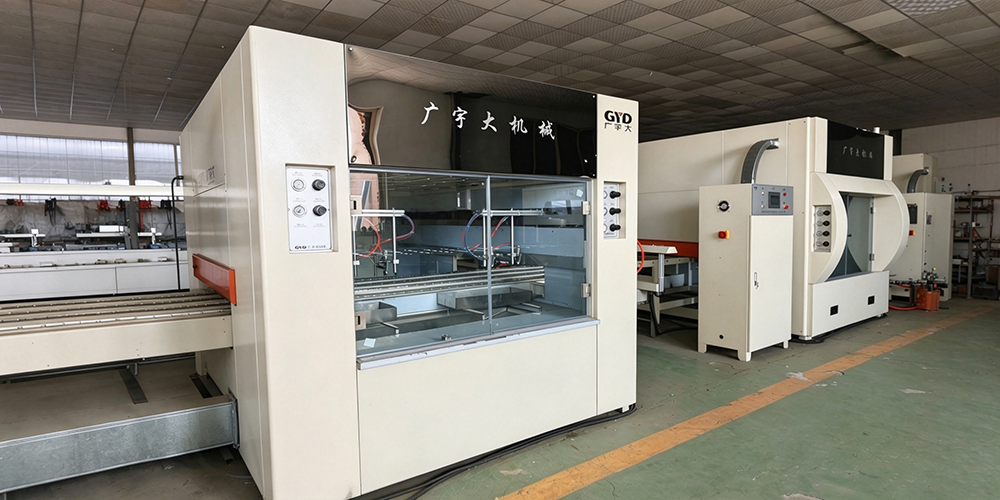
A linear spray painting machine moves products through an in-line application process. Its financial assessment should include the equipment and the supporting systems required to make it productive.
Include installation, material delivery, conveyors, extraction, controls, utilities, training, and commissioning where applicable.
If drying or curing equipment must change, include that cost too. A machine-only quotation can understate the actual project investment.
Simple payback estimates how long cumulative net savings take to recover the initial investment. It does not, by itself, capture all benefits and costs after recovery or account for when they occur.
US Department of Energy guidance describes life-cycle costing as comparing the present value of investment, installation, energy, operating, maintenance, and disposal costs over a project's life. That framework is useful here, although its federal-project assumptions should not be copied into a private factory model. [2877]
An investment model is only as credible as its starting data.
Record coating consumption against products that meet the agreed finish standard.
Use accepted square metres, panels, doors, or another meaningful unit. Apply the same definition before and after installation.
Include cleaning materials, consumables, direct operating labor, relevant utilities, maintenance, rework, and disposal.
A flat panel and a routed cabinet door may require different application times, coverage, and handling.
Group products by relevant characteristics. Otherwise, an easier product mix after installation may be mistaken for an equipment improvement.
Compare purchased material, opening and closing inventory, production use, waste, and returned material.
A lower purchasing month does not necessarily indicate lower consumption. Inventory changes and production volume can obscure the true result.
Document shifts, batch sizes, coating types, color changes, staffing, quality criteria, and downtime.
These records help explain differences when production conditions change.
Transfer efficiency describes how much sprayed coating reaches the intended part rather than being lost elsewhere. Improving it can reduce the material required for a specified finish. [2761]
Graco identifies applicator selection, pressure, spray pattern, distance, orientation, and triggering as important variables. [2761]
Automation supports savings only when those conditions are correctly established and maintained.
A process can consume excessive coating even when the surface looks acceptable.
Agree on the required film build and a suitable verification method. Do not classify thinner-than-specified application as a saving.
If application becomes more consistent, some sanding, respraying, and replacement may be avoided.
Measure each defect category and its actual repair route. Avoid assuming that every historical defect originated in manual spraying.
Graco notes that spraying less paint can extend booth-filter life. [2761]
Treat any additional reduction in filters, cleaning effort, or waste handling as a separate measured benefit, not an automatic consequence with a fixed percentage.
Graco explains that different ASTM and EN test arrangements can produce substantially different transfer-efficiency results for the same applicator. [2761]
Request the method, target geometry, coating, and operating conditions behind every quoted figure.
Do not insert a laboratory percentage directly into the factory's annual savings forecast.
Excessive atomizing air can increase overspray. Excessive fluid pressure can increase bounce-back, while an oversized pattern can send material past the product. [2761]
A new machine does not remove the need for correct setup, maintenance, and trained operation.
Track total coating and cleaning-material use per accepted product.
This captures startup, flushing, residual mixtures, changeovers, and rejects that an applicator-efficiency test may not represent.
Automation changes work rather than eliminating every task.
List loading, coating preparation, inspection, recipe selection, cleaning, maintenance, and exception handling.
Assess staffing across a full shift, including breaks and changeovers.
Reduced overtime, avoided temporary labor, or a documented staffing-budget change may create cash savings.
Redeploying an employee to another task creates capacity, but it does not automatically reduce payroll.
Do not count the same labor hours simultaneously as payroll savings, increased output, and reduced overtime unless the production plan demonstrates that all three occur.
State who benefits from the released time and how that benefit is valued.
Request service intervals, consumable lists, recommended spares, and replacement costs.
Include applicators, pumps, seals, filters, sensors, and other relevant components. Clarify what the warranty covers and what remains an operating expense.
Measure or estimate electrical demand, compressed air, ventilation, and any changed drying or curing requirements.
Compare equivalent operating conditions. A lower application cost can be offset by higher supporting-system costs.
Include cleaning time, material losses, recipe development, programming, and support subscriptions where applicable.
Frequent small batches can produce a different business case from long, stable runs.
Allow for commissioning, training, initial waste, validation, and temporary production disruption.
Do not assume that demonstration performance becomes normal factory performance immediately.
Evaluate the proposed line against a realistic baseline.
Alternatives may include maintaining the existing process, upgrading applicators, introducing partial automation, or installing a complete line.
Do not compare a fully optimized proposal with an artificially poor baseline.
Place investment, operating savings, maintenance, replacements, and other costs in the years when they are expected to occur.
DOE guidance emphasizes discounting future costs to a common present-value basis when conducting life-cycle comparisons. [2877]
Use finance-approved assumptions for the factory rather than federal discount rates.
Present equipment economics clearly before adding the chosen borrowing or leasing structure.
Then have finance review interest, taxes, depreciation, working capital, and any incentives. Keep the treatment consistent so costs are not counted twice.
Include end-of-life value only when supportable.
Also consider removal, disposal, and site-restoration obligations where relevant.
Use lower utilization, modest material savings, slower ramp-up, and realistic maintenance.
Ask whether the investment remains acceptable without additional sales.
Use trial-supported consumption, the planned product mix, and a credible production schedule.
Identify which assumptions are measured and which remain estimates.
Evaluate additional accepted output only where demand and supporting capacity exist.
Value extra sales using incremental contribution after associated variable costs—not total revenue.
Determine which assumptions matter most: utilization, coating price, consumption reduction, labor, or quality.
Ask what operating level is required for the project to meet the company's investment criteria. This is more informative than presenting one optimistic payback figure.
Test normal substrates, coatings, geometries, and finish standards.
Include difficult products rather than only convenient demonstration parts.
Run startup, normal production, a representative changeover, an interruption, and restart.
Record material use, approved output, defects, staffing, cleaning, and relevant utilities.
Specify the product mix, measurement method, quality limits, trial duration, and responsibility for corrective action.
A promise of "reduced paint consumption" is incomplete without its baseline and conditions.
Track results during ramp-up and routine operation.
DOE measurement-and-verification guidance emphasizes defining baseline and post-installation costs and allowing adjustments for changes in facility conditions. Its examples concern energy projects, but the principle of documented, comparable conditions is relevant to coating-cost verification. [2878][2885]
According to the supplied company background, GYDFinishing was founded in 2007 and provides machinery and surface-finishing solutions for wood, glass, fibre cement, and other materials.
Its stated applications include wooden doors, furniture, cabinet doors, and flooring, with offerings from individual machines to turnkey lines.
For a linear spray project, ask Guangyutai Machinery to confirm configuration, material compatibility, integration responsibilities, commissioning, and service arrangements.
Send current consumption records, product drawings, coating documentation, quality standards, staffing data, and production targets. Request a proposal supported by a representative trial and a transparent cost model.
Select equipment around verifiable long-term economics—not an unsupported savings percentage.
Cost per accepted product is a practical starting point. Keep the product definition, finish requirements, and cost boundary consistent.
No. Test conditions may differ, and total consumption also includes cleaning, startup, residual material, and rejects. [2761]
Not automatically. Record it separately unless it reduces a documented expenditure or generates another measurable financial benefit.
No. Compare lifetime costs, performance, risk, and the timing of cash flows. Life-cycle analysis extends beyond initial recovery. [2877]
Include it only where demand and supporting capacity are credible. Use incremental contribution after associated costs, not total sales revenue.
Request scope, utilities, maintenance, consumables, changeover requirements, service terms, and a performance trial tied to representative products.
A universal guarantee would not be justified. ROI depends on factory-specific investment, utilization, costs, quality, and commercial conditions.


