
Views: 296 Author: 广宇大 Publish Time: 2026-11-24 Origin: Site


Content Menu
● What Does Reliability Mean in Spray Finishing?
>> Separate Reliability from Maintainability
>> Look Beyond the Spray Machine
● Identify the Downtime That Matters Most
>> Planned Cleaning and Changeovers
>> Quality-Related Interruptions
>> Recovery and Product Release
● How Appropriate Equipment Selection Prevents Recurring Problems
>> Match the Applicator to the Coating
>> Validate Material Compatibility
>> Establish a Stable Spray Setup
● Design for Fast, Safe Maintenance
>> Review Access Before Installation
>> Standardize Where Appropriate
>> Request Complete Documentation
● Build a Preventive Maintenance Plan around Actual Use
>> Start with Manufacturer Instructions
>> Assign Clear Responsibilities
>> Record Findings, Not Just Completion
>> Revise the Plan Using Evidence
● Protect Ventilation and Housekeeping
>> Maintain the Required Ventilation
>> Control Residue Accumulation
>> Reduce Unnecessary Overspray
● Use Alarms and Monitoring Effectively
>> Distinguish Monitoring from Prediction
● Keep Critical Spares Without Overstocking
>> Rank Components by Consequence
● Plan for Stops, Restarts, and Quality Recovery
>> Validate Restart Conditions
>> Never Bypass Safeguards to Improve Uptime
● Measure Reliability through Accepted Production
>> Track More Than Breakdown Hours
>> Include Recurring Short Stops
>> Review Losses by Cause and Duration
>> Link Improvements to Verified Results
● Validate Reliability Before Purchasing
● Discuss Your Finishing Requirements with GYDFinishing
>> 1. Can reliable spray finishing equipment eliminate downtime?
>> 2. Should maintenance follow a fixed daily schedule?
>> 3. Does automation remove the need for skilled operators?
>> 4. How does better spraying affect filter demand?
>> 5. Which spare parts should be stocked?
>> 6. What is the best downtime measure?
>> 7. What should a supplier demonstrate?
Reliable spray finishing equipment helps manufacturers protect production time by preventing avoidable interruptions, simplifying maintenance, and supporting controlled recovery after a stop. Its value is not simply that a machine keeps moving. The line must continue producing an acceptable finish safely and consistently.
For furniture, wooden doors, cabinet components, and flooring, an interruption can affect more than the spraying station. Products may require inspection, cleaning, rework, or disposal before production can resume.
My recommended approach is to evaluate reliability across the complete finishing process: material delivery, application, conveying, ventilation, controls, and downstream drying or curing.
The goal is predictable, safe, quality-assured production—not uninterrupted operation at any cost.
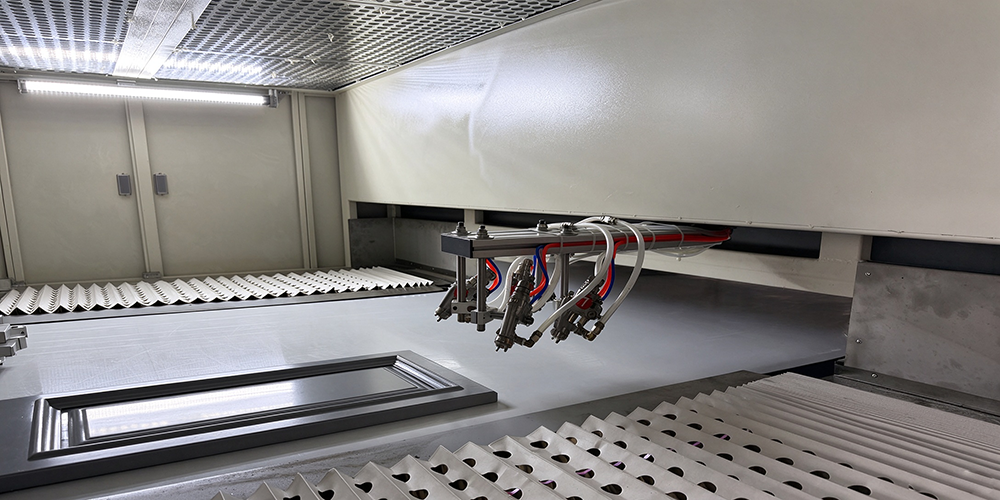
For purchasing purposes, define reliability as the ability to perform the required task under specified operating conditions.
A machine that runs continuously while producing unacceptable coating is not delivering useful production.
Reliability concerns avoiding failures. Maintainability concerns restoring equipment safely and efficiently when intervention is needed.
Evaluate both. A component may fail infrequently yet cause an extended shutdown because it is difficult to access or replace.
Review the complete line boundary.
A functioning applicator cannot compensate for unavailable material, failed extraction, inconsistent product feeding, or an unavailable downstream process.
Clarify which supplier is responsible for each interface before installation.
Before investing, build a clear record of current losses.
Record failures involving delivery equipment, applicators, sensors, drives, conveyors, controls, and supporting utilities.
Capture the observed symptom separately from the confirmed cause. "Low pressure" is an event description, not necessarily a diagnosis.
Keep necessary planned work distinct from unexpected breakdowns.
Cleaning is not automatically wasted time. The opportunity is to perform it safely, predictably, and without unnecessary steps.
Record pauses for pattern adjustment, contamination investigation, appearance approval, or repeated defects.
A line may appear mechanically available while losing significant production time to unstable quality.
Measure from the initial interruption until accepted production resumes.
Restarting a motor is not the same as restoring saleable output.
Graco identifies conventional air spray, compliant spray, HVLP, air-assisted, electrostatic, and rotary atomization as technologies with different advantages and limitations. Selection depends on the material and required finishing result. [2761]
Avoid specifying technology solely because it is described as advanced.
Provide coating and cleaning-product documentation before purchase.
Request confirmation of compatibility across pumps, seals, hoses, applicators, and other wetted components. Include the actual working sequence and cleaning requirements.
Graco explains that excessive atomizing air can increase overspray, excessive fluid pressure can increase bounce-back, and oversized spray patterns can send material past the product. [2761]
Correct setup supports a more controlled process. It should not be replaced by repeated pressure increases whenever appearance changes.
Ask maintenance personnel to inspect the proposed layout.
Check access to applicators, pumps, filters, conveyors, isolation points, and service panels. Consider the tools and lifting arrangements needed for replacement tasks.
A compact footprint is not beneficial if routine work requires extensive dismantling.
Compare component availability, commonality, and approved substitutes.
Standardization can simplify stocking and training, but substitutions must preserve coating compatibility, performance, and safety.
Obtain electrical and pneumatic diagrams, component identification, maintenance instructions, approved procedures, and software-backup arrangements.
Confirm whether documentation matches the delivered configuration rather than a generic machine family.
During acceptance, ask trained personnel to perform representative inspections and replacements under safe conditions.
Measure the complete task, including isolation, access, replacement, checks, and release—not merely the time needed to remove one part.
Use the delivered equipment manuals and coating documentation to establish the initial schedule.
Do not prescribe one universal cleaning interval for every coating and shift pattern.
Define which checks operators perform and which require authorized maintenance personnel.
Each task needs an owner, frequency, acceptance condition, and escalation route.
A checked box provides little diagnostic value.
Where applicable, record observations such as leakage, unusual movement, pattern changes, abnormal readings, or repeated alarms. Compare findings with approved operating limits.
Review failure records, replaced parts, cleaning findings, and production conditions.
Adjust the schedule through a controlled process rather than extending intervals simply to avoid planned downtime.
Spray-booth reliability is also a safety matter.
For operations within its scope, US OSHA 29 CFR 1910.107 requires adequate mechanical ventilation during spraying and sufficiently afterward to exhaust relevant vapors. It also addresses devices that indicate or ensure required airflow in specified booth arrangements. [1720]
These are US requirements, not a substitute for assessment against local obligations.
The same standard addresses accessible cleaning and keeping combustible residues under control, with cleaning daily if necessary. [1720]
Design planned work around the actual process. Do not wait for a visible production failure before addressing unsafe accumulation.
Graco notes that improved transfer efficiency can reduce paint use and extend booth-filter life. [2761]
This supports evaluating application setup alongside filter management. It does not establish a universal filter-change interval or justify operating beyond approved limits.
For each important alarm, define the likely condition, safe response, inspection requirement, and escalation path.
Avoid forcing operators to guess whether repeated resetting is acceptable.
A dashboard showing pressure or motor status is not automatically predictive maintenance.
Ask what the system measures, how thresholds are established, and whether it has demonstrated useful warning for the relevant failure mode.
Request timestamps, alarm descriptions, recipe changes, and relevant operating records.
Correlating events can help distinguish an equipment failure from a material, utility, or scheduling problem.
If remote diagnostics are proposed, define authorization, connection security, support availability, and permitted actions.
Remote assistance does not replace site inspection, energy isolation, or qualified personnel.
Prioritize parts whose failure could stop the line for an extended period.
Consider replacement lead time, availability, service requirements, installed quantity, and whether a safe approved alternative exists.
Check identification, compatibility, storage conditions, shelf life where relevant, and any required configuration.
A replacement controller is not operationally ready simply because it is on a shelf.
Ask about service hours, escalation contacts, diagnostic requirements, spare-part lead times, and exclusions.
Distinguish an initial response commitment from a guaranteed on-site repair time.
Document how affected products are identified, separated, inspected, and released.
Include parts remaining in spray, leveling, drying, or curing zones during interruption.
OSHA identifies electrical, mechanical, hydraulic, pneumatic, chemical, and thermal energy among potential hazards during servicing. Its hazardous-energy guidance emphasizes appropriate lockout/tagout procedures and worker training. [2886]
A stop button or alarm reset is not a substitute for required energy control.
Specify material checks, equipment checks, spray-pattern verification, and first-product approval where relevant.
Do not resume unrestricted production merely because the original alarm has cleared.
Safety-related stops must trigger investigation and correction.
Reducing recorded downtime by disabling protection does not improve equipment reliability.
Record failure frequency, repair time, waiting for parts, diagnosis, restart, and quality-release time.
Define each measure consistently so comparisons remain meaningful.
Small interruptions may be overlooked individually yet reveal important recurring problems.
Set a recording threshold and review repeated events rather than focusing only on major failures.
Rank problems by total production impact.
The most frequent alarm may not cause the greatest loss, while a rare event may justify a critical spare or design change.
Compare similar products, coatings, shifts, and quality requirements.
Do not attribute better performance to equipment alone if scheduling, staffing, or material conditions also changed.
Run representative substrates and coatings through normal production, changeover, a planned interruption, and restart.
Verify alarms and interlocks through a supplier-approved safe test plan. Never create hazardous faults for demonstration.
Assess documentation, maintenance access, backup restoration arrangements, operator training, and support procedures.
A short attractive demonstration establishes neither long-term availability nor dependable recovery.
According to the supplied company background, GYDFinishing was founded in 2007 and provides surface-finishing machinery for wood, glass, fibre cement, and other materials.
Its stated applications include wooden doors, furniture, cabinet doors, and flooring, with offerings from individual machines to turnkey production lines.
For a reliability-focused project, send Guangyutai Machinery your product drawings, coating documentation, downtime records, factory layout, and maintenance constraints.
Request a configuration-specific proposal covering service access, critical spares, training, commissioning, and acceptance testing. Select equipment around sustained accepted output and safe recovery—not an unsupported promise of zero downtime.
No. Planned maintenance, changeovers, material interruptions, and unexpected failures still require management. The objective is fewer avoidable losses and controlled recovery.
Use manufacturer instructions as the starting point. Set task-specific intervals based on the equipment, coating, operating conditions, and documented findings.
No. Personnel still need to recognize changes, follow approved procedures, assess quality, and escalate problems appropriately.
Graco notes that reducing paint sprayed through improved transfer efficiency can extend booth-filter life. Actual replacement limits still depend on the installation and approved requirements. [2761]
Prioritize parts by failure consequence, replacement lead time, availability, compatibility, and required configuration.
Use several complementary measures, including frequency, total restoration time, and accepted output. State clearly when downtime begins and ends.
Representative production, changeover, safe stopping and restart, maintenance access, documentation, training, and an agreed service-support process.


