
Views: 276 Author: 广宇大 Publish Time: 2026-10-12 Origin: Site


Content Menu
● What Is a Light Curing Machine?
● Main Types of Light Curing Machines
>> Spot, Flood, and Conveyor Systems
● The Performance Measures That Matter
>> Exposure Time and Production Speed
>> Adhesives and Component Assembly
>> Coatings and Wood Finishing
>> Electronics and Medical Devices
>> Define the Material and Product
>> Match the Machine to Production
>> Protect People from UV Exposure
>> Maintain Optics and Cooling
>> Is a Light Curing Machine the Same as a Dryer?
>> Which Wavelength Should I Choose?
>> Is Higher Power Always Better?
>> Can UV Light Cure Adhesive in a Hidden Joint?
>> How Often Should UV Output Be Checked?
>> What Safety Measures Are Essential?
Modern manufacturing depends on processes that can bond, coat, print, or seal products quickly and consistently. A light curing machine uses controlled light—most often ultraviolet light—to trigger a chemical reaction in a specially formulated adhesive, coating, or ink. Instead of waiting for a liquid material to dry through evaporation or prolonged heating, manufacturers can cure it on demand, often in a compact station integrated into a production line.
This guide explains how light curing machines work, how to choose between lamp and LED systems, which performance measures matter, where the equipment is used, and how to manage safety and maintenance. The central principle is simple: the light source must match the material's photoinitiator chemistry, and the product must receive enough energy for the required cure. A machine's advertised power alone cannot guarantee that result.
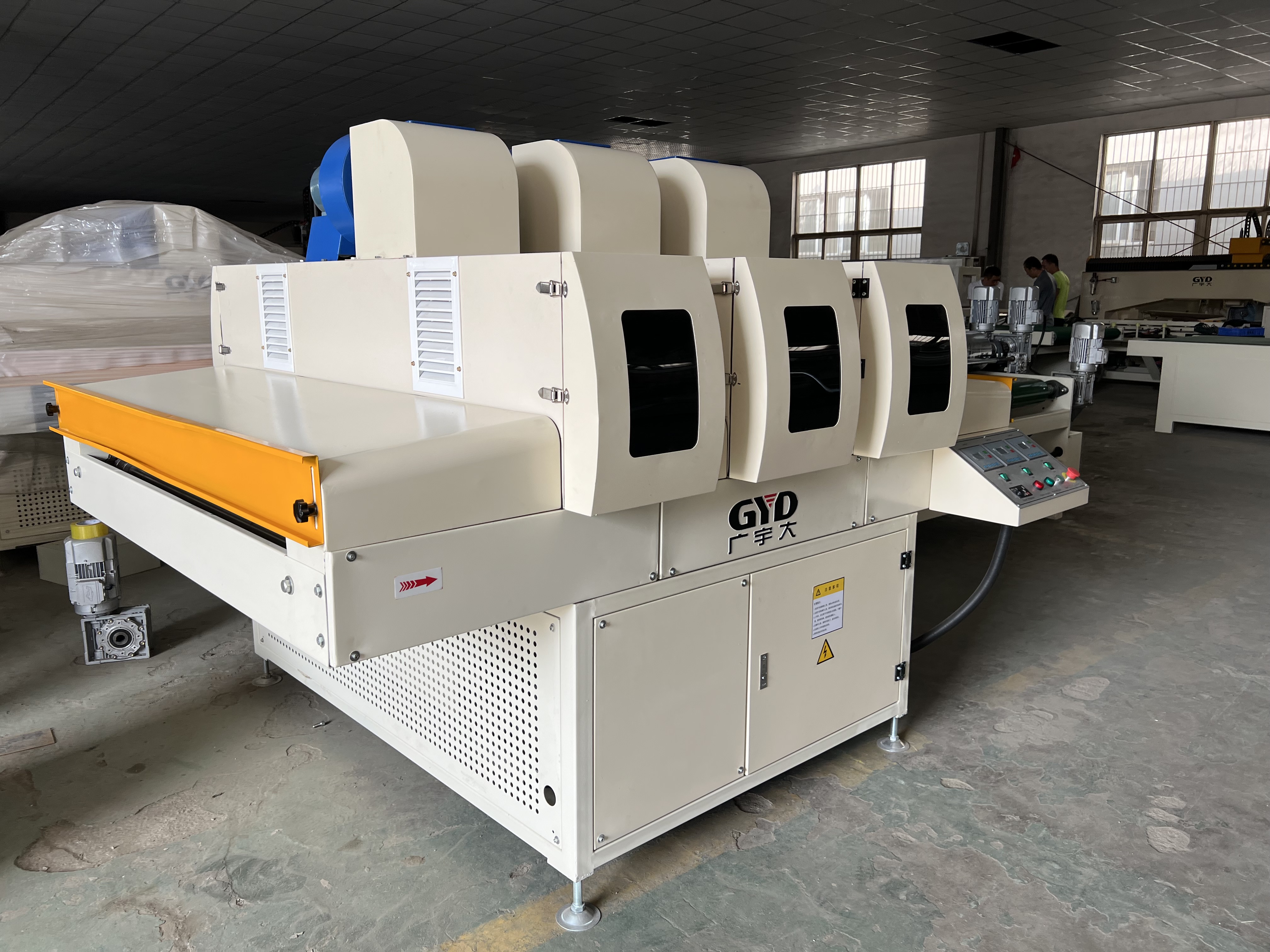
A light curing machine exposes a photosensitive material to light at a suitable wavelength. Photoinitiators in the formulation absorb that energy and initiate polymerization, converting a liquid or semi-liquid material into a solid polymer network. UV curing is used for inks, adhesives, and coatings across manufacturing sectors including automotive, aerospace, electronics, medical devices, and wood products. [1788]
The process is often described as "drying," but that term can be misleading. In conventional drying, water or solvent evaporates. In light curing, the main transformation is a photochemical reaction. Some formulations may still require a flash-off or other preparation step, but light exposure drives the cure itself.
The process therefore depends on the formulation as much as on the machine. A light source that works well with one adhesive may not cure another material properly if the photoinitiator does not absorb its output effectively. A good equipment selection begins with the material's technical data and safety data sheets, not simply with a desired lamp style.
Light curing machines range from handheld spot-curing tools to flood lamps and conveyor systems. A spot-curing unit delivers concentrated light to a small area, often for bonding or assembly. A flood system covers a larger work area, while a conveyor model passes products beneath a fixed or adjustable light source for repeatable processing.
Some machines are designed for continuous production and connect to a programmable logic controller, or PLC. These systems may coordinate lamp output, conveyor speed, sensors, and production-line interlocks. Other units are standalone benchtop devices intended for prototyping, repair, or lower-volume assembly.
The correct format depends on the product geometry and production workflow. A narrow beam may suit a small adhesive joint but be inefficient for a large panel. A conveyor may suit flat products but require dedicated fixtures for three-dimensional parts or shadowed regions.
Mercury vapor systems emit a broad spectrum of light that can activate a range of photoinitiators. This broad output can make them suitable for materials formulated for traditional mercury lamps and for applications where broad spectral coverage is useful.
These systems may require warm-up time and management of heat. Lamp output can change over time, so users should monitor performance and follow manufacturer guidance for lamp replacement and intensity checks. Their operating requirements, cooling needs, and maintenance should be compared with those of LED options.
UV LED machines emit light in narrower wavelength bands. Common industrial choices include 365, 385, 395, and 405 nanometers, but the right band depends on the material's photoinitiator and the thickness or optical properties of the layer being cured. [1797]
LED systems typically offer instant switching and can reduce unwanted heat directed toward the product compared with traditional arc lamps. Their narrow output makes matching the source to the chemistry especially important. A formulation designed for broad-spectrum mercury exposure may not cure well under an LED unless its chemistry is compatible.
LED heads also require effective thermal management. The LEDs generate internal heat even though they usually emit less infrared energy toward the substrate. Air-cooled or water-cooled designs help maintain stable operation and protect output over time. [1797]
Spot systems focus light on a small area, making them useful for localized adhesive joints, component tacking, and precision assembly. Flood systems irradiate a wider region and can cure multiple points or a complete surface, provided the light reaches all required areas.
Conveyor systems move products through an exposure zone at a controlled speed. They are useful for repeatable production, including printed parts and coated panels. Some industrial conveyor systems offer adjustable speed and wavelength options; one current product listing, for example, describes wavelengths from 365 to 405 nanometers and speed control from 0.5 to 10 meters per minute. These are product-specific figures, not universal specifications. [1795]
Wavelength determines which photoinitiators absorb the light effectively. For LED systems, 365 nanometers is often used for surface curing and specialized adhesives, while 385 and 395 nanometers are widely used for inks and coatings. A 405-nanometer source may suit some thicker or specially formulated materials. These are broad tendencies, not substitutes for the coating supplier's recommendations. [1797]
Before choosing a machine, confirm the material's specified wavelength range. Ask the supplier to test the actual formulation and substrate together. If a product includes pigments, fillers, or UV-blocking components, light may not penetrate as expected, even when the lamp wavelength appears suitable.
Irradiance describes the intensity of light reaching a surface at a given moment. Dose, also called energy density, is the total energy received over the exposure period. In simplified form:
A high irradiance may help achieve a required dose quickly, but it does not automatically prove that the entire material thickness has cured. The part must receive an adequate total dose at the relevant wavelengths. Insufficient dose can leave a tacky surface or an under-cured bond interface. [1797]
Measure performance at the work surface, not just at the lamp window. Distance, reflectors, optics, protective glass, line speed, and lamp condition can all affect the delivered energy. A radiometer suitable for the system's wavelength range can help verify output during commissioning and routine quality checks.
For conveyor systems, exposure time depends on the length of the illuminated zone and the conveyor speed. Increasing line speed reduces exposure time unless the irradiance, illuminated area, or number of curing stations changes.
A practical setup must balance throughput against cure quality. Run tests at the intended production speed and at realistic extremes, including the fastest line speed, the thickest coating, and the most difficult color or substrate. Confirm the result using an application-appropriate cure test rather than relying only on surface appearance.
Light curing machines are used to bond components where rapid fixation can improve assembly speed. Applications may include electronics, medical devices, automotive components, and optical assemblies. A spot-curing source can hold a part in place quickly, while a flood or conveyor system may cure a broader adhesive layer.
The design must account for whether light can reach the adhesive joint. If opaque parts block the exposure path, a UV-only process may leave hidden adhesive uncured. Manufacturers may need a light-transmitting substrate, a different adhesive chemistry, secondary cure mechanism, or an alternative joining method.
For regulated or high-reliability products, document the curing recipe and monitor relevant process variables. That may include lamp output, exposure time, material batch, and part configuration.
Light curing is used for suitable coatings on wood, plastics, metal, and composite surfaces. In wood finishing, conveyor systems can cure compatible coatings as boards move through the process, supporting continuous production. The choice between LED and traditional lamps depends on coating chemistry, film thickness, line speed, and substrate sensitivity. [1798]
Large flat panels may require uniform coverage across the entire width. Lamp arrangement, reflectors, panel position, and conveyor tracking influence the cure. In addition, wood grain, pigments, and coating thickness can affect light penetration and the final surface properties.
A manufacturer should validate cure through the full coating layer. A surface that feels dry may not indicate complete cure underneath.
Printing operations use UV and LED systems to cure inks on suitable substrates. Rapid curing can help prevent smearing and enable immediate downstream processing. A conveyor or press-integrated system can be designed around print width, line speed, ink chemistry, and substrate characteristics.
For printed products, uniform output across the web or sheet is important. Uneven exposure can create inconsistent adhesion, gloss, rub resistance, or color performance. Regularly inspect the light source and verify irradiance across the working width according to the equipment and process requirements.
Electronics and medical manufacturing use light curing for adhesives, encapsulants, and protective coatings. LED systems can be useful when low heat exposure is important for sensitive components, while the ability to control exposure can support repeatable assembly. [1797]
These uses may require traceability, validated process windows, and documented inspection. For medical devices, the curing process should be developed in line with applicable quality-system and regulatory requirements. Equipment specifications alone do not establish that a finished product is compliant.
Start by identifying the exact adhesive, coating, or ink, along with the substrate, layer thickness, color, and product geometry. Obtain the supplier's recommended wavelength, minimum dose, irradiance range, and any limits on temperature or exposure.
Consider whether parts are transparent, translucent, or opaque to the curing light. Identify shadowed zones, recesses, overlapping layers, and surfaces that may reflect or absorb light differently. These factors can affect cure uniformity.
Specify the required working width, product dimensions, conveyor speed, duty cycle, and integration needs. Consider whether the system needs to run continuously, operate intermittently, or switch between several product types.
For automated lines, check PLC compatibility, external controls, status signals, and interlocks. Industrial LED systems may support digital or serial control and monitoring, but interfaces differ by product and manufacturer. Confirm compatibility before purchase. [1797]
Ask the supplier to test representative materials and parts at your target speed. Include worst-case conditions, such as the darkest pigment, thickest coating, narrowest adhesive joint, or most shadowed product geometry.
Agree on objective acceptance criteria before testing. Depending on the application, these might include adhesion, hardness, rub resistance, tack, conversion, or bond strength. If the process is sensitive, establish a documented operating window rather than a single successful setting.
UV radiation can injure eyes and skin, and damage may not be immediately apparent. Systems should be enclosed or shielded to prevent direct and reflected exposure. Interlocks can prevent operation when protective covers are open, and workers should receive training on UV hazards. [1788]
Use protective eyewear rated for the relevant wavelengths, along with suitable clothing and gloves where exposure may occur. Follow the equipment manufacturer's instructions and the employer's industrial hygiene assessment. Do not look directly at an operating UV source, even briefly. [1789]
Some sources emitting wavelengths below 250 nanometers may produce ozone, so ventilation may be necessary depending on the equipment. Confirm the emission characteristics and ventilation requirements for the specific machine. [1788]
Dust or material deposits on the optical window can reduce the light reaching the product. Clean surfaces using the method and materials recommended by the supplier; inappropriate cleaners or abrasive wipes may damage coatings or optics.
Check fans, filters, heat sinks, coolant levels, and water circuits as applicable. Poor thermal management can shorten LED or lamp life and affect output stability. For water-cooled equipment, follow the supplier's instructions for coolant quality and circuit maintenance. [1797]
Use a suitable, calibrated radiometer to check delivered output at the work plane. Record measurements and investigate changes that could indicate dirty optics, aging components, cooling problems, or altered geometry.
If the curing process changes—such as a new material, thickness, color, line speed, or lamp position—revalidate the process. A machine that once produced good results may no longer deliver the required dose after the process changes.
Not exactly. A conventional dryer usually removes water or solvent through evaporation. A light curing machine initiates a photochemical reaction that hardens a compatible material. Some production lines use both drying and light curing, depending on the formulation.
Choose a wavelength that matches the photoinitiator in the adhesive, coating, or ink. Common LED options include 365, 385, 395, and 405 nanometers, but no single wavelength suits every formulation. Confirm compatibility with the material supplier and test the actual application. [1797]
No. The material needs sufficient irradiance and total dose at the relevant wavelengths, but excessive exposure can waste energy or create unwanted heating. The right setting depends on the formulation, geometry, thickness, and production speed.
Only if enough curing light reaches the adhesive, or if the adhesive has a suitable secondary cure mechanism. Opaque components can block UV exposure, so hidden joints require careful material and process selection.
Check it during commissioning, after maintenance or process changes, and at the frequency specified by the quality plan and equipment supplier. Regular radiometer measurements help identify output drift before it causes product defects.
Shield the source, use interlocks, train operators, control access, and provide appropriate UV-rated eye and skin protection. Assess ventilation where the source may generate ozone and follow the manufacturer's safety instructions. [1788][1789]


