
Views: 289 Author: 广宇大 Publish Time: 2026-10-12 Origin: Site


Content Menu
● What Is a Glue Spray Painting Machine?
>> Clarifying the Equipment Name
>> How Adhesive Spraying Works
>> Adhesive Supply and Conditioning
>> Pumps, Hoses, and Spray Heads
>> Conveyor, Fixtures, and Controls
● Adhesive Types and Their Requirements
>> Solvent-Based and Reactive Adhesives
● Spray Versus Other Application Methods
>> Spraying Compared with Roller Coating
>> Spraying Compared with Bead or Slot Application
● Applications Across Industries
>> Furniture, Foam, and Mattress Manufacturing
>> Packaging and Paper Converting
>> Automotive, Filters, Textiles, and Industrial Assembly
● Process Setup and Quality Control
>> Define the Bond and Application Window
>> Calibrate Coverage and Repeatability
>> Troubleshoot Common Defects
● Safety and Workplace Controls
>> Ventilation and Spray Enclosures
>> Hot Surfaces, Pressure, and Housekeeping
>> Personal Protective Equipment and Training
● How to Choose a Glue Spray Machine
>> Match the Machine to the Adhesive
>> Evaluate Throughput, Changeovers, and Service
>> What Does "Glue Spray Painting Machine" Mean?
>> Is a Glue Spray Machine Suitable for Flat Panels?
>> Can One Machine Apply Hot-Melt and Water-Based Glue?
>> How Do I Reduce Adhesive Waste?
>> Does Spraying Always Create Overspray?
>> What Safety Measures Are Important?
>> How Can I Verify Bond Quality?
The phrase "glue spray painting machine" can describe different equipment: an adhesive spray machine, an automated paint sprayer, or a production line that applies both glue and finishing materials in separate stages. This article focuses on adhesive spray machines, while clarifying how they differ from paint equipment and other glue applicators. It covers machine components, adhesive types, application methods, process control, safety, maintenance, and how to select equipment for furniture, packaging, foam, and industrial assembly.
A successful glue spray process is about more than applying adhesive quickly. The system needs to deposit the right amount in the right pattern, at the correct temperature and pressure, while matching the adhesive's open time to the next assembly step. When these factors are well controlled, an automated machine can improve consistency, reduce manual handling, and support continuous production.
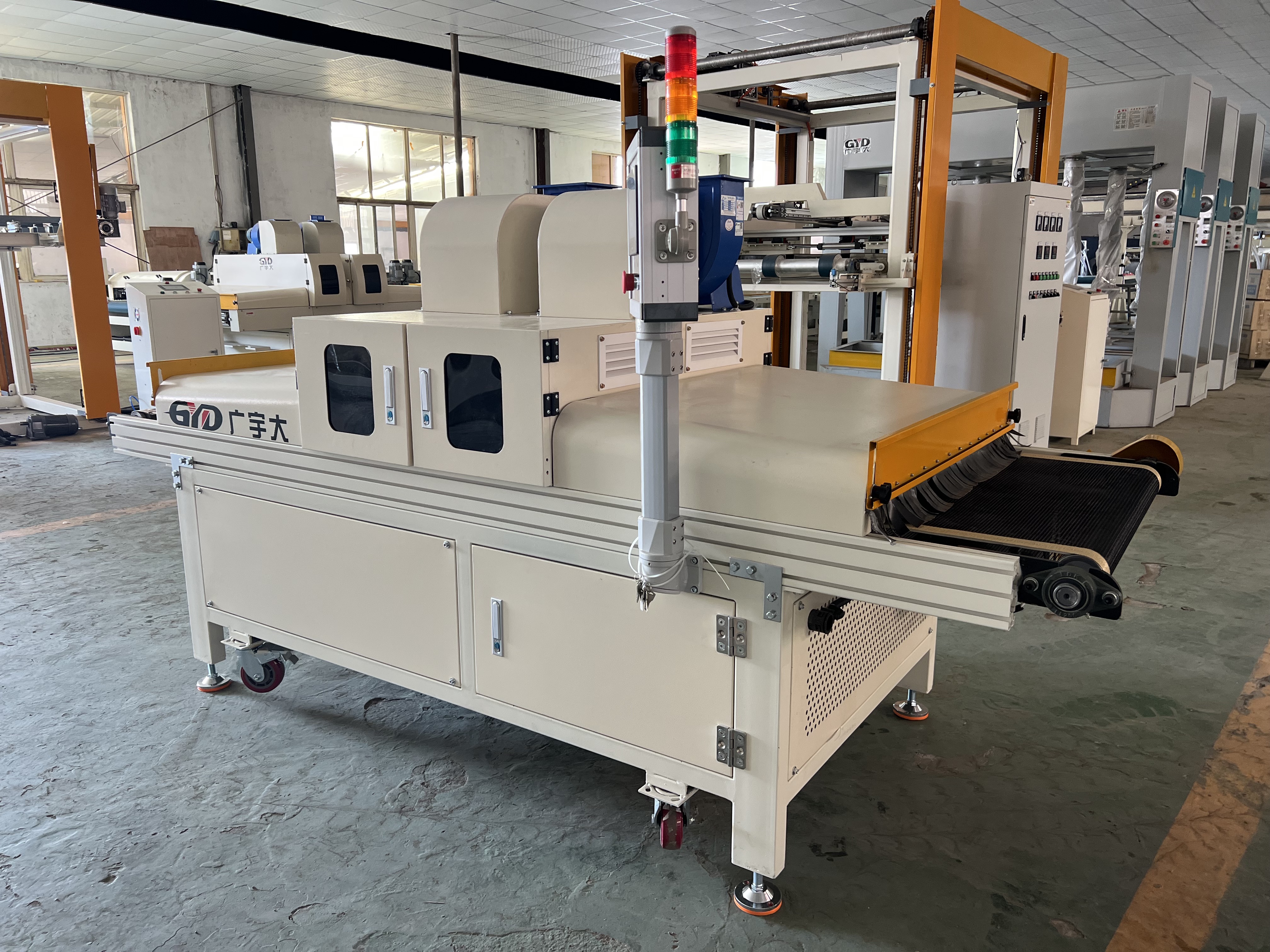
"Glue spray painting machine" is not a single standardized equipment category. Buyers may use it to mean an adhesive spraying system, a spray applicator integrated with a production line, or a machine that can spray paint and glue using separate application circuits. Before comparing suppliers, define the job: will the machine apply adhesive, paint, or both?
An adhesive spray machine meters glue from a supply unit and delivers it through a nozzle or applicator head. Depending on the adhesive, the supply equipment may include a tank, pump, heated hose, filters, pressure controls, and one or more spray guns. A paint spray machine instead atomizes finishing material to create a decorative or protective film. Although both may use spray guns and conveyors, their fluid handling, cleaning, ventilation, and process-control needs can differ substantially.
For hot-melt applications, solid adhesive is heated in a melter until it becomes a pumpable liquid. A heated hose carries it to the gun, which deposits it as a mist, swirl, web, dot pattern, or bead. Hot melt bonds as it cools and solidifies, rather than by evaporation of a solvent or water. The material must be applied and joined within its useful open time, with adequate contact and compression for the intended bond.
For water-based or solvent-based adhesives, a pump sends liquid through the applicator. The spray pattern is formed by the nozzle, fluid pressure, air assistance, or another atomization method. The substrate may then need flash-off or drying before assembly. A system designed for hot melt cannot automatically be assumed compatible with waterborne or solvent-borne glue: wetted materials, temperature controls, seals, ventilation, and cleanup methods must suit the adhesive chemistry.
The supply unit stores and conditions the adhesive before application. A hot-melt system typically uses a heated tank or melter, pump, heated hose, and heated applicator. Temperature should follow the adhesive manufacturer's specified range. Excessive heat can degrade adhesive, while insufficient heat can increase viscosity and cause poor flow, inconsistent spray, or restricted nozzles. Correct temperature helps the adhesive wet out the substrate; too much or too little can create different application problems. [1850]
Water-based and solvent-based systems usually require compatible tanks, pumps, filters, hoses, and seals. Agitation may be necessary for some formulations, but only when recommended by the adhesive supplier. Viscosity, solids content, pot life, and sensitivity to contamination should all be considered when selecting the supply arrangement.
The pump provides a stable adhesive supply at the flow and pressure required by the spray head. The hose must be compatible with the adhesive and, for hot melt, maintain the specified application temperature along its length. Pressure regulation and monitoring help prevent starvation at low pressure or excessive output at high pressure.
The spray head determines how adhesive is distributed. A single nozzle may produce a bead or narrow fan, while an array can cover a wider area. Swirl heads create spiral patterns; web-pattern applicators can lay down broad, open coverage. Pattern selection affects coverage, bond strength, adhesive use, and the amount of overspray or airborne mist. Hot-melt application guidance identifies spraying as useful for larger coverage areas and fast lines, while extrusion suits bead placement and roll coating suits flat surfaces. [1850]
A conveyor moves products through the application zone at a controlled speed. Fixtures keep irregular items stable and orient surfaces consistently toward the spray heads. Sensors can detect product presence and trigger the applicator only when a part is in position, reducing unwanted glue output between products.
Controls may include a programmable logic controller, touchscreen recipe settings, conveyor-speed control, pressure regulation, temperature monitoring, and alarms. More complex installations can synchronize multiple heads, robot movements, or downstream presses. A recipe should record the settings that materially influence application, including adhesive temperature where applicable, pump pressure or flow, spray pattern, stand-off distance, line speed, and trigger timing.
Hot-melt adhesives are applied in a molten state and form a bond as they cool. They are used in packaging, product assembly, textiles, foam lamination, furniture, and other manufacturing operations. Application options include spraying, extrusion, rolling, and slot-die coating; the appropriate choice depends on the required pattern and substrate. [1850]
Spray-grade hot melts are useful when manufacturers need broad, discontinuous, or open-pattern coverage. A swirl or web pattern can leave portions of the substrate exposed while distributing adhesive over a large bonding area. This can help where a continuous film would be unnecessary or could affect flexibility, breathability, or material feel. The pattern should be confirmed through application and bond testing.
Water-based adhesives are common in woodworking, furniture, foam fabrication, paper products, and related applications. They may be sprayed onto irregular surfaces or applied with rollers to large, flat surfaces. SABA Adhesives notes that spraying is flexible for irregular substrates, whereas automated roller systems can provide precise, repeatable application on flat surfaces without overspray. [1855]
Because water must evaporate for many water-based adhesives to develop a bond, the line may need a flash-off zone, drying equipment, or a defined assembly window. Humidity, air movement, substrate absorbency, and applied quantity can influence drying and bonding. Develop the process with the adhesive supplier rather than copying settings from a hot-melt line.
Solvent-based adhesives can offer particular performance or processing characteristics, but their vapors and spray mists require careful assessment. Equipment, enclosure, exhaust, ignition control, and waste handling must be selected for the actual material and workplace conditions. A standard spray setup is not automatically safe for a flammable formulation.
Reactive adhesives, including some polyurethane systems, may have specific moisture, mixing, pot-life, or cleaning requirements. Two-component materials require accurate proportioning and mixing. Before purchasing a machine, provide the equipment supplier with the exact adhesive information and safety data sheet, and involve appropriate facility safety professionals.
Spraying can be effective for irregular surfaces, three-dimensional shapes, open structures, broad coverage, and products where contact rollers cannot reach every bonding area. It can also be integrated with robotic or reciprocating motion to apply repeating patterns at production speed. Hot-melt guidance describes spraying as useful for larger coverage areas and fast line speeds. [1850]
Spray application is not always the most economical option for flat panels. Atomization can create overspray, airborne material, and cleanup requirements. If a product needs a thin, uniform film over a flat surface, a roller coater or slot-die system may provide more controlled transfer. The adhesive supplier's application guidance should inform the choice.
Roll coating makes physical contact with a flat substrate and can provide an even layer with limited overspray. It is often suitable for flat, large surfaces such as foam sheets. Spray application offers more flexibility for irregular shapes but can be more labor-intensive when performed manually. SABA describes these distinctions and notes that automated rollers can make adhesive application repeatable, while spraying is useful for irregular substrates. [1855]
The trade-off is not simply "spray is fast, roller is slow." It depends on coverage, product mix, line speed, material cost, loading method, cleaning time, and bond specification. A factory producing many different shaped products may value spray flexibility. A high-volume flat-panel operation may prioritize contact coating's repeatability and transfer efficiency.
A bead or line applicator deposits adhesive only where the joint requires it. This can reduce consumption in carton sealing, assembly, or edge bonding. Slot-die systems apply a controlled continuous layer, useful for films, webs, and flat laminating operations that require uniform coverage. Spray is preferable when a broader or more open pattern is needed, especially on contoured or porous substrates.
The adhesive pattern should match the joint design. Too little coverage can leave dry areas and weak bonds. Too much can extend open time, cause squeeze-out, contaminate machinery, or increase cost. Adhesive quantity, pressure, temperature, substrate condition, compression, and open time interact to determine bond performance. [1850]
Furniture and mattress production often involves bonding foam, fabric, wood, and composite layers. Spray systems can reach contoured foam or irregular surfaces, and automated heads can repeat a pattern across a moving product. This can reduce the variability associated with hand spraying when the equipment is correctly adjusted and maintained.
For broad, flat foam sheets, roller application may be a cleaner alternative where the adhesive and process allow it. Furniture production can use different methods for different components: spray for shaped parts, rollers for flat stock, and beads for selected seams or joints. The choice should reflect product design and required bond strength rather than a preference for one machine type.
Packaging lines commonly use hot melt for case sealing, carton assembly, and product positioning. Spray or swirl patterns can cover larger areas, while beads and dots deliver glue precisely at closure points. Automatic detection and timing help synchronize adhesive deposition with moving cartons and reduce glue application when no product is present.
Paper and film converting may call for continuous coatings rather than spray patterns. The system must keep adhesive coat weight stable as web speed changes and manage the material's temperature or drying requirements. For high-speed lines, application trials should assess bond performance and cleanliness around the nozzles and web path.
Adhesive spray equipment can be used for automotive interior lamination, insulation, filter media, textiles, nonwovens, and product assembly. Open patterns can preserve flexibility or porosity in some constructions, but the required pattern depends on the engineering specification. Automated systems may combine sensors, motion control, multiple nozzles, and production data recording.
Each industry brings distinct operating requirements. Automotive applications may demand traceability and repeatable bond performance. Filter production may need careful control to avoid blocking media. Textile applications may require a pattern that bonds layers without making the composite undesirably stiff. Prototype testing and validation are essential before routine production.
Start with the required bond performance: peel strength, shear strength, resistance to heat or moisture, flexibility, or another relevant criterion. Then identify the adhesive manufacturer's recommended application temperature, viscosity range, open time, substrate preparation, pressure, and cure or set conditions.
A line should be designed around the time between application and contact with the second substrate. For hot melt, the adhesive must remain sufficiently molten for wet-out when the substrates meet, and compression is important to bring surfaces into contact. For water-based systems, the assembly window may depend on evaporation and tack development.
Set the spray distance, gun angle, pressure, flow, pattern width, conveyor speed, and trigger timing. Confirm that the pattern covers the bonding region without excessive overspray. Use test coupons during setup, then verify bonds with a method appropriate to the product.
Record a baseline recipe and define tolerances for important settings. Recheck after nozzle replacement, adhesive change, line-speed adjustment, or maintenance. If the product geometry changes, confirm that the old recipe still provides the intended coverage.
Weak bonds may result from insufficient adhesive, poor wetting, incorrect temperature, a cold or contaminated substrate, inadequate pressure, or an open-time mismatch. Stringing or tails can point to temperature, nozzle, timing, or adhesive-viscosity issues. Overspray may indicate an unsuitable pattern, excessive pressure, incorrect stand-off, or poor trigger timing.
Do not solve every defect by increasing adhesive output. Excessive adhesive can create squeeze-out, contamination, longer set time, and higher material costs. Change one relevant variable at a time and document the outcome. For persistent problems, review the adhesive supplier's technical guidance and involve the machine provider.
Spraying can generate mist, vapor, or residue. The necessary controls depend on adhesive chemistry and the process. In the United States, OSHA's spray-finishing rules address flammable and combustible materials and define a spray booth as a power-ventilated structure designed to confine spray, vapor, and residue and direct them to exhaust. OSHA also requires mechanical ventilation for applicable spraying areas and specifies that it operate during spraying and long enough afterward to clear vapors from coated articles and residues. [1720]
Do not assume that water-based means hazard-free. OSHA's interpretation indicates that booth requirements depend on hazardous chemicals present, and waterborne products may still contain hazardous constituents. Review the safety data sheet, conduct a risk assessment, and have competent professionals determine whether the process requires an enclosure, mechanical exhaust, fire protection, or other controls. [1805]
Hot-melt equipment operates at elevated temperatures and pressure. Guard hot surfaces, train operators on safe shutdown and depressurization, and inspect hoses, couplings, valves, and fittings for wear or leaks. Follow the adhesive and equipment manufacturers' requirements for temperature limits, pressure relief, cleaning, and lockout.
Keep the spray area clean and remove adhesive buildup before it becomes a slip, fire, or contamination hazard. Manage waste according to the adhesive's safety information and local requirements. Avoid improvised cleaning methods that could expose workers to hot material, solvent vapor, or unexpected pressure release.
PPE should be selected through a hazard assessment, not by guesswork. Depending on the material and task, this may include eye protection, heat-resistant gloves, protective clothing, or respiratory protection under a managed program. Operators should know the correct startup, shutdown, purge, cleaning, and emergency procedures for the specific equipment.
Machine guarding and interlocks should prevent unintended operation during cleaning or maintenance. Where ventilation is required, the process should be arranged so that spraying cannot proceed if essential extraction is unavailable, as required by applicable standards and the system's risk assessment.
Provide the supplier with the adhesive's technical and safety data sheets, expected consumption, viscosity, operating temperature, and cleaning requirements. Confirm compatibility of tanks, pumps, hoses, seals, filters, and nozzles. For hot melt, verify that the melter and heated delivery system can maintain stable temperature at the required output.
Ask whether the system supports the required pattern, including bead, dot, swirl, web, or broad spray. Clarify whether the line needs a manual gun, automatic fixed head, reciprocating unit, robot, or multiple synchronized applicators.
Calculate output using real product dimensions, spacing, line speed, and application time. Include changeover and cleaning time when estimating daily capacity. A high nominal pump rate does not guarantee the desired production rate if loading, positioning, or downstream pressing becomes the bottleneck.
Review spare-parts availability, technical support, training, warranty terms, documentation, and supplier experience with similar products. Ask for a production trial using representative materials and agreed acceptance criteria. Check how the equipment responds to low adhesive level, blocked nozzles, loss of temperature, or ventilation faults.
The phrase is ambiguous and can refer to an adhesive spray machine, a paint sprayer, or a combined production line. Specify whether the equipment must apply glue, paint, or both, and provide details about the material and product before requesting quotations.
It can be, especially when a broad or patterned adhesive layer is required. For flat, large surfaces, roller coating may provide more precise transfer and avoid overspray. Compare the required bond pattern, output, and adhesive consumption through application trials. [1855]
Some systems may be configurable, but compatibility should never be assumed. The materials may require different pumps, hoses, temperatures, seals, ventilation, and cleaning procedures. Obtain written confirmation from the equipment supplier for each adhesive formulation.
Choose the right pattern, use product detection and timed triggering, maintain nozzles, and calibrate pressure, flow, and stand-off distance. Apply only the quantity needed for the specified bond. Excessive output can cause squeeze-out, contamination, and higher costs. [1850]
Atomized application can create overspray, but the amount depends on the nozzle, adhesive, pattern, pressure, geometry, and enclosure. Good setup and application trials can help control it. For applications where overspray is unacceptable, consider contact roller or slot application if compatible.
Assess the adhesive's hazards, provide appropriate ventilation or enclosure where required, control ignition sources for flammable materials, maintain pressure equipment, and train workers. OSHA rules address mechanical ventilation and containment for covered spray-finishing operations; local regulations and the exact material determine the applicable controls. [1720]
Define a suitable test with product engineering and the adhesive supplier, such as peel, shear, or another application-specific method. Test parts made at the intended line speed and settings, including worst-case materials and geometries. Visual inspection alone may not reveal inadequate bond strength.


