
Views: 288 Author: 广宇大 Publish Time: 2026-11-11 Origin: Site


Content Menu
● What Is a New Linear Spray Painting Machine?
>> Definition and Core Function
● What Is Retrofitting Existing Finishing Equipment?
>> Definition and Core Function
● New Machine vs Retrofit: The Core Difference
>> How a New Linear Spray Painting Machine Works
>> How Retrofitting Existing Equipment Works
● Production Capacity and Line Balancing
● Coating Types and Process Compatibility
>> Water-Based and Solvent-Based Coatings
● Safety, Ventilation, and Fire Prevention
>> Machine Guarding Requirements
● A Practical Selection Framework
>> Choose a New Linear Spray Painting Machine When:
>> Choose Retrofitting Existing Finishing Equipment When:
>> Consider a Hybrid Approach When:
● A Practical Validation Roadmap
>> Step 1: Define the Product Family
>> Step 2: Run a Coating Trial
>> Step 3: Validate the Complete Line
>> Step 4: Train Operators and Technicians
>> Step 5: Standardize Recipes and Maintenance
● Common Problems and Expert Solutions
>> Inconsistent Film Thickness
>> Daily Checks
● How GYDFinishing Approaches Growing Production
>> Which option is better for growing production?
>> Can retrofitting handle high-volume production?
>> Do water-based coatings still require a spray booth?
>> How should I compare production speed?
>> Can a production line use both a new machine and retrofit equipment?
Choosing between a new linear spray painting machine and retrofitting existing finishing equipment for growing production depends on current equipment condition, production target, product mix, available floor space, and long-term capacity plan. A new machine offers a clean, integrated platform. Retrofitting can preserve usable assets and reduce capital outlay, but only when the existing system can safely support the upgraded process.
From an equipment manufacturer's perspective, neither option is universally better. The right choice depends on the actual profile, coating system, required output, and factory constraints.
This guide compares both approaches from a practical production standpoint. It explains how each works, where each performs best, and how to validate the right solution for your growing production line.
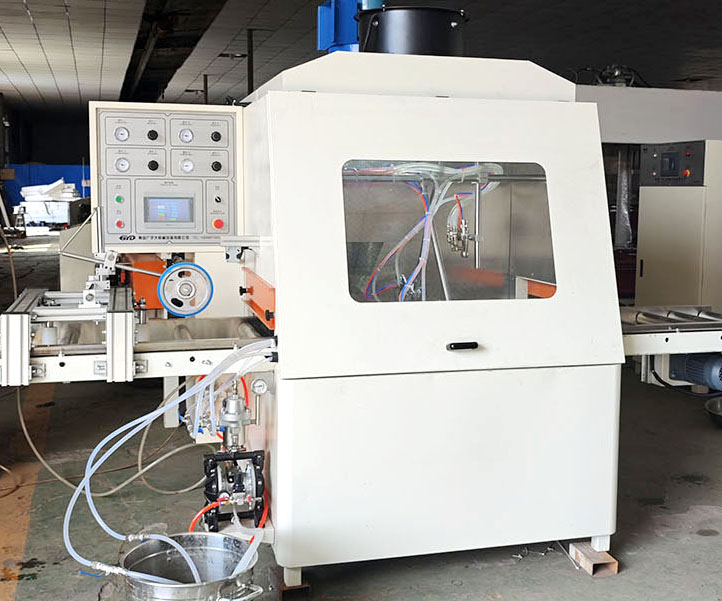
A new linear spray painting machine is a purpose-built system that applies coating to profiles moving along a conveyor line. It may include spray guns, nozzles, pumps, conveyors, sensors, and control systems.
New machines can handle:
- Flat panels
- Mouldings and trim
- Door frames
- Cabinet components
- Furniture rails
- Flooring profiles
- Complex or multi-sided profiles
The key advantage is integrated design. A new machine can be specified around the actual product, coating, and production target.
New linear spray painting machines are commonly used for:
- High-volume production
- Repeatable profiles
- Products requiring consistent film build
- Lines with limited operator variation
- Applications requiring tight quality control
- Products with complex geometry
- High-throughput finishing
They are most effective when consistency, throughput, and process control are priorities.
Retrofitting existing finishing equipment upgrades or modifies an existing system to improve performance, capacity, or safety. It may include new spray guns, nozzles, pumps, conveyors, sensors, controls, or drying equipment.
Retrofitting can handle:
- Existing product families
- Existing factory layout
- Existing utilities
- Existing operators
- Existing maintenance routines
The key advantage is capital efficiency. Retrofitting can preserve usable assets and reduce initial investment.
Retrofitting existing finishing equipment is commonly used for:
- Small batches
- Custom colors
- Varied profiles
- Low- to medium-volume production
- Applications where drying is handled separately
- Factories with limited floor space
They are most effective when flexibility, low volume, and operator judgment are priorities.
The fundamental difference is how the system is designed.
- New linear spray painting machine is designed around the actual product, coating, and production target.
- Retrofitting existing finishing equipment upgrades an existing system to improve performance.
Both approaches can produce high-quality finishes under the right conditions. The better choice depends on the profile, coating, and production objective.
A typical new machine process follows this flow:
1. Prepare the coating to the specified viscosity.
2. Load the profile onto the conveyor.
3. Detect the part and select the spray recipe.
4. Move the profile through the spray zone.
5. Apply the coating using controlled gun settings and line speed.
6. Send the coated profile to flash-off, drying, or curing.
7. Inspect the finished profile for coverage, film build, and appearance.
The most important variables are coating viscosity, gun distance, spray angle, fluid output, atomizing air, fan air, line speed, and profile geometry.
A typical retrofit process follows this flow:
1. Audit the existing equipment and identify constraints.
2. Prepare the coating to the specified viscosity.
3. Load the profile onto the conveyor.
4. Apply the coating using upgraded gun settings and line speed.
5. Send the coated profile to flash-off, drying, or curing.
6. Inspect the finished profile for coverage, film build, and appearance.
7. Adjust the retrofit based on trial results.
The most important variables are existing equipment condition, coating viscosity, gun distance, spray angle, fluid output, atomizing air, fan air, line speed, and profile geometry.
New machines can support high line speeds, but oven length and drying time may become the bottleneck.
The complete line must be balanced:
Spray → flash-off → dry or cure → sanding if required → second coat if required → inspection.
A fast spray station cannot compensate for poor coverage, incorrect film thickness, or excessive overspray.
Retrofit systems can support flexible production, but existing equipment limits may become the bottleneck.
The complete line must be balanced:
Spray → flash-off → dry or cure → sanding if required → second coat if required → inspection.
A fast retrofit cannot compensate for poor coverage, incorrect film thickness, or excessive overspray.
New machines require floor space along the line.
They can provide:
- Compact line layout
- Reduced handling
- Better material flow
- Improved process control
However, new machines may require:
- More floor space
- More careful line design
- More maintenance access
- More operator training
Retrofit systems can be adapted to existing floor space.
They can provide:
- Flexible layout
- Easier expansion
- Better use of available space
- Lower initial equipment investment
However, retrofit systems may require:
- More handling
- More transfer time
- More work-in-process inventory
- More careful scheduling
- More operator training
Both new machines and retrofit systems can support:
- Primers
- Sealers
- Stains and glazes
- Topcoats
- Protective clear coats
- Matte, satin, and gloss finishes
Each coating has different viscosity, curing behavior, adhesion requirements, and cleaning needs.
Water-based coatings often require controlled temperature and airflow during drying. They are generally easier to clean up, but equipment compatibility must still be verified.
Solvent-based coatings may flash off faster depending on the formulation. They require compatible hoses, seals, pumps, and solvent-based cleaning procedures.
Important: "Water-based" does not mean "no ventilation required." OSHA notes that the need for spray booth ventilation depends on the presence of hazardous chemicals in the coating, not simply whether the coating is water-based. [1805]
Spray finishing can release mists, vapors, and residues. OSHA identifies spray finishing using flammable and combustible materials as a regulated operation under 29 CFR 1910.107. [1720]
A spray booth is a power-ventilated structure provided to enclose or accommodate a spraying operation, confine and limit the escape of spray, vapor, and residue, and safely direct them to an exhaust system. [1720]
OSHA requires adequate local exhaust ventilation for coating and gluing processes, including manual spray, rolling, brushing, automated coating, and dip coating. [2331]
Ventilation must remain in operation during spraying and for a sufficient time afterward to allow vapors from drying coated articles and finishing-material residue to be exhausted. [1720]
OSHA also states that the total air volume exhausted through a spray booth should dilute solvent vapor to at least 25 percent of the lower explosive limit of the solvent being sprayed. [2202]
OSHA requires one or more methods of machine guarding to protect operators and other employees from hazards such as point of operation, ingoing nip points, rotating parts, flying chips, and sparks. [2271]
Guards must be affixed to the machine where possible and secured elsewhere if attachment is not possible. [2271]
OSHA also notes that retrofitting older equipment with appropriate guards is a recommended control. [2428]
Both new machines and retrofit systems should include:
- Properly designed spray booth or enclosed spray zone
- Mechanical exhaust ventilation
- Make-up air supply
- Filter maintenance program
- Grounding and bonding for static control
- Appropriate electrical classification where required
- Coating storage and handling controls
- Operator training
- Emergency stop and interlock systems
- Regular inspection of hoses, pumps, guns, filters, and guards
Do not treat ventilation or guarding as optional accessories. They are core safety and quality systems.
- You need consistent film thickness.
- You produce high volumes of repeatable profiles.
- You need tight quality control.
- You have stable production conditions.
- You want to reduce operator variation.
- You produce small batches or custom colors.
- You have complex or irregular shapes.
- You need flexibility and quick changeover.
- You do not require tight film-build control.
- You do not have the volume to justify a new machine.
- You produce both standard and specialty products.
- You need high throughput for standard profiles and flexibility for custom work.
- You want to reduce manual touch-up without overcomplicating the line.
A hybrid solution may use a new machine for high-volume profiles and retrofit equipment for custom or repair work.
Document the profiles, dimensions, materials, coatings, target output, and quality standard.
Include photographs, drawings, and physical samples of the most difficult profile.
Test the actual profile with the intended coating. Record:
- Coating viscosity
- Application method
- Gun distance
- Spray angle
- Fluid output
- Atomizing air
- Fan air
- Line speed
- Number of passes
- Film thickness
- Drying result
- Adhesion test
- Visual appearance
Do not judge only the spray station. Validate the complete sequence:
New machine: spray → flash-off → dry or cure → sanding if required → second coat if required → inspection.
Retrofit: spray → flash-off → dry or cure → sanding if required → second coat if required → inspection.
Operators should understand daily checks, coating preparation, part loading, and quality inspection. Technicians should understand gun setup, nozzle care, filters, pumps, electrical controls, and safety systems.
Create written recipes for each product family. Include coating type, viscosity, gun settings, line speed, curing conditions, and inspection criteria.
Schedule maintenance for filters, nozzles, pumps, hoses, conveyors, sensors, and ventilation equipment.
Likely causes:
- Incorrect gun distance
- Incorrect spray angle
- Incorrect fluid output
- Incorrect line speed
- Operator variation
- Worn nozzles or filters
Solution: Standardize gun settings, verify fluid delivery, and validate film thickness with the actual profile.
Likely causes:
- Insufficient gun positions
- Incorrect spray angle
- Excessive line speed
- Insufficient film build
- Profile movement or vibration
Solution: Adjust gun positions or spray angle, reduce line speed, and validate coverage with the actual profile.
Likely causes:
- Excessive fluid output
- Incorrect fan pattern
- Gun too far from the part
- Poor gun activation timing
- Worn nozzles
- Excessive booth airflow
Solution: Optimize transfer efficiency before increasing exhaust capacity. A well-tuned application process reduces contamination and filter replacement frequency.
Likely causes:
- Excessive atomizing air
- Incorrect solvent balance
- Gun too far from the workpiece
- Excessive booth airflow
- Incorrect coating temperature
Solution: Review the coating technical data and validate the application distance, air settings, and booth environment.
Likely causes:
- Excessive film build
- Slow line speed
- Incorrect coating viscosity
- Insufficient flash-off time
- Poor application overlap
Solution: Reduce film build or adjust line speed and flash-off conditions. Confirm that the coating is within its recommended application range.
- Inspect spray guns and nozzles.
- Check fluid hoses and connections.
- Confirm conveyor alignment.
- Verify booth airflow and filter condition.
- Inspect pumps, valves, and fluid lines.
- Check for leaks, air bubbles, or pressure fluctuation.
- Clean gun tips according to the coating manufacturer's instructions.
- Inspect emergency stops and safety interlocks.
- Check belt tension and conveyor tracking.
- Inspect gun carriage movement.
- Clean or replace filters as required.
- Check pump performance and fluid delivery.
- Review coating consumption and reject rates.
- Inspect ventilation fans and ducts.
- Check electrical connections and control panels.
- Review PLC alarms and error history.
- Calibrate sensors and verify safety devices.
- Audit recipes against actual production results.
GYDFinishing has manufactured surface finishing equipment since 2007 and provides solutions for wood, glass, fibre cement, and other materials. Its experience includes automatic coating equipment for wooden doors, furniture, cabinet doors, and flooring.
For a buyer comparing a new linear spray painting machine with retrofitting existing finishing equipment, the most useful supplier discussion is not simply about automation level. It should focus on:
- The exact profile drawings and physical samples
- Coating type and target film thickness
- Required production output
- Available factory space and utilities
- Curing method and drying time
- Color-change frequency
- Operator skill level
- Maintenance and spare-part strategy
- Total cost of ownership
A credible supplier should be willing to test the customer's actual profiles and coating system, document the results, and explain the limitations as well as the benefits.
A new linear spray painting machine is designed around the actual product, coating, and production target. Retrofitting upgrades an existing system to improve performance.
New machines are usually better for high-volume, repeatable profiles. Retrofitting is better when existing equipment can support the upgrade.
Yes, but only if the existing equipment can support the required output. Retrofitting may be limited by conveyor speed, drying capacity, or booth design.
Yes, if hazardous chemicals are present. OSHA notes that the need for spray booth ventilation depends on the presence of hazardous chemicals in the coating, not simply whether the coating is water-based. [1805]
Compare accepted finished parts per shift, not conveyor speed or drying time alone. Include loading, coating changes, cleaning, curing, inspection, rework, and downtime.
Yes. Many factories use a new machine for high-volume profiles and retrofit equipment for custom or repair work.
If you are deciding between a new linear spray painting machine and retrofitting existing finishing equipment for growing production, start with a profile-specific finishing trial rather than a generic equipment quotation.
Send GYDFinishing your profile drawings, coating specification, target output, and factory layout. A practical evaluation should identify the right system, gun setup, drying method, and total line layout for your product family.
- After the introduction: AI image prompt: *Side-by-side industrial comparison of new linear spray painting machine and retrofitting existing finishing equipment on wooden profiles, clean modern factory, realistic photography, wide angle.*
- In the "How Each Approach Works" section: AI image prompt: *Cutaway technical illustration comparing new linear spray machine and retrofit upgrades on wooden profile cross-sections, clean engineering illustration.*
- In the "Production Capacity" section: AI image prompt: *Close-up technical illustration showing conveyor flow, spray guns, drying oven, and inspection on wooden mouldings, no text.*
- In the "Safety" section: AI image prompt: *Technical illustration of spray booth airflow, intake air, exhaust duct, filters, grounding, and wooden profiles moving through the booth.*
- In the "Validation Roadmap" section: AI image prompt: *Flowchart-style factory illustration showing profile loading, coating application, flash-off, drying, sanding, inspection, and packaging.*
- OSHA, *29 CFR 1910.107 – Spray finishing using flammable and combustible materials*: [https://www.osha.gov/laws-regs/regulations/standardnumber/1910/1910.107]
- OSHA, *29 CFR 1910.94 – Ventilation*: [https://www.osha.gov/laws-regs/regulations/standardnumber/1910/1910.94]
- OSHA, *29 CFR 1910.212 – General requirements for all machines*: [https://www.osha.gov/laws-regs/regulations/standardnumber/1910/1910.212]
- OSHA, *Machine Guarding – Standards*: [https://www.osha.gov/machine-guarding/standards]
- OSHA, *Machine Guarding – Introduction*: [https://www.osha.gov/etools/machine-guarding/introduction/general-requirements]
- OSHA, *Struck By, Struck Against, Caught In*: [https://obis.osha.gov/SLTC/etools/poultry/general_hazards/struck_caught.html]
- OSHA, *eTool: Sawmills – Plant-Wide Hazards*: [https://www.osha.gov/etools/sawmills/plant-wide-hazards/health-hazards/chemicals]
- OSHA, *Spray Operations – Overview*: [https://www.osha.gov/spray-operations]
- OSHA, *Spray Operations – Controlling Hazards*: [https://www.osha.gov/spray-operations/controlling-hazards]
- OSHA, *Requirements for spray booth when spraying water-based paint*: [https://www.osha.gov/laws-regs/standardinterpretations/2008-03-28]
- GYDFinishing company background supplied by the client.


