
Views: 283 Author: 广宇大 Publish Time: 2026-09-22 Origin: Site


Content Menu
● Understanding Wood Stain Application Roller Coating Technology
>> What Is a Wood Stain Application Roller Coating Line?
>> Core Components of Automated Roller Coating Systems
● Types of Wood Stain Application Roller Coating Line Configurations
>> Single Roller Coating Systems for Stain and Primer
>> Double Roller Coating Systems for Uniform Color Application
>> UV Roller Coating Production Lines for Rapid Curing
>> Integrated Turnkey Roller Coating and Finishing Lines
● Leading Wood Stain Application Roller Coating Line Manufacturers
>> ZZCHRYSO and Wood-Press-Machine (China)
>> GYD Finishing and Akhurst Machinery (China and UK)
● Key Selection Criteria for Wood Stain Application Roller Coating Line Systems
>> Production Volume and Workpiece Geometry
>> Stain Chemistry and Wood Species Compatibility
>> Workpiece Dimensions and Tolerance Requirements
● Maintenance and Operational Best Practices
>> Daily Cleaning and Preventive Maintenance Protocols
>> Optimizing Application Parameters for Quality and Efficiency
>> What is the difference between single roller and double roller coating systems?
>> Can Wood Stain Application Roller Coating Lines handle both water-based and solvent-borne stains?
>> What maintenance is required for Wood Stain Application Roller Coating Lines?
>> How long does it take to install and commission a Wood Stain Application Roller Coating Line?
Modern wood finishing demands uniform stain penetration, minimal material waste, and maximum production efficiency to remain competitive in global furniture and architectural millwork markets. A Wood Stain Application Roller Coating Line has evolved from simple wipe stations and manual spray guns into sophisticated automated systems that integrate precision stain application, excess removal, and controlled drying in continuous production flows. This comprehensive guide explores leading Wood Stain Application Roller Coating Line technologies, system configurations, and selection criteria that transform staining operations from labor-intensive bottlenecks into streamlined competitive advantages for furniture, door, cabinet, flooring, and exterior wood product manufacturers.
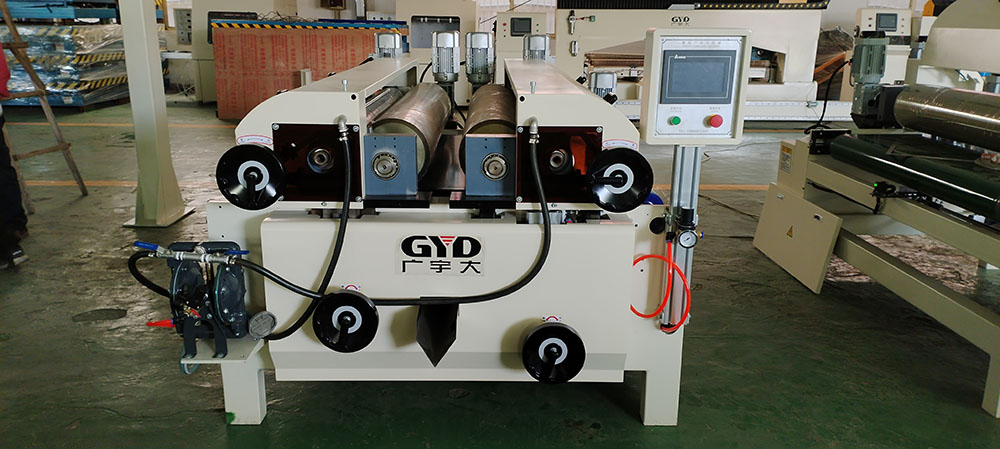
A Wood Stain Application Roller Coating Line is an industrial coating application system specifically engineered to apply wood stains, pigmented sealers, and penetrating finishes with repeatable precision across flat panels, shaped components, and three-dimensional furniture parts using roller-based application technology. Unlike manual staining methods that depend heavily on operator skill, consistency, and stamina, Wood Stain Application Roller Coating Lines deliver uniform color penetration, controlled wipe-off, and optimized material usage across production runs without fatigue-related quality degradation that plagues manual operations during long shifts.
These systems integrate roller coating, spray application, vacuum coating, or brush staining technologies to create uniform stain films that penetrate wood fibers evenly while minimizing surface pooling and color variation. Advanced Wood Stain Application Roller Coating Line configurations feature multi-stage application, excess stain removal through wiping or vacuum extraction, and controlled drying zones that maintain optimal parameters throughout high-volume production cycles, enabling consistent color matching across batches and production facilities.
Industrial Wood Stain Application Roller Coating Lines consist of several integrated subsystems working in concert to achieve reliable high-quality finishes at production speeds. Application modules employ precision roller coaters, spray manifolds, or brush staining units that deposit controlled stain volumes onto wood surfaces. Roller coaters use applicator rollers and doctor blades to meter exact stain quantities, while spray systems atomize stains into fine mists that penetrate open grain structures uniformly across panel surfaces.
Excess stain removal systems employ wiping rollers, vacuum extraction, or centrifugal force to remove surplus stain from surfaces while leaving penetrated color in wood pores, creating the characteristic translucent appearance that showcases natural grain patterns. Conveyor systems transport workpieces through application, wipe-off, and drying zones at controlled speeds ranging from 5 to 25 meters per minute depending on stain chemistry, wood species, and desired color depth, enabling seamless integration with upstream sanding and downstream topcoat application in continuous production flows.
Single roller coating systems represent entry-level Wood Stain Application Roller Coating Line configurations suitable for low to medium volume operations where capital investment must be minimized while still achieving dramatic improvements over manual methods. These compact, high-precision machines feature working widths from 0 to 1,320 millimeters with workpiece thickness ranges from 2 to 80 millimeters and minimum working lengths of 300 millimeters, fully automating application of primers, stains, sealants, or adhesives with exceptional uniformity that effectively replaces inconsistent manual methods.
The automatic single roller coater for primer and stain applications features operation heights of 900 millimeters optimized for ergonomic loading and unloading, total power ratings of 7.5 kilowatts, and versatile configurations that accommodate diverse flat substrates including solid wood, MDF, plywood, glass, and PVC. Compatible coating materials span UV lacquer, water-based stains, solvent-borne primers, and reactive sealers, enabling manufacturers to process varied product portfolios without extensive reconfiguration or component replacement when switching materials between production runs.
Double roller coating systems enhance Wood Stain Application Roller Coating Line capabilities by applying stain simultaneously to top and bottom surfaces or employing sequential roller configurations that work stain into wood pores while smoothing surface appearance. A typical double-roller coloring coater uses a sponge roller as the first applicator and a rubber roller as the second, with the sponge roller pressed approximately 1 millimeter more than the rubber roller to ensure color reaches chamfered edges without mottling.
Application rates are controlled between 10 to 20 grams per square meter, adjusted according to desired color effect and substrate condition. After staining, panels pass through brush leveling units that ensure water-based colorant is evenly worked into wood pores and any excess is removed, making grain patterns more distinct while preventing blotching that compromises appearance quality in premium furniture and architectural millwork applications where finish quality directly impacts product value and customer satisfaction.
UV roller coating production lines represent advanced Wood Stain Application Roller Coating Line technology that combines automated roller application with immediate ultraviolet light curing, dramatically reducing drying times and floor space requirements for high-volume furniture, cabinet, and architectural panel production. After coating application, workpieces pass through high-intensity UV lamp arrays that instantly polymerize UV-curable coatings, enabling immediate handling and secondary processing within minutes rather than the hours required for air-dry or thermal cure systems.
A typical UV roller coating line for wooden doors may follow formulations such as one stain, two fillers, three primers, two topcoats or simplified one stain, one filler, two primers sequences depending on desired finish quality and production throughput requirements. Intercoat primer layers are cured with single-lamp UV dryers at 60 to 80 millijoules per square centimeter, while final primer layers are fully cured with double-lamp UV dryers at 100 to 120 millijoules per square centimeter, ensuring complete polymerization that prevents adhesion failures and finish defects in demanding applications.
Fully integrated turnkey Wood Stain Application Roller Coating Lines combine surface preparation, multi-stage stain application, excess removal, flash-off zones, and topcoat application in one continuous flow that transforms raw substrates into finished, ready-to-assemble components with minimal manual handling. These complete installations suit mass production environments where parts move automatically from sanding through stain application, wipe-off, drying, and topcoat curing without intermediate storage or re-fixturing that introduces contamination risks and delays order fulfillment.
Bürkle roller coating lines exemplify this technology with disc paths, roller application machines including e.a. sy-Coater RCLD 1300, distribution and scraping brush machines VBM 1300, and cleaning machines RMB 1300 configured for working widths of 900 to 1,300 millimeters with feed speeds from 5 to 25 meters per minute. Workpiece dimensions accommodate minimum lengths of 400 millimeters, heights from 3 to 80 millimeters, and diverse substrates including wood-based materials such as MDF, HDF, hardboard, plywood, and solid wood panels used in door and furniture industries.
ZZCHRYSO manufactures comprehensive UV roller coating machines and Wood Stain Application Roller Coating Lines suitable for flat workpieces such as doors, flooring, and flat furniture panels, delivering accurate and uniform coating application that ensures finishing with great fullness and no color differences across production batches. Their roller coating machines are ideal for staining, primer, and topcoat application with residual paint recovery and recycling systems that dramatically reduce material costs and environmental impact compared to spray application methods.
The company's equipment portfolio spans surface preparation through final cure with automatic spraying machines, UV curing tunnels, IR drying systems, and wide-belt sanders that level coated surfaces between coats for ultra-smooth finishes required by high-end furniture and architectural millwork specifications. Technical support encompasses installation, operator training, and ongoing maintenance services across global markets, ensuring customers achieve target quality and throughput levels that justify capital investment in automated finishing technology.
Taisan Machinery manufactures automatic UV roller coating production lines featuring precision sponge rollers and brushes that ensure uniform color penetration without blotching, enhancing natural wood grain appearance in premium furniture and architectural applications. Their roller coater series includes automatic edge roller coating machines for doors and panels, automatic single roller coating machines for primer and stain applications, and complete production line solutions designed for all types of flat substrates including solid wood, MDF, plywood, glass, and PVC.
The company's high-efficiency UV roller coating systems achieve flawless finishes while reducing paint consumption by up to 70 percent compared to conventional spray application methods. Single roller coaters serve as entry-level powerhouses for primer and sealer application on flat substrates like MDF or particle board, while double and reverse roller coaters handle more demanding applications requiring uniform color application on both sides of panels or complex multi-stage finishing sequences.
Bürkle operates as a leading manufacturer of roller coating lines thought out to the smallest detail, serving lacquering and printing applications across furniture, flooring, door, and architectural panel industries. Their roller coating lines feature disc paths, roller application machines, distribution and scraping brush machines, and cleaning machines configured for working widths from 900 to 1,300 millimeters with feed speeds from 5 to 25 meters per minute.
In the first coating step, stains and oils are applied with specially developed roller coating machines, followed by brushing and partial curing carried out by downstream Bürkle brushing machines and energy-saving UV systems. After initial priming, Bürkle filler applicators ensure perfectly prepared surfaces, followed by intermediate sanding on fully integrated sanding machines, then final coating with additional base coats and top coats using three additional Bürkle roller applicators and UV dryers required for curing.
GYD Finishing manufactures comprehensive automatic paint spraying machines, roller coating machines, paint drying machines, and complete finishing lines suitable for coating flat workpieces in broad ranges of materials including wood and wood composites. Their product portfolio serves furniture, door, cabinet, flooring, and architectural panel manufacturers with equipment that delivers consistent finish quality at production speeds that justify capital investment over manual or semi-automated methods.
Akhurst Machinery distributes the Bürkle RCL-M Roll Coating Machine, a high-performance solution for precise and even paint application on flat workpieces combining high-quality application rollers with finely adjustable dosing rollers to ensure even coating with minimal material usage. Working widths of 1,300 millimeters with feed speeds from 5 to 25 meters per minute suit diverse production volumes, while robust construction, high processing speed, and intuitive controls make these machines ideal for companies seeking efficient and cost-saving solutions for industrial painting.
Matching Wood Stain Application Roller Coating Line capacity to actual production volumes and workpiece complexity prevents both underutilization of capital equipment and production bottlenecks that delay order fulfillment and frustrate customers. Low to medium volume operations processing under 500 panels daily benefit from single roller coaters or compact UV spray systems with manual loading and unloading stations positioned at ergonomic heights to reduce worker fatigue during extended shifts.
High-volume manufacturers handling thousands of components daily require double roller configurations or integrated turnkey lines with automated material handling, quick-change applicator rollers, and integrated drying zones that minimize changeover downtime between product styles. Evaluate cycle times including loading, stain application, excess removal, flash-off, drying, and unloading phases to calculate realistic daily throughput under actual operating conditions rather than theoretical maximums that ignore real-world constraints such as material handling delays and quality inspection requirements.
Different stain chemistries demand specific application technologies, fluid delivery pressures, and drying methods to achieve optimal penetration and color uniformity without blotching, lap marks, or uneven absorption that compromises appearance. Water-based stains require stainless steel fluid paths, ceramic nozzles, and corrosion-resistant seals to prevent rust contamination during extended production runs, while solvent-borne systems need explosion-proof electrical components and adequate ventilation to meet occupational safety and environmental regulations.
Oil-based penetrating stains and lyes require brush application or roller systems that work stain into wood pores while removing excess from surfaces, creating uniform color penetration with minimal waste. Verify that candidate Wood Stain Application Roller Coating Lines accommodate your specific stain portfolio including water-based, solvent-borne, oil-based, and UV-curable formulations without requiring extensive reconfiguration or component replacement when switching materials between production runs.
Furniture components, architectural panels, and exterior wood products vary dramatically in dimensions and complexity, from small drawer fronts to large wardrobe panels exceeding two meters in length with raised profiles and moulded edges. Ensure that candidate Wood Stain Application Roller Coating Lines accommodate maximum workpiece dimensions with adequate clearance for applicator roller contact, spray gun travel, or brush cylinder rotation without edge contact that damages finishes or creates safety hazards for operators loading and unloading parts.
For shaped components such as raised panel doors, shaker styles with deep grooves, or carved decorative elements, prioritize Wood Stain Application Roller Coating Lines with programmable applicator roller positioning that adjusts pressure, standoff distance, and stain volume dynamically across varying surface contours. Flat panel-only machines may achieve superior results on simple slab doors but struggle with profiled surfaces, potentially requiring manual touch-up that negates automation benefits and increases labor costs per finished unit.
Consistent daily cleaning prevents stain buildup in applicator rollers, fluid lines, filters, and wipe-off systems that degrades finish quality and increases unplanned downtime that disrupts production schedules. Flush fluid delivery systems with appropriate solvents at shift end, removing applicator rollers and doctor blades for thorough cleaning to prevent clogging from dried stain residue that alters application patterns and creates streaks or dry spots on finished parts.
Inspect conveyor chains, drive motors, photoelectric sensors, roller bearings, and brush cylinders for wear, contamination, or misalignment that could affect positioning accuracy and stain uniformity across workpiece surfaces. Weekly preventive maintenance should include lubrication of linear guides with manufacturer-specified greases, verification of applicator roller alignment, calibration of fluid pressure regulators against certified gauges, and inspection of wipe-off rollers or vacuum extraction systems to ensure adequate excess stain removal that prevents surface pooling and color variation.
Achieving optimal stain quality while minimizing material consumption requires careful balancing of applicator roller pressure, fluid flow rate, conveyor velocity, and wipe-off intensity to match stain viscosity, wood species porosity, and desired color depth. Start with manufacturer-recommended baseline settings for your specific stain type and wood species, then conduct systematic test applications on sample panels to evaluate color uniformity, penetration depth, and surface appearance across faces, edges, and profiles.
Use wet film thickness gauges during setup to verify that applied stain volumes meet specification requirements before entering flash-off or drying stages, preventing costly rework from under or over-application that wastes material and delays order shipments. Document successful parameter combinations for each stain type and wood species, creating standardized setup sheets that reduce changeover times and ensure consistent results across shifts, operators, and production facilities that maintain brand quality standards regardless of where products are manufactured.
Single roller coating systems apply stain or primer to one surface at a time using a single applicator roller and doctor blade configuration, suitable for entry-level operations and simple flat panels. Double roller coating systems employ two applicator rollers either for simultaneous top and bottom surface coating or sequential sponge and rubber roller configurations that work stain into wood pores while smoothing surface appearance, delivering superior color uniformity and reduced blotching on premium furniture and architectural components.
Wood Stain Application Roller Coating Lines typically reduce stain consumption by 20 to 40 percent compared to manual application through precise metering, consistent application patterns, and optimized wipe-off that minimizes waste. Integrated stain recovery systems further reduce waste by capturing and recycling excess material for reuse, dramatically reducing material costs and environmental impact compared to manual methods where excess stain is wiped onto rags and discarded.
Yes, most modern Wood Stain Application Roller Coating Lines accommodate multiple stain types with appropriate component configurations and material selections that resist chemical attack and corrosion. Water-based stains require stainless steel fluid paths and corrosion-resistant seals, while solvent-borne systems need explosion-proof electrical systems and enhanced ventilation. Many manufacturers offer convertible systems that can be adapted for different stain chemistries with component changes and safety upgrades.
Daily maintenance includes flushing fluid delivery systems, cleaning applicator rollers and doctor blades, wiping down conveyor systems, and checking fluid levels in supply tanks. Weekly tasks involve lubricating linear guides, verifying applicator roller alignment, checking pressure regulator calibration, and inspecting wipe-off rollers or vacuum extraction systems. Monthly inspections should cover electrical connections, safety interlocks, conveyor drive components, and drying zone heaters to identify wear before failure causes production stoppages.
Installation and commissioning timelines vary by system complexity and site preparation, typically ranging from two to eight weeks depending on foundation requirements, utility connections, and integration with existing material handling systems. Simple single roller coaters may be operational within weeks after delivery if utilities and floor space are ready, while complete turnkey Wood Stain Application Roller Coating Lines with conveyor integration, multi-stage application, drying systems, and automated material handling require extended commissioning periods including operator training and production trials.


