
Views: 294 Author: 广宇大 Publish Time: 2026-11-25 Origin: Site


Content Menu
>> Costs Appear After Installation
>> Low Price Can Hide Scope Gaps
>> A Higher Price Is Not Proof of Quality
● What Reliability Means for a Spray Line
● Use Life-Cycle Cost to Compare Options
>> Pick the Right Decision Rule
● Reliability Indicators to Test Before You Buy
>> Spare Parts and Service Support
● Reliability and Coating Cost
>> Stable Setup Protects Material Use
>> Check Efficiency Claims Carefully
>> Consistency Is a Reliability Benefit
>> Spraying Less Extends Filter Life
>> Electrostatic Systems Need Fail-Safe Controls
● An Illustrative Comparison (Hypothetical)
● Questions to Ask Every Supplier
● Discuss Your Long-Term Value Assessment with GYDFinishing
>> 1. Is the cheapest linear spray painting machine ever the right choice?
>> 2. How can I verify a supplier's reliability claims?
>> 3. Does a higher transfer-efficiency rating mean a more reliable machine?
>> 4. Which safety features indicate good design?
>> 5. Should I use payback or life-cycle cost?
>> 6. How do I account for downtime cost?
When you choose a linear spray painting machine, the lowest purchase price rarely gives the lowest cost of ownership. Reliability affects accepted output, coating consumption, rework, maintenance, and safety every day the line runs. Price affects the investment once.
That does not mean the most expensive machine is best. A premium price proves nothing without evidence. The practical approach is to compare life-cycle cost per accepted product, and to test reliability claims before you sign.
I have no customer cases or measured GYDFinishing data to cite, so this article offers a method rather than a promised result.
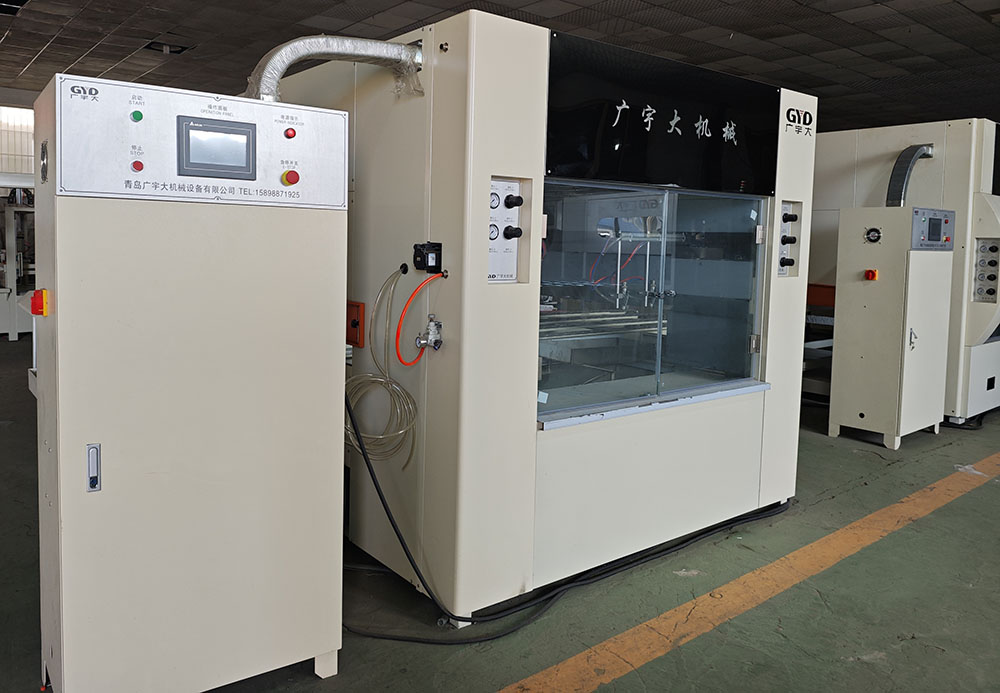
A quotation shows what you pay at the start. It rarely shows what the line costs over its working life.
Coating, cleaning materials, labor, energy, filters, spare parts, rework, and downtime all continue for years. A cheaper machine can look attractive and still cost more per accepted product.
Check what each quotation includes. Extraction, controls, conveying, installation, training, and commissioning may sit inside one offer and outside another. Compare complete scopes, not headline prices.
Ask for evidence. Request maintenance documentation, component specifications, service terms, and a representative trial. Reliability must be demonstrated, not assumed from cost.
Define reliability as the ability to produce acceptable finishes safely under specified conditions. A machine that runs but produces rejects is not reliable in a useful sense.
- Availability: the line is ready to run when needed.
- Repeatability: settings produce the same finish batch after batch.
- Maintainability: faults can be found and fixed safely and quickly.
- Safety integrity: protective functions work as designed.
A reliable applicator cannot compensate for failing extraction, unstable material delivery, or a conveyor that stops unpredictably. Evaluate the complete flow from loading to unloading.
US Department of Energy guidance describes life-cycle cost analysis as the sum of the present values of investment, capital, installation, energy, operating, maintenance, and disposal costs over a project's life. Future costs are discounted to the present to reflect the time value of money. [2877]
The guidance suits comparing alternatives that meet the same performance level but differ in investment, operating, maintenance, or repair costs, and sometimes in service life. [2877] That describes the choice between a cheaper and a more reliable spray machine.
For mutually exclusive options, DOE recommends the lowest life-cycle cost or the highest net savings. It cautions that savings-to-investment ratio and adjusted internal rate of return may favor less efficient options and must not decide accept-or-reject choices between mutually exclusive alternatives. [2877]
The DOE document concerns federal energy and water projects. Borrow its logic, but let your finance team set discount rates and the evaluation period.
Ask maintenance staff to review the proposed layout. Check access to applicators, pumps, filters, conveyors, and electrical panels. A part that fails rarely but takes hours to reach can cost more than one that fails more often and swaps in minutes.
Request a bill of materials with component makes and models for pumps, drives, sensors, controls, and wetted parts. Confirm that coating chemistry is compatible with seals, hoses, and pump materials.
Ask about lead times, recommended spares, response times, and support hours. Distinguish a response commitment from a guaranteed repair time.
Obtain electrical and pneumatic diagrams, maintenance procedures, and software backups. Verify that documents match the delivered configuration rather than a generic machine family.
Test a planned stop and restart. Record how products in the line are identified, how the system restarts, and how first-product approval works. Restarting a motor is not the same as restoring accepted production.
Graco defines transfer efficiency as how much spray covers the part compared with how much sprays past it and is wasted. [2761] Too much air pressure can cause excessive overspray, and fluid pressure should be minimized to reduce bounce-back. [2761]
A machine that holds settings reliably helps keep those variables inside a good window. A machine that drifts forces operators to compensate, often by spraying more.
Graco explains that the ASTM and EN 13699-1 tests produce very different results. For example, an HVLP gun tested to ASTM shows 25 to 32 percent transfer efficiency, while the same gun tested to EN shows 70 to 78 percent. [2761] Ask which method any supplier used.
Graco states that operator technique can change transfer efficiency by 10 to 30 percent, and that a paint robot repeats the same spray technique each time. [2761] Repeatability therefore has a measurable commercial value, provided the programmed technique is correct.
Graco notes that spraying less paint also lengthens booth-filter life. [2761] Include filter changes and waste handling when you compare operating costs.
Safety functions are part of reliability. A line that stops safely and starts correctly protects people and production.
OSHA's spray finishing standard requires mechanical ventilation adequate to remove flammable vapors, mists, or powders. It must run at all times during spraying and long enough afterward to exhaust vapors from drying articles and residue. [1720]
For conventional dry booths, the standard sets a minimum average air velocity over the open face of 100 linear feet per minute, or 60 for electrostatic spraying. It requires visible gauges, audible alarms, or pressure-activated devices to indicate or ensure that velocity. [1720]
For fixed electrostatic apparatus, OSHA requires automatic controls that disconnect power without delay and signal the operator when ventilation fails, the conveyor stops, a ground occurs, or required clearance is reduced. [1720]
The standard requires spraying areas to stay as free as practical of combustible residue, with cleaning daily if necessary. It also requires regular inspection of pressure hoses and couplings, and withdrawal of any that show deterioration or leakage. [1720]
These are US requirements. Have a qualified specialist assess your local obligations and the proposed installation. Never accept a design that depends on bypassing a safeguard to keep production running.
These numbers are invented to show the arithmetic. They are not benchmarks and do not describe any GYDFinishing machine.
Machine A has a purchase price of 250,000 currency units. Machine B costs 300,000.
Assume the following annual running costs:
- Machine A: unplanned downtime 40,000, maintenance 20,000, rework 30,000. Total: 90,000.
- Machine B: unplanned downtime 15,000, maintenance 14,000, rework 18,000. Total: 47,000.
Machine B costs 50,000 more at the start but 43,000 less each year. Simple break-even arrives in about 1.2 years. Over eight years, undiscounted, Machine A costs 970,000 and Machine B costs 676,000.
Now reverse the assumptions. If Machine B's yearly advantage were only 5,000, break-even would take 10 years, and the cheaper machine would win in most scenarios. This shows why you need measured inputs. A finance review should discount the cash flows and test conservative cases.
- What is included in the quoted scope, and what is excluded?
- Which components are critical, and what are their replacement lead times?
- What routine maintenance does the machine need, and who performs it?
- How are alarms handled, and what protective functions can operators never bypass?
- What documentation and software backups will you deliver?
- What does the warranty cover, and what remains an operating expense?
- Can we run a trial with our coating, our products, and a planned stop and restart?
Use production coating and representative products, including difficult geometry. Record accepted output, material use, cleaning time, and defects. Include a changeover, an interruption, and a restart.
Agree on the measurement method in writing before the trial. Treat the result as an input to your cost model, not as a guarantee for every future month.
According to your supplied company background, GYDFinishing was founded in 2007 and provides machinery and surface-finishing solutions for wood, glass, fibre cement, and other materials. Its stated applications include wooden doors, furniture, cabinet doors, and flooring, from single machines to turnkey lines.
To get a useful comparison, send Guangyutai Machinery:
- Product drawings and representative samples.
- Coating technical and safety data sheets.
- Current output, downtime, defect, and consumption records.
- Factory layout, utilities, and maintenance resources.
- Output targets and finish standards.
Ask for a clearly scoped quotation, a maintenance and spares plan, and a representative trial. Then compare life-cycle cost per accepted product, not purchase price alone.
Sometimes. It can suit low volumes, simple products, or uncertain demand. Compare full life-cycle cost, reliability evidence, and your quality requirements before deciding. [2877]
Ask for component lists, maintenance documentation, service terms, and a trial using your products. Record availability, rework, and restart behavior during the trial.
No. Transfer efficiency measures material reaching the part, and the result depends on the test method. ASTM and EN 13699-1 can give very different percentages for the same gun. [2761]
Look for ventilation interlocks, airflow indicators or alarms, grounding, and, for electrostatic systems, fail-safe controls that cut power when ventilation fails or the conveyor stops. Confirm local requirements. [1720]
Use life-cycle cost or net savings to choose between mutually exclusive options. Use savings-to-investment ratio or adjusted internal rate of return only to rank projects when funds are limited. [2877]
Measure lost accepted output, recovery time, rework, and labor during stoppages. Count only costs you can verify, and avoid double counting the same loss.
1. US Department of Energy, Federal Energy Management Program. "[Guidance for the Implementation and Follow-up of Identified Energy and Water Efficiency Measures in Covered Facilities]," September 2012. Used for life-cycle cost definition, discounting, decision rules, and cautions on savings-to-investment ratio and adjusted internal rate of return. [2877]
2. Graco. "[Tips for Improving Transfer Efficiency]." Used for the transfer-efficiency definition, ASTM and EN 13699-1 differences, pressure settings, operator technique, robot consistency, and filter-life effects. [2761]
3. US Occupational Safety and Health Administration. "[29 CFR 1910.107 – Spray finishing using flammable and combustible materials]." Used for ventilation, airflow indication, fail-safe electrostatic controls, housekeeping, and hose inspection requirements. [1720]
The DOE guidance concerns federal projects. This article borrows its economic principles, not its federal parameters.


