
Views: 286 Author: 广宇大 Publish Time: 2026-11-25 Origin: Site


Content Menu
● Why a Three-Year Review Matters
>> Compare Present Reality with the Original Specification
>> Separate Equipment Change from Production Change
>> Include Operators and Maintenance Staff
● Review Accepted Output, Not Machine Running Time
>> Measure Approved Production
● Audit Coating Quality and Process Stability
>> Compare Current Finish with the Approved Standard
>> Review Defect Records by Category
>> Check Whether Operators Have Compensated Informally
● Measure Material Consumption and Waste Properly
>> Track Coating per Accepted Product
>> Treat Transfer Efficiency with Care
>> Inspect Wear-Sensitive Components
>> Review Collection and Reuse Practices
● Evaluate Reliability and Maintainability
>> Rank Losses by Total Impact
>> Review Maintenance Compliance
● Audit Ventilation, Housekeeping, and Safety Controls
>> Verify Ventilation Performance
>> Review Filters and Residue Management
>> Reassess Grounding and Ignition Control
● Review Controls, Data, and Documentation
>> Compare Active and Approved Recipes
>> Preserve Evidence for Future Decisions
● Decide Between Adjusting, Restoring, Upgrading, or Replacing
>> Adjust When Settings or Procedures Have Drifted
>> Restore When Components Have Worn
>> Upgrade When Requirements Have Changed
>> Replace When Support or Capability Is Insufficient
● Discuss a Line Review with GYDFinishing
>> 1. What is the first step in a three-year spray-line review?
>> 2. Does higher paint consumption always mean applicator wear?
>> 3. How should transfer efficiency be used in an audit?
>> 4. Which safety items deserve early attention?
>> 5. Is a three-year-old line due for replacement?
>> 6. What information should a supplier receive before assessing the line?
A three-year review of a linear spray painting line should answer a practical question: does the line still deliver the accepted output, finish quality, material efficiency, safety, and operating cost the business expected? It should also identify which problems are caused by equipment wear and which come from changed products, coatings, staffing, or maintenance practices.
Do not judge the line from conveyor speed or a single recent breakdown. Review the complete production system against the original specification, current requirements, and measured operating records.
My recommended approach is to treat the review as an engineering and commercial audit. Start with evidence, separate causes carefully, and decide whether the line needs adjustment, restoration, upgrade, or eventual replacement.
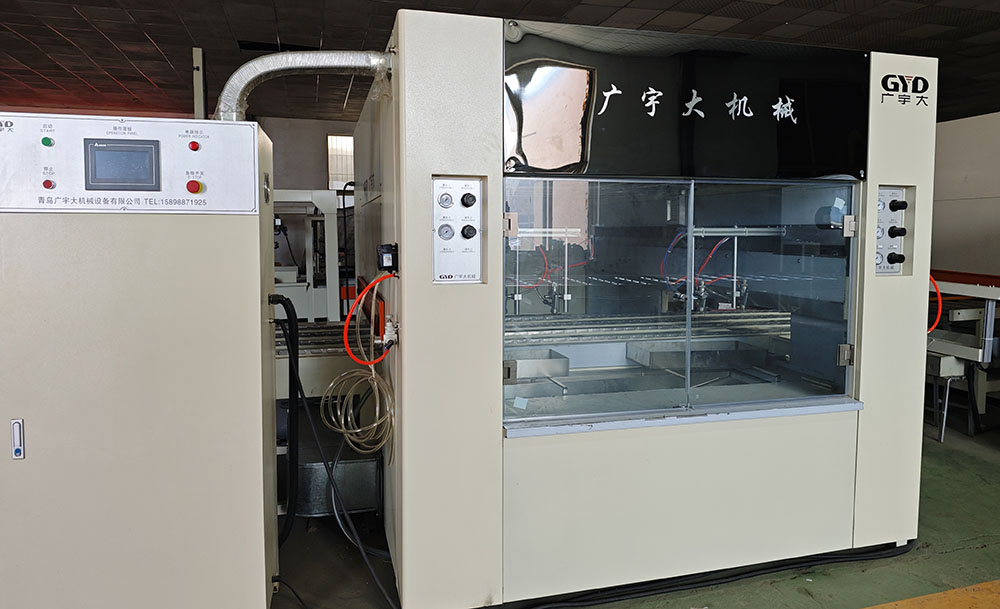
By this stage, the initial commissioning period has passed, but wear, process drift, staffing changes, and product-mix changes may already be affecting results.
Retrieve the acceptance criteria, approved recipes, drawings, operating assumptions, and any agreed performance conditions.
If the original documents were incomplete, document the current accepted operating window clearly. Without a reference point, "worse than before" remains an opinion.
A line may appear less productive because products became more complex, batches shortened, coatings changed, or quality standards tightened.
Group production by comparable product family before drawing conclusions about equipment condition.
Interview the people who run and service the line.
Their observations can reveal workarounds, recurring alarms, awkward cleaning tasks, and informal settings that do not appear in the control system. Verify those observations against records rather than treating either source as complete alone.
Use accepted pieces, linear metres, or square metres per shift.
Include products rejected, reworked, or held for inspection. A line can appear mechanically productive while generating significant recovery work.
The original bottleneck may have changed.
Record where products wait, where operators intervene, and which stage limits completed output. The constraint could now be loading, drying capacity, inspection, cleaning, or maintenance access.
Frequent minor interruptions can be more damaging than a few visible major failures.
Define a consistent recording threshold and review repeated events by location, product, shift, and coating. Do not assume that a reset alarm indicates the underlying cause was resolved.
Inspect representative production against retained reference samples.
Check coverage on all required surfaces, edges, recesses, and local film build. A repeated spray path can reproduce a coverage gap just as reliably as a good finish.
Separate runs, dry spray, contamination, uneven coverage, adhesion problems, and appearance variation.
Do not group them under "spraying defects." Different categories often indicate different causes, including preparation, material, application, curing, handling, or maintenance.
Compare current settings with the approved recipe.
If operators increased pressure or output to cover a problem, investigate why. Graco identifies excessive air pressure and excessive fluid pressure as potential contributors to overspray and bounce-back. [2761]
Graco advises matching spray-pattern height to the part and selecting an appropriate tip size. It also recommends proper gun distance, perpendicular spraying, and correct triggering. [2761]
Verify these settings on the actual current product range, not only the products used during commissioning.
Use a consistent unit and compare similar product families.
Include startup, flushing, residual mixtures, cleaning, and rejects. A rising paint-use figure may reflect product changes rather than a failing applicator.
Transfer efficiency describes how much sprayed material reaches the part compared with how much passes beyond it. [2761]
Graco explains that ASTM and EN 13699-1 test arrangements can produce very different percentages for the same applicator. Never compare a current factory estimate with a brochure percentage unless the measurement basis is understood. [2761]
Examine tips, needles, seals, pumps, hoses, and other fluid-delivery components using the manufacturer's instructions.
Worn parts can change pattern, flow, and consistency. Replace or recalibrate based on documented inspection—not assumption.
If overspray or leftover material is recovered, confirm contamination controls and supplier-approved reuse conditions.
A recovery arrangement that saves material but increases defects is not a net improvement.
Measure the interval from stoppage until accepted production resumes.
Include diagnosis, waiting for parts, repair, cleaning, restart checks, and first-product approval.
Do not focus only on the most frequent alarm.
Compare failure frequency, duration, product loss, and safety significance. A rare failure with a long lead time can justify a critical spare more strongly than a common but quickly corrected fault.
Check whether planned inspections and cleaning activities occurred and what they found.
A completed checklist is less useful than recorded observations such as leakage, abnormal movement, pressure changes, or recurring contamination.
Confirm availability, lead time, compatibility, and supplier support for important components.
For aging controls or drives, ask whether replacement parts, firmware, and documentation remain obtainable. Do not wait for a failure to discover that support has changed.
A line can produce acceptable parts while safety conditions deteriorate.
US OSHA 29 CFR 1910.107 requires adequate mechanical ventilation in spraying areas and sufficient operation afterward to exhaust vapors from drying coated articles and residues. [1720]
For dry booths with overspray filters, it also requires indication or assurance of required air velocity. [1720]
These are US requirements; confirm applicable local requirements for your site.
Inspect filter condition, replacement practice, discarded-filter handling, and residue accumulation.
The standard requires spraying areas to remain as free as practical from combustible residues and addresses disposal of contaminated materials. [1720]
Graco notes that spraying less paint lengthens the life of booth filters. Do not extend filter life by ignoring required airflow or inspection conditions. [2761]
OSHA's spray-finishing standard addresses effective grounding of metal booth parts, exhaust ducts, and relevant piping. [1720]
For electrostatic equipment, it also addresses approved apparatus, safe distances, fail-safe controls, guarding, and ventilation interlocks. [1720]
Have qualified personnel inspect the actual installation rather than relying on the original commissioning record.
OSHA identifies electrical, mechanical, hydraulic, pneumatic, chemical, and thermal energy as potential servicing hazards and emphasizes lockout/tagout procedures and worker training. [2886]
Confirm procedures reflect modifications made since installation. A change to conveyors, guards, or controls can alter the isolation requirements.
Check recipe versions, change authorization, and modification history.
Remove unapproved copies. Production should not depend on undocumented settings known only to one operator.
Ensure controller programs, parameters, drawings, manuals, and software licenses are current and recoverable.
Test restoration where it can be done safely. A backup that has never been recovered cannot be assumed useful.
Identify alarms that are routinely bypassed, ignored, or reset without investigation.
Define the likely condition and required response for each important alarm. Never disable a safety-related function to improve recorded uptime.
Retain downtime classifications, defect records, consumption data, and maintenance findings.
These records support a defensible decision about adjustment, restoration, or replacement.
If the equipment remains sound, retraining, recipe restoration, or corrected inspection practice may recover performance.
Document the changes and verify them through production data. Do not purchase equipment to solve an unresolved procedure problem.
Consider replacing specific worn parts, recalibrating systems, or overhauling a defined subsystem.
Request an inspection scope and evidence supporting the proposed work. Avoid replacing components solely because a supplier recommends a generic three-year interval.
A new product range, coating, quality requirement, or output target may exceed the original configuration.
Define the gap precisely. A targeted modification should address a measured limitation without introducing unmanaged interface risk.
Consider replacement when spare-part availability, repair cost, safety exposure, or required performance no longer supports the existing installation.
Use full-life cost, accepted output, risk, and implementation constraints in the decision. Do not rely on age alone.
According to the supplied company background, GYDFinishing was founded in 2007 and provides machinery and surface-finishing solutions for wood, glass, fibre cement, and other materials.
Its stated applications include wooden doors, furniture, cabinet doors, and flooring, with offerings from individual machines to turnkey production lines.
For a linear spray line review, send Guangyutai Machinery the original specification, current product range, coating documentation, downtime records, defect data, maintenance history, and production targets.
Request a clearly scoped assessment that separates adjustment, restoration, upgrade, and replacement options—supported by representative testing where practical. Make the decision from verified performance, not assumptions.
Collect the original specification, current approved recipes, and recent production records. Then compare comparable products over a consistent period.
No. Product mix, coating, cleaning, rejects, settings, and operating practice can also change consumption. Investigate before replacing parts.
Use it as one diagnostic measure, but understand the test method. ASTM and EN 13699-1 can produce very different percentages for the same applicator. [2761]
Review ventilation, filter condition, residue control, grounding, electrostatic safeguards where applicable, and servicing procedures. Use qualified personnel and local requirements. [1720][2886]
Not automatically. Decide using measured capability, support availability, safety condition, maintenance burden, and future production requirements.
Provide the original specification, drawings, product list, coating data, downtime and defect records, maintenance history, and current capacity targets.


